
 Fr Joseph Esper
One summer morning a farmer named Ned was helping his neighbor Willy build a new fence, but the work was going slowly. Finally, Ned deliberately dropped a fence post in a muddy puddle of water, splattering both men with mud. Ned’s wife happened to observe this, and at lunch she asked, “Dear, did my eyes deceive me, or did you drop the fence post in the mud on purpose?” “Oh, yes,” he nodded; “I certainly did.” “Well, why in the world did you do that?” she asked, and Ned explained, “It’s simple, dear. Willy had on a pair of brand new overalls, and we weren’t getting any work done because he was so worried about getting ‘em dirty—so I had to make that wasn’t a problem any more. Did you notice how much faster the work went after I baptized him?” (Gerard Fuller, Stories for All Seasons, p. 31). None of us were christened by being splashed with muddy water, but all of us were baptized—and part of the reason this occurred was so that we could get busy with the Lord’s work. Jesus calls each one of us—and as His followers, we must make sure nothing interferes with our response.
If we were conducting a business seminar, experts would come in and tell us how to run things more efficiently and accomplish as much as possible, and I expect their most important advice could be summed up in a single word: prioritize. Many people waste time, money, and opportunities because they don’t set proper priorities and then follow through on them. To be successful, it’s necessary to remember what’s most important, and to make sure everything is organized and arranged in support of that goal. As essential as this is for business, it’s even more so for our spiritual lives. Why are we here on earth? To know, love, and serve God with all our hearts. What should our ultimate goal in life be? To make it to Heaven, and to take along with us as many people as possible. What does this mean in terms of all our other responsibilities, amusements, and past-times? Very simply, that they must not be allowed to interfere with or distract us from our highest priority.
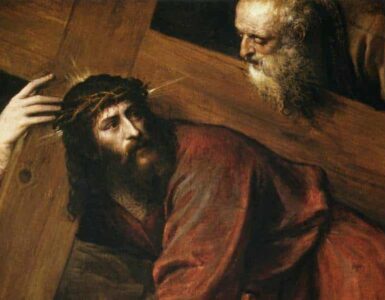
Jesus tells us very clearly in the Gospel of Matthew (10:37-42) that if we love anyone or anything more than Him, we are not worthy of Him, and if we do not take up our cross and follow after Him, we cannot be His disciples. If we find or discover our lives in the sense of achieving worldly fulfillment, we risk losing everything, but if we lose our lives in the sense of remaining focused on the life to come, we will gain all the joyful wonders and blessings of eternity that God has in store for us. As St. Paul instructs us in the Letter to the Romans (6:3-4, 8-11), we must think of ourselves as dead to sin and living for God, for in this way we will receive newness of life in Christ. Moreover, we will also be blessed for helping other people in their efforts to grow in holiness. As Our Lord says, we will be rewarded for showing kindness to His servants, even for something as simple as giving someone a cup of cold water in His Name. In Second Kings (4:8-11, 14-16) the woman and her husband who offered hospitality to Elisha the prophet were greatly blessed for their kindness, for the Lord never forgets the good that we do. God is love, and in order to live as His children, we must do our best to love Him and our neighbor, doing whatever it takes to enshrine this as our highest priority.
With all of our day-to-day responsibilities, goals, and desires, it’s easy to lose sight of what we’re supposed to be about, so—much as Ned did with Willy—God may allow us to be splattered with spiritual mud from time to time in order to help us get back on track. For example, we may become obsessed with a project we’re working on, to the point where we overlook the needs and feelings of the people around us, or fail to respond to their legitimate requests for our time and assistance. If so, God may “splatter” us with mud by allowing us to experience all sorts of interruptions and annoyances and problems; these things can be His way of reminding us that our schedule isn’t sacred, and that what matters isn’t whether our desk is cleared at the end of the day, but whether we’ve responded in a Christ-like way to the people who need our help. Perhaps we’ve become a little too proud or cocky of late, and have gotten into the habit of patting ourselves on the back for our achievements and of comparing ourselves very favorably to other people. If so, God may splatter us with mud by allowing us to experience great embarrassment or to make an incredibly stupid or costly mistake; these things can be His unpleasant but necessary ways of reminding us of the vital importance of humility. Maybe we’ve allowed our faith to become weak and flabby, or have let our pursuit of money and pleasure encroach upon the time and energy we used to give to God. If so, the Lord may not just splatter us, but gently push us into the mud by causing everything to go wrong, and by allowing all our achievements to dry up and having everything we rely upon disappoint us. This sort of shock therapy is sometimes the Lord’s most effective way of reminding us that we are utterly dependent upon Him, and that if we’re not serving Him, we’re missing the whole point of human existence.
Baptism gives us the promise of eternal life, but if we’re to collect on this promise when we die, we have to do our share in working for God’s Kingdom in the meantime. This means rearranging our schedule in whatever way is necessary to give us time for attending weekend Mass and praying each day. It means being grateful for God’s blessings and being generous in sharing them, rather than complaining about what we don’t have or acting in a selfish manner. It means learning to give a higher priority to people than to things, and being open to God’s will even when it isn’t something we’d choose for ourselves. It means praying not only for ourselves and not only when we need something, but also praying for God’s glory and the well-being of others—including people we dislike and people who are different from us. It means giving other people the benefit of the doubt, and forgiving them when they hurt or disappoint us. It means sometimes saying “yes” when we’d rather say “no,” and contributing to charity and getting involved in our parish and neighborhood. It means beginning each new day not with the question “What do I need or hope to do today?,” but rather, “Lord, what do You want me to do today?”
Life is not just a vacation, but also a sacred duty and a pilgrimage; earth is not only a playground, but also a workshop; discipleship is not merely a free ticket into Heaven, but a promise to do our part as genuine and committed followers of Jesus. If we are to be worthy of Him, we must welcome those who come to us in His Name; if we are to find our lives in eternity, we must spend them wholeheartedly in His service here and now. The Lord is calling each one of us, and answering His call is the greatest and most wonderful and most important thing we can ever do.

 Msgr John Kasza
 Deacon Donald Cox
 Deacon Kurt Godfryd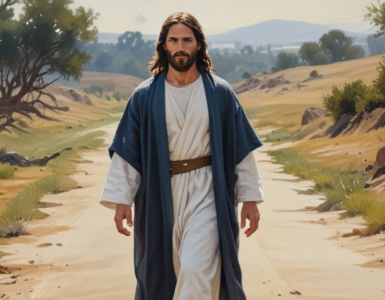
 Fr Dino Vanin