
 Fr Joseph Esper
We commonly think that experts or professionals know everything about their profession, and thus simply “do” their tasks, without needing to prepare for or think about them. In fact, many times the opposite is true; experience has taught professionals the importance of careful preparation and of not taking short-cuts. For instance, when the Detroit Grand Prix was held at the beginning of this month, the drivers—including the winner Kyle Kirkwood—didn’t just get into their racing cars without preparation, relying on their professional skill to see them through; no, they practiced the course earlier, and carefully checked over their cars, making sure everything was just right. In the field of medicine, the best doctors and surgeons are the ones who’ve mastered all the basic techniques, no matter how simple, and who keep up-to-date on new procedures. Members of a symphony orchestra don’t just sit down when it’s time for a concert and begin playing; even after hours of rehearsal, they still take time to warm up and tune their instruments. An actress will remind herself to watch for her cue and to pause in the right places; a professional baseball player like Detroit Tiger Riley Greene will remind himself to look for his pitch and then meet the ball squarely when swinging the bat; an executive about to give a presentation before the board of directors will remind himself to stay calm, avoid rushing, look his audience in the eye, and thus make a good impression.
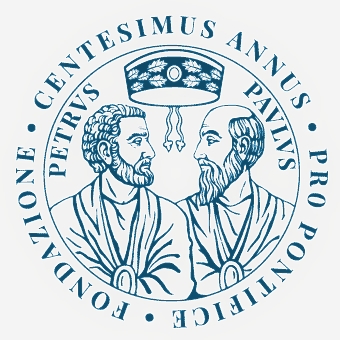
Professionals aren’t the ones who can safely ignore the basics; they’re the ones who have mastered them and who, in some ways, pay the most attention to them. Success or greatness comes from faithfulness to basic principles. This idea is especially true in regard to faith. On June 29th, we honored Saints Peter and Paul, the two greatest apostles and the two greatest leaders of the early Church. Because they were such great saints, we might wrongly assume they knew everything they needed to, that they had all the answers, never had any doubts or problems, and were easily able to handle everything themselves. Just the opposite was true. Because they were so holy, they—more than anyone—were aware of their complete dependency on God. Relying on God, even as we make our own best efforts, is one of the basics of our faith. The closer we come to Jesus, the more we realize our need for Him.
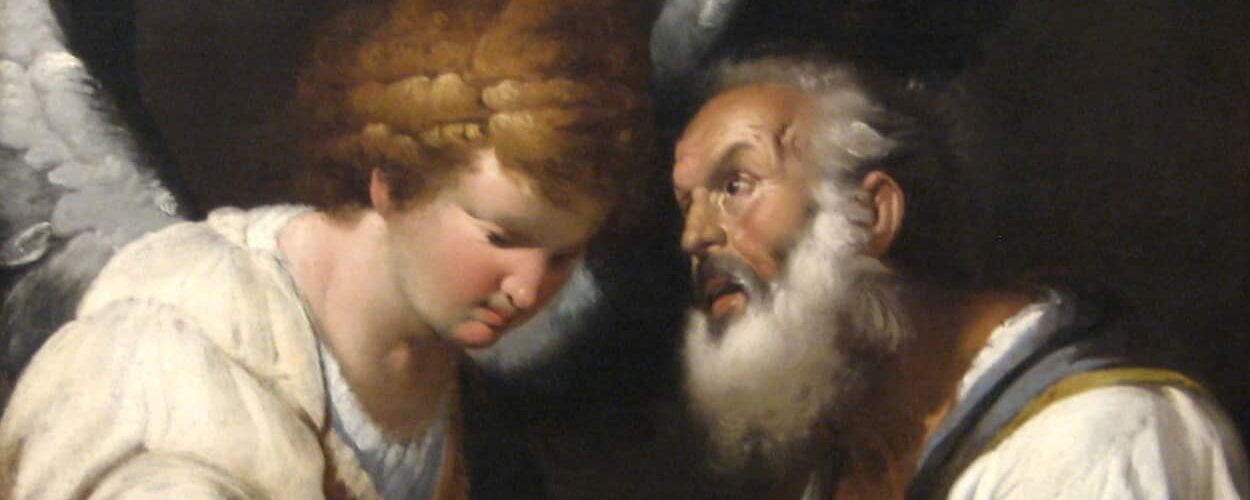
Scripture reminds us of our complete and ongoing need for God and how this was certainly true for Peter and Paul. The Acts of the Apostles (12:1-11) describes how Peter was arrested and imprisoned just before the Jewish feast of Passover by King Herod Agrippa; this would have been about fourteen years after the death and Resurrection of Jesus. Just as the Lord had been put on trial, condemned, and executed, so King Herod intended to do this also to the leader of the apostles. When Jesus had been arrested, His followers didn’t trust in God; instead, they unsuccessfully relied on their own strength, and ended up running away in fear. Peter in particular had insisted he would never deny the Lord, but in his moment of weakness, that’s precisely what he did. This time, however, the Church immediately turned to God in fervent prayer, and He responded. His angel had to give precise instructions to Peter, much as an adult would instruct a child (“put on your belt . . . your sandals . . . your cloak”); this shows that Peter was not a swash-buckling hero able to take care of himself—but he was able to obey God, and this is what mattered.
St. Paul (2 Timothy 4:6-8, 17-18), while reflecting on his years of ministry, said “I have competed well, I have finished the race, I have kept the faith.” However, he acknowledges that this was achieved through God’s power, not his:
The Lord stood by me and gave me strength, and The Lord will rescue me from every evil threat and will bring me safely to His heavenly kingdom.
Thus, the closer Paul came to God, the more he learned to place his trust in Him. In the Gospel of Matthew (16:13-19), when Peter professed his faith in Christ, Jesus called him “Rock”—a source of strength and leadership for the Church. As we know, Peter didn’t always live up to this—particularly when he denied knowing Jesus after the Lord’s arrest—but when he did rely on God, he was a powerful and effective leader.
Many prophecies by various saints and mystics over the centuries have foretold a future time when the world and humanity would be in great distress; even the Church would be terribly afflicted and apparently on the verge of destruction. From a human standpoint, all will appear lost or beyond any hope of repair—but then God will intervene powerfully and miraculously, saving His people and renewing and exalting His Church. Saints Peter and Paul will supposedly play an important role in this process. According to a great prophetess or visionary who lived some 200 years ago, Blessed Anna-Maria Taigi, during a future conclave to elect a new pope, Saints Peter and Paul will themselves come down from Heaven and extend their hands toward the gathered cardinals, with rays of light flowing out and enveloping the one chosen by God—a great future pope who will help restore the Church and society, ushering in a golden age of peace, prosperity, and religious unity.
Will this prophecy one day be fulfilled? At this point, we have no way of knowing for sure; what is certain is that the world cannot be renewed and blessed solely through human efforts. Everything depends on the grace of God. Saints Peter and Paul learned this lesson, and so must we. In practical terms, this means taking the time to pray for God’s guidance whenever we have an important decision to make. It means a willingness to grow closer to God and to deepen our faith, instead of merely being complacent about our religion. Relying upon the Lord means having a constant awareness that we’re sinners in need of His mercy; it involves practicing virtues, doing good deeds for others, trying to have proper priorities, rejecting the false values of our society, and letting God be at the very center of our lives.
We can’t treat faith as something secondary, as something to be achieved without any real effort on our part, or as something we can handle easily enough on our own. We need God’s grace to make our efforts successful. As the lives of Saints Peter and Paul demonstrate, the closer we come to God, the more we should realize our dependency on Him.

 Michael Baglino
 Michael Vacca