
 Fr Joseph Esper
Once there was a local church which decided to undertake an evangelization campaign, in which all its members would try to bring more people to know Jesus. Special pamphlets or tracts were printed, containing testimonies of faith and passages from the Bible; the idea was for parishioners to give these to the people to whom they were witnessing. One of the congregation’s members was a young man named Jim, who—as a boy—had been labeled “learning disabled”; as a result, Jim had never been taught to read or write. He didn’t want to be left out, so he asked for some of the pamphlets, too. The parishioners, not wanting to hurt his feelings, gave him some, but didn’t expect anything to come of it, since he was socially inept and not even able to read. However, Jim kept asking for more pamphlets, and over the following year he ended up bringing more people to Christ than almost the rest of the parish put together. His approach was a simple one: every time he went up to a stranger, he would say in his slow, slurred voice, “Hi, my name is Jim. I can’t read. Would you please read this to me?” Almost everyone would read the pamphlet aloud at Jim’s request, and many of them were touched by its message (Illustration Digest, Nov. 1996, p. 13).
This is a wonderful example of how God multiplies our small gifts when we give them with generosity and trust. Jim could never have been another John Paul II or another Billy Graham—but in his own simple, limited way, he accomplished great things. Perhaps the reason God doesn’t perform even more miracles in the world is that we don’t give Him the opportunity; too often we put limits on what we’re willing to let Him do. If instead we can honestly say to God, “Lord, I don’t have very much to offer, but what I do have, I give to You wholeheartedly,” He will surprise us and bless us, and others, in ways beyond our imagining.
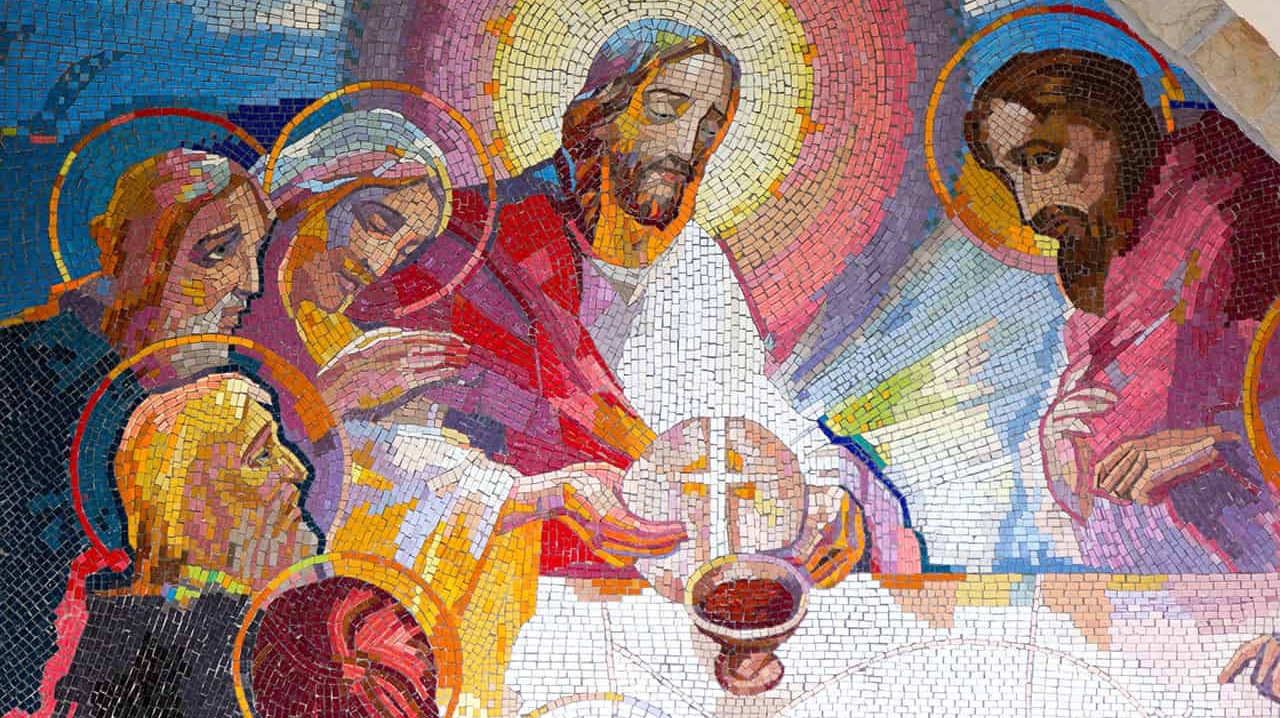
There have been priests and other preachers who’ve tried to explain away the miracle in the Gospel of Matthew (14:13-21), saying, “When the people saw that Jesus and the apostles were going to try to feed everyone with only five loaves and two fish, they were so moved by this act of generosity and trust that they brought out their own food which they were secretly carrying, and shared it so that everyone had enough, instead of selfishly hoarding it; that was the real miracle.” However, this nice, understandable, rational explanation is not what the Gospel passage says. Jesus actually provided enough food for the entire crowd from just the five loaves and two fish—enough for everyone to eat, and enough to fill twelve baskets with the leftovers (whereas if the people had provided the food by sharing what they brought, they would have kept the leftovers for themselves). We should never doubt God’s ability to work miracles, even when our resources seem completely unequal to the task. All He asks is an honest spirit of trust and generosity on our part. Through the words of the prophet Isaiah (55:1-3), the Lord calls us to come to Him if we are thirsty or hungry—not just in a physical way, but also spiritually and emotionally; He will provide for those who have faith, for doing so is part of the everlasting covenant or sacred agreement He made with King David and his descendants. St. Paul (Romans 8:35, 37-39) promises that absolutely nothing can separate us from Christ’s love—not hunger or thirst, trial or distress, persecution or danger, or any other form of suffering; no matter how impossible the situation or how great the challenge, God will sustain those who place their hopes in Him.
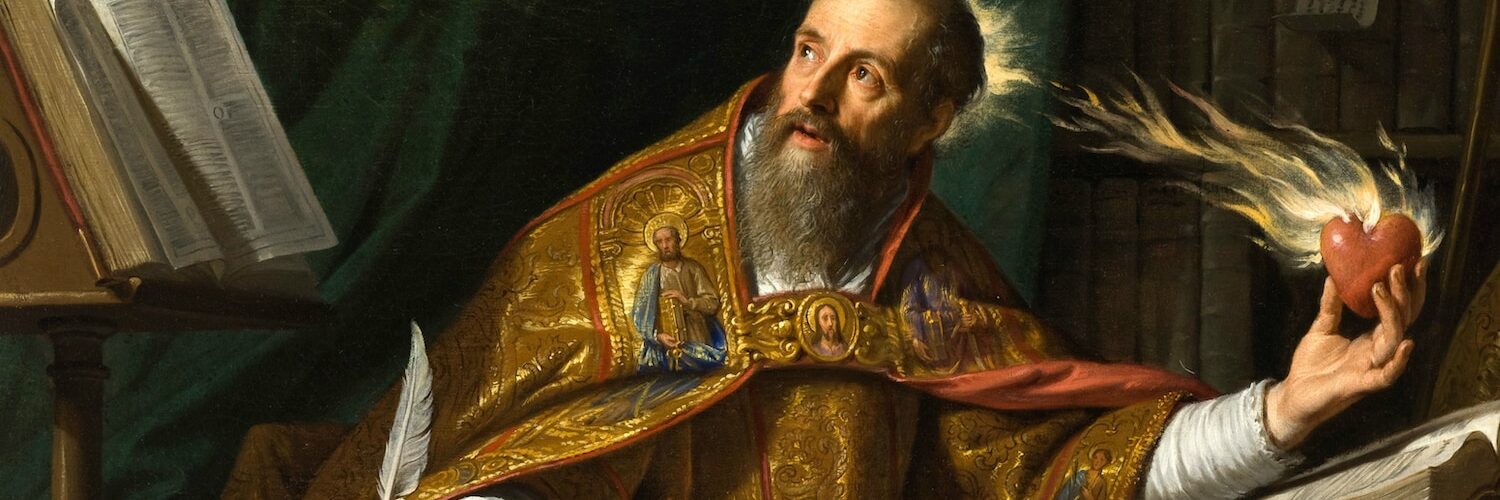
One of the greatest saints in the Church’s history—one who touched the lives of many people by his dramatic conversion, his profound writings, and his inspired leadership as a bishop—was St. Augustine, who lived some 300 years after Christ. However, Augustine would never have become a saint if it weren’t for the unending prayers and sacrifices of his mother St. Monica, who never once gave up on her son when he was living a sinful and spiritually deluded or misguided life. Monica, through her gentleness and patience, eventually helped convert not only her son Augustine, but also her ill-tempered husband Patricius and his cranky mother. As many people know, as a simple wife and mother, Monica achieved great things; what usually isn’t remembered is that, when she was growing up, she was greatly influenced by an old family servant, who taught her to be virtuous, corrected her faults, and gave her an example of genuine Christian faith. This elderly servant didn’t preach the Gospel as a missionary or work miracles; we don’t even know her name—but by doing the little bit she could in the situation God chose for her, she set into a motion a chain of events which has been an ongoing source of blessing for the Church.
So it is with those who trust in God. Sometimes we may wonder, “Why should I go to Mass today—what will it matter if I miss this one time?” Maybe today is the day you’ll hear something in the homily which you mention in passing to someone else; you might not think the words or ideas are all that important, but they might be just what that person needs to hear, even to the point of changing his or her life. Sometimes we may think, “I don’t know very much about parish activities and projects—so why should I join this group or attend this meeting?” Maybe someone will say something at the meeting which clicks in your mind, inspiring an idea which would never have occurred to anyone else; when you mention it, your idea is enthusiastically accepted, and proves to be a great success, benefiting the parish and community in a lasting way. Sometimes we insist, “I’m not really knowledgeable about the Bible, and I’m certainly not holy—so how can I be expected to share my faith?” Maybe you have a co-worker or neighbor going through a time of crisis; this person is turned off by slick television evangelists and pushy door-to-door missionaries, but would actually be receptive to your humble, hesitant, but genuine effort to express support and your sincere offer to pray for and even with him or her.
Almost every genuine Christian sooner or later experiences self-doubts; God allows these to keep us humble. The important thing is that we do not doubt Him—and this includes not doubting His ability to use limited, sinful, imperfect people like us to help bring about His Kingdom. So many times, God wants us to step on the gas pedal while He does the steering—and so often we instead fearfully slam on the brakes. We’ll never get very far that way. Instead, we must thank God for the gifts He’s given us, and allow Him to multiply them for the benefit of others. Feeding a vast crowd with only five loaves and two fish is nothing compared to what Jesus can do with a loving and trusting heart. When the day comes that your faith, my faith, and the faith of every other Christian is strong enough, God will change the world.

 Fr Charles Irvin
 Paul Suski
 Fr Dino Vanin
 Deacon Kurt Godfryd