
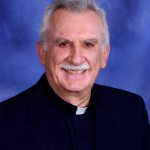
 Fr Dino Vanin
Walking through the woods in late April, with my eyes strained to spot spring mushrooms, I was stunned by the shy yet imposing beauty of tiny yellow violets. Aren’t violets supposed to be blue? Those little, insignificant, fragile yellow flowers were claiming their existence. They were just there. They could not account for their existence, as couldn’t every other bud, future leaf, tree and animal in the forest. Come to think of it, neither could I, or any other human being. From those tiny plants to the most important human being, to the largest star, all unable to justify their existence. Yet, all called to life by our Creator.
For me it was a very humbling experience manifesting the power and the majesty of God’s design so evident in those small plants that were supposed to be of a different color. Their insignificance underscores our own insignificance. Apart from the tears of those who love us and a sigh of relief from those who cannot stand us, nothing will change in this world as we die.
This is the same insignificance revealed by the parable (Mt 18:21-35) given us on this 24th Sunday in Ordinary Time. We owe God a huge amount, i.e., not only our very existence, but also the noble ability to transcend ourselves, to be called to love, to become like him, to interact with him, to become part of him. What other people owe us is a negligible amount by comparison.
Today, we are invited (or rather urged) to grasp as much as it is humanly possible, what God wants of us. We are urged to look at the crucifix, to see what the Father had to do to change our insignificance into total significance. That is the huge amount we owe God. We should never forget that, not just because it is extremely important, which, of course, it is, but also because our salvation depends on it.
There is no way we can pay him back. What can we reasonably do to pay back for Jesus’ blood? So, once we realize that we should, but we cannot pay God back in full, let us remember that even if he seems to accept our empty promises of payment, our promises remain totally impossible to keep. At the same time, we shall also remember that any of our brothers’ and sisters’ offense we refuse to forgive is totally insignificant when compared to what we owe God. Say: $1,000,000 vs. $10.
Any debt owed us is payable, is forgivable as it is incurred by other frail human beings. But it is we who, in our bruised ego, might make it impossible for our brothers and sisters to repay us. Even if blinded by our pride and unmindful of our insignificance, we must not “choke” them; we must heed them when they cry: Be patient with me, and I will pay you back.
By throwing them into the “prison” of isolation, of ruined reputation, of avoidance and biased interpretation of what really took place, we would make it impossible for them to pay their debt to us. By refusing to forgive them, foolishly, we would inflate their debt to be equal, (or even bigger) than our debt to God!
But Jesus cuts right through our foolishness; our insignificance remains, no matter how enormous the wrong done to us appears our eyes. And most importantly, Jesus reminds us of how the Father in heaven will not be forced into changing his nature, which is total, infinite love and mercy. If our Heavenly Father, who is total love, wants to cancel our debt, which he does, he has the right to cancel the debt of everyone else, which he does. But he also has the right to demand from us, as a binding condition, to cancel the debts that others owe us.
God is making us an offer we cannot refuse. If we want to enter his Kingdom, we have no choice but to forgive others from the bottom of our heart. In other words: only if we become love can we be part of God who is love. Only if all resentment, all vengefulness, all unwillingness to forgive are uprooted, can we become fully divine. The Father’s intention to forgive and to make equally divine all his errant children, including ourselves and those who wronged us, should not be mistaken for the rightful punishment that those who break the law should expect for their crimes.
One final note: even if as far as we can tell, by divine grace, we are reconciled with everyone, we should be deeply disturbed as we approach this heavenly banquet. It cannot taste right until we know that we have done more than our share to foster reconciliation and forgiveness within our community of faith. We ought to be deeply disturbed until love replaces all traces of resentment and unforgiveness. Our Heavenly Father wants this to happen before the final, endless banquet can be enjoyed by all his children.


 Vincent Ryan Ruggiero

 Jennifer Borek
 Deacon Steve Greco