

 Fr Dino Vanin
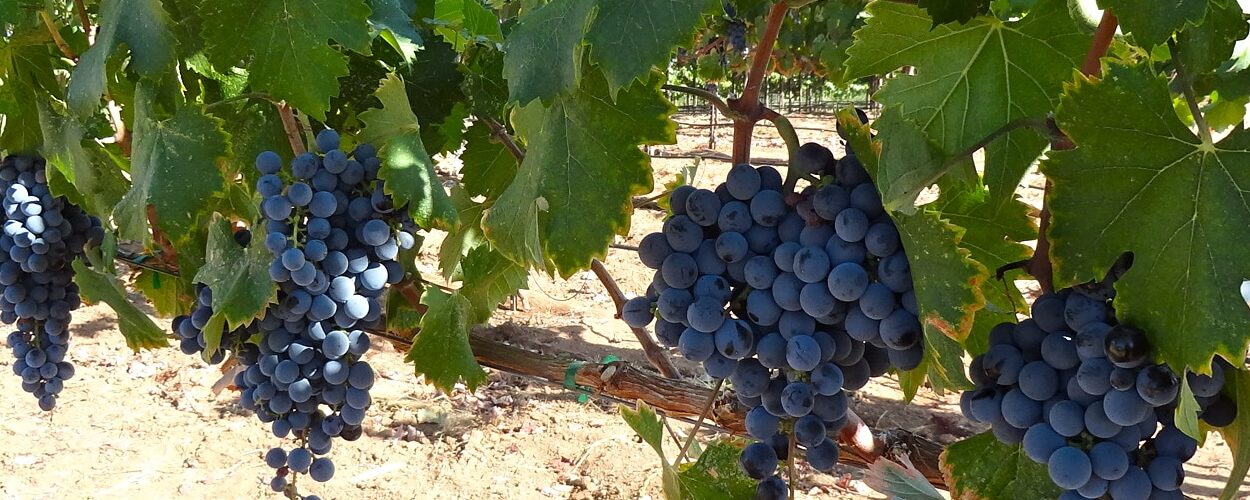
On this 27th Sunday in Ordinary Time, the template of God’s Word deals with the very common heartbreak of unreciprocated love. As we can clearly see from the first reading (Is. 5:1-7) and the gospel passage (Mt 21:33-43) God himself laments this experience of unreciprocated love, of a broken heart, not once, not twice, but repeated times throughout salvation history. The analogy of the vineyard fails to hide God’s sadness and frustration:
What more was there to do for my vineyard that I had not done?
Isaiah 5:4
Since this parable was first addressed to the chief priests and the elders of the people (Mt 21:33), I realize that God’s expectation of his priests, deacons and bishops is higher than his expectation of the people entrusted to their spiritual care. We, in the ranks of deacons/priests/bishops, must be so in love with Jesus as to do our very best to make sure that all of you, too, fall in love with Jesus and reciprocate his love faithfully and wholeheartedly.
Now, if all of us (bishops, priests, deacons, religious and laity) pause to consider the incredible extent to which God the Father went to assure our loving response, we will never engage less than our total self in this effort of reciprocating his love. Here is the extent of the Father’s emotional investment in us:
Finally, he sent his son to them, thinking, ‘They will respect my son.’
Matthew 21:37
One day, I was sitting on a bench by the YMCA pool in Royal Oak, MI, waiting for my swimming lesson to start. An older woman on the same bench struck an idle conversation with me. However, once she learned that I was a priest, she said: “I am a former Catholic. I left everything because I cannot believe that Jesus is God.” Pressed by me to be more specific, she continued: “It is impossible; it is unthinkable; it makes no sense for God to care so much for us as to become one like us.”
I wonder how many “believers,” how many “churchgoers,” deep down, live as if God’s love for them were considerable, but “reasonably limited.” My dear brothers and sisters in Christ, not only does God care so much for us to become one like us, but he goes to the very ultimate limit of giving up his only Son amid excruciating torments to prove his love.
If a prince falls in love with a commoner, the tabloids extol the blindness of true love and turn it into a rag-to-riches story, a joyous fairy tale. In the case of God the Father and Jesus his Son, falling in love with us, the Bible, the most famous book in the world had to be written. As the story unfolds, why is it that God is so determined to leave no stone unturned until we respond with love to his love entreaties?
Anyone who has ever fallen in love, and still loves someone special, knows exactly why God is so persistent. Listen to these lyrics: There ain’t no mountain high enough Ain’t no valley low enough Ain’t no river wide enough to keep me from getting to you… The popular song by Nickolas Ashford & Valerie Simpson (1966) insists. This is truer of our God!
St. Paul, who writes to us in our second reading (Phil 4:6-9) knows all about God falling in love with him, and how God pursued him until he reciprocated. It is not a coincidence that St. Paul is one in the ranks of priests/bishops to whom this parable of the tenants and the vineyard is first addressed.
Today, we find out from St. Paul something heartening and comforting: by responding positively to God’s love, we gradually become anxiety-free. We begin to trust blindly the One Who sacrificed his only Son to make us his. Furthermore, by reciprocating God’s love, we can also divert our energies and efforts away from the rat race of this world and from all the pressure that self-interest imposes on us. Eventually, it would free us to focus instead on whatever is true, whatever is honorable, whatever is just, whatever is pure, whatever is lovely, whatever is gracious. (Phil 4:8)
Thus I, one in the ranks of priests/bishops myself, find hope in the transformation that God’s love brings about in whomever is docile and humble enough. I wonder, though, if I will ever be able to tell you what St. Paul recommends today: “keep on doing what you have learned and received and heard and seen in me.” (Phil 4:9)
At any rate, as we promise to pray for each other, to support each other, to find enough courage to reciprocate God’s love for us, we resolve also to do our very best to work with the Spirit of the Lord Jesus to bear the fruits that our divine Landowner expects of us as signs of our love for him. And, in case someone forgot, the gifts of the Spirit are. …love, joy, peace, patience, kindness, generosity, and faithfulness, (Gal 5:22)


 Fr Joseph Esper
 Deacon Kurt Godfryd
 Fr Charles Irvin