
 Fr Joseph Esper
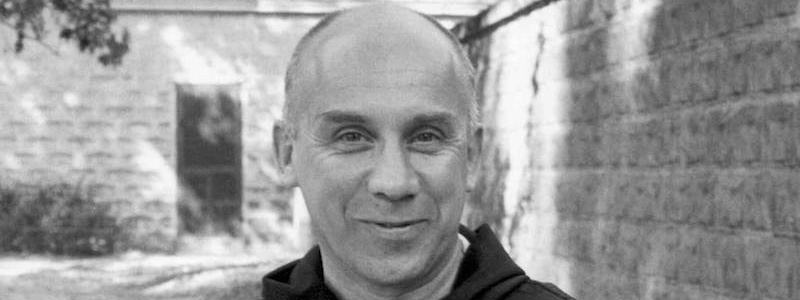
When I was in the seminary in the 1970s, two other seminarians and I journeyed down to the well-known monastery of Gethsemane near Bardstown, Kentucky, run by the Cistercian Order—more commonly known as the Trappist monks. The monastery of Gethsemane is perhaps most famous for being for many years the home of the great Catholic spiritual author and monk Thomas Merton, whose writings, especially his autobiography The Seven Story Mountain, made him an international celebrity in religious terms. I didn’t know much about him, but his great reputation made him, in my mind, almost a distant and other-worldly figure. Then, while on retreat at Gethsemane, I read something he wrote about how, one day, when the bell for lunch was ringing, he was so hungry he wanted to run through the wall as a short-cut, instead of peacefully processing into the refectory, or cafeteria, as usual. This simple admission on his part made him seem real to me, and someone to whom I could relate.
Thomas Merton had been orphaned at the age of sixteen. Lacking parental discipline and guidance, he was attracted by radical ideas, and became a Communist at the age of twenty even as he was living a very worldly and sinful life. Three years later, however, while traveling alone in Europe, he underwent a conversion experience one night in his room. As he later wrote, “The whole thing passed in a flash. . . . I was overwhelmed with a sudden and profound insight into the misery and corruption of my own soul. . . . I was filled with horror at what I saw . . . and my soul desired escape . . . from all this with an intensity and an urgency unlike anything I had ever known before.” Falling to his knees, he truly prayed for the first time in his life, begging God to free him from evil and show him the way to Heaven. As a result of the discernment that followed, Thomas Merton, at the age of twenty-six, entered the monastery of Gethsemane and remained there as a monk for the rest of his life (Mark Link, S.J., Illustrated Sunday Homilies, Series I, Year A, p. 105).
Merton’s life story inspired many people, and his conversion is precisely the sort of response Jesus seeks from every sinner. God’s mercy and blessings are available to everyone, but can only change the lives of those whose hearts are open. As followers of Jesus, we must live in a way that calls sinners to genuine repentance, spiritual freedom, and eternal happiness.
Today lots of people claim, “I’m spiritual, but not religious.” However, this idea is foolish and shortsighted; Jesus established the Church, in part, because human nature is weak and uncertain, and needs some degree of rules, ritual, and structure—otherwise, it’s too easy for the devil, or our own sinful nature, to deceive us. The danger of religion, however, is that we might place so much emphasis on these necessary things that we lose sight of what they’re supposed to safeguard and promote: a humble and loving relationship with God and our neighbor. Many of the chief priests and elders had fallen into this trap; that’s why Jesus (Matthew 21:28-32) confronted them with His parable of the two sons; only the one who repented of his initial disobedience was pleasing to God, not the one who said all the right things but didn’t follow through on them. As the Lord proclaims in the Book of the Prophet Ezekiel (18:25-28), sinners who repent will be saved, no matter how great their previous wickedness. The religious leaders in Our Lord’s day had lost sight of this truth, and so Jesus had to remind them that tax collectors, prostitutes, and other notorious sinners were actually becoming holier than they were. We must achieve this type of holiness, St. Paul (Philippians 2:1-11) says, by “humbly regarding others as more important than [ourselves]” and by looking out for the interests of other people, not just our own.
A college professor was appalled at the poor writing skills of her freshman class, almost all of whom had trouble with simple grammar and correct sentence structure and punctuation. There was one girl, however, who had seemingly mastered all these rules, and the professor asked her to explain to the class how she made her writing so clear and concise. The student simply said, “I don’t claim to know all the rules of grammar, especially about how to use commas; I just put them in wherever they make the sentences sound better.” (Homily Helps, St. Anthony Messenger Press, September 30, 1984)
Just as memorizing all the rules about proper punctuation doesn’t count for anything if they don’t improve one’s writing skills, so following all the rules and regulations of our religion don’t achieve anything worthwhile unless we are actually growing in God’s grace. To say “yes” to God but not follow through is a form of hypocrisy and disobedience; to say “no” to God but then repent and do what He asks is in fact a moment of grace and blessing, and a reason to give thanks and rejoice—whether this moment of grace occurs in our own lives, or in the life of some other sinner or even some lost soul. The ideal situation, of course, is to say “yes” to God all along and then follow through on our commitment, whether in big things or little things, and never require a change of heart and sincere repentance—but most people, except for some of the saints, never quite achieve this. As long as we’re sincerely striving to come closer to God, despite our many moral failures and setbacks, He will be pleased with us.
We might think of our lives as writing a love letter to God, and our sincere prayers—whether we’re saying “Yes, Lord,” or “Show me the way, Lord,” or “Tell me what You want me to do, Lord”—are like the commas or punctuation that help make everything sound better and help our lives become better, even as we strive to give a good example to the sinners around us. There are people like Thomas Merton who begin their adult lives by going in the wrong direction, but are then convicted of their sins and led to repentance by God’s grace—and quite often the prayers of their loved ones play an important role in this process. Jesus asks each of us to pray for the conversion of sinners, whether they’re like the first son or the second son in His parable, and the more we offer our prayers and sacrifices for this intention, the closer we ourselves are to the eternal happiness of God’s Kingdom.

 Msgr John Kasza
 Fr Mario Attard OFM Cap
 Fr Dino Vanin