 Fr Joseph Esper
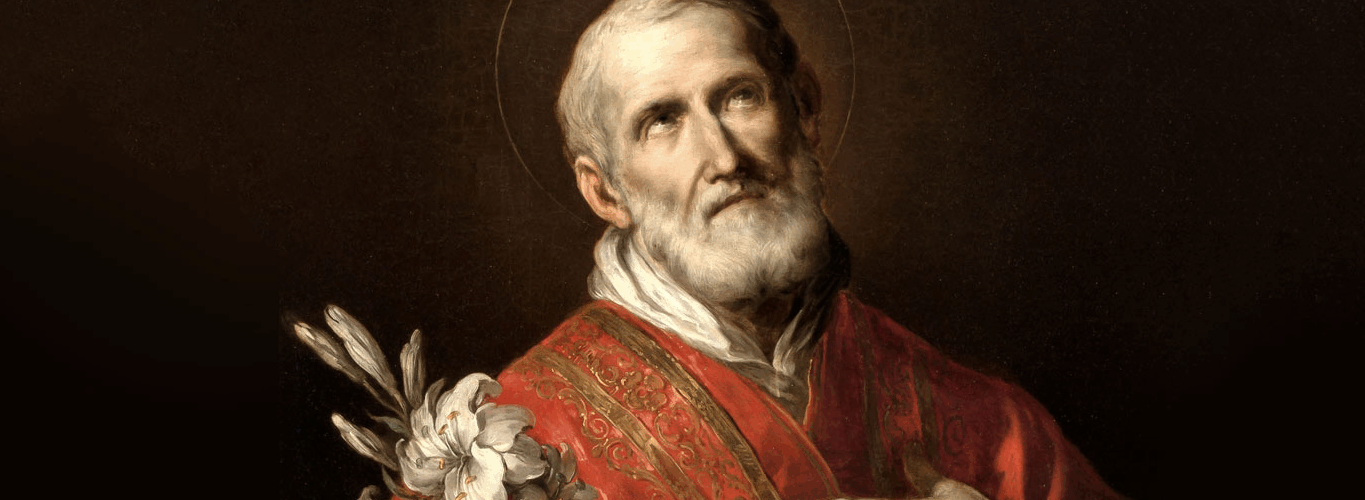
The Italian priest St. Philip Neri lived in Rome in the middle of the 16th century; because of his cheerful, fun-loving personality, and his belief that holiness isn’t just for priests and nuns, but is meant for everyone, he was very influential and attracted a wide following. One day a student came to him and asked for alms. The saint cheerfully gave him some money, while inquiring what it was needed for. The young man replied, “I’m studying to become a barrister” (another term for lawyer). To this, Philip said, “And then what?” The student proudly explained, “I’ll develop a reputation as a skilled lawyer through my persuasive tongue.” “And then what?” the saint asked. “Why, I’ll make a very good living for myself and attract a beautiful woman for my wife.” “And then what?” the saint continued. “Well, I suppose I’ll become one of the leading men of the city, and my family will be greatly respected.” “And then what?” Father Philip asked. “After that, I’ll be able to retire and live out my remaining years in comfort.” “And then what?” asked the saint. At this, the student’s face became sad, and he responded with some reluctance, “Well, of course, at last I must die.” To this, St. Philip asked one last time, “And then what?” The young man had no answer, and turning away in silence, he went off with downcast eyes.
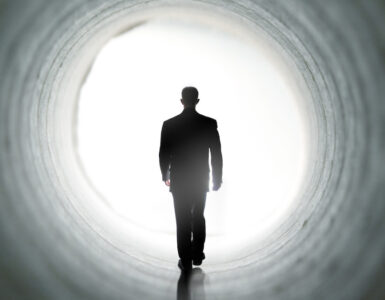
St. Philip’s final question haunted him: what would come after death? The reminder that, sooner or later, he would be judged on how he spent his life stayed with him; he couldn’t get that challenging and demanding thought out of his mind—and so he changed his life and priorities, and instead of putting worldly success first, he made holiness his most important goal (Rev. Francis Spirago, Anecdotes and Examples for the Catechism, p. 9). If we were to talk to Jesus face to face, sharing with Him all our hopes and dreams and plans about our life decisions and careers and retirement, He might very well smile at us with love and ask, “And then what?” We are put here on earth to become holy, wise, and loving—and all these things require us to remember that our true goal must be eternal life in Heaven.
As a pastor, I have to admit that, if the rich man mentioned in the Gospel of Luke (12:13-21) was one of my parishioners, and I was paying him a pastoral visit, I might be so tempted to ask him for a large donation for the parish that I’d forget to remind him about the need to prepare for judgment by storing up treasure in Heaven. Ideally, of course, I’d bring up both subjects, and he’d respond wholeheartedly to each suggestion. Whether we’re preaching the Gospel, or listening to it, it’s all too easy to let our very real concerns over money and heating bills and special collections overshadow what really matters. That’s why the readings for the 18th Sunday in Ordinary Time can serve as a needed reminder, and as a call to conversion. As the Book of Ecclesiastes says, it is a foolish and even tragic waste of life to devote our time and energy primarily to building an earthly fortune that we can’t take with us, let alone use or enjoy, once we die. We have to think in bigger terms than just this earthly life; as St. Paul teaches in the Letter to the Colossians, we must seek what is above and avoid that greed which—for so many people—becomes a form of idolatry. This was the rich man’s sin. His enjoyment of God’s blessings became almost an end in itself and caused him to forget or ignore the God Who gave him the blessings in the first place. As a result, he neglected his spiritual responsibilities, leaving him completely unprepared for death and judgment.
In the museum at Greenfield Village, there’s a huge steam locomotive dating from the early days of trains and railroads. A sign explains the complicated machinery, listing the boiler pressure, size and number of the wheels, the weight, the horsepower, and so on. Then the sign ends with a very significant statement: 96% of the power generated by the boilers was used in moving the locomotive itself, and only 4% was left to pull the train (Pulpit Resource, June 1990, p. 36). This, of course, was an incredibly inefficient or wasteful use of power, and all modern engines—whether in trains, airplanes, or automobiles—are much more energy-efficient. However, that same terribly out-of-balance ratio might apply to many people when it comes to devoting themselves to all their duties, dreams, and enjoyments of this world, as opposed to preparing themselves for the world to come. Efficiency experts and business consultants often teach executives to prioritize—that is, to figure out the most important thing their job entails, and then build their schedule around that duty, to make sure they have enough time and energy to fulfill it to the best of their ability. That’s good advice for us, too.
This certainly doesn’t mean we should start neglecting our worldly duties and forsake those who depend on us by living like hermits; it’s unrealistic for a wife and mother to say, “I’m going to begin spending at least five hours every day praying and reading the Bible,” or for a hardworking husband and father to decide, “I’m going to get up for two hours of prayer in the middle of every night, and fast by eating only one small meal every day.” God doesn’t want us to damage our health, abandon those who need us, or give our religion a bad name by acting in an extreme or fanatical way. No, He simply wants us to put our focus on Him, and then respond to His guidance as to how we must live in this world without truly being a part of this world. Certainly, this means praying every day, coming to Mass every weekend, and asking for the Lord’s help in all our work and activities. It also means being generous in sharing the blessings we’ve received—and doing our best to obey God’s commandments, especially when they’re difficult or counter-cultural. Little sacrifices, repeated day after day, shape our characters and train our souls to recognize and do what’s right—and that way, when we’re confronted with a crucial choice between this world’s values and those of the Kingdom, we’ll be ready and able to make the right decision.
As St. Philip Neri knew, three little words can help us keep everything in proper perspective: “And then what?” Every time we think about our hopes and dreams, and about our present and future plans and desires, it’s a good idea to ask ourselves this simple question, and then see whether the answer makes us uncomfortable, or fills us with hope and peace. Jesus offers us treasures in Heaven that far exceed anything we could ever hope to have here on earth; it’s up to us to understand what’s at stake and then make the right response.

 William Borst
 Deacon Kurt Godfryd
 Paul Suski