


 Carolyn Humphreys, O.C.D.S.
No music he heard, and no angels he saw
As he lay in his wrappings of linen and straw;
And the ox and the ass could not kneel and adore
For the poor creatures never were angels before.The palace he found was an old cattle stall
With a broken down roof and a windowless wall,
And it looked so ashamed of its spider-worn wood;
But it tried to be heaven, as well as it could.A dull stable lantern that hung dark and dim
Was the small bit of moonlight that flickered on him.
Now it longed to be beautiful, starry and bright;
And it sputtered and wept for the dearth of its light.But a lady of beauty stood over his head.
While she gathered the strewings about for his bed.
And her soul was as sweet as a fresh budding rose
And as white as the fusion of myriad snows.And her hands did not soil this immaculate prize,
Father Leonard Feeney, S.J.
And her breath did not sully the bloom in his eyes.
On her breast sweet and safe could he slumber and nod:
The lily white village maid, Mother of God.
Throughout history, Mary has inspired more men and women than any other woman who ever lived. Long ago, she stood alone. She was the first woman to believe in Jesus. Since then her influence has been phenomenal. As men and women of today follow Mary, they bring the light of Christ to a society darkened by sin.
By imitating Mary, we instill into society the most important change agent it needs—holiness. In doing so we become flames of light in the dark night of degrading, demeaning and individualistic influences. With Mary’s help we follow her lead by striving to draw forth the good in others. She encourages us to live in her light by dressing with dignity, speaking respectfully, maintaining sturdy and sound values, doing little kindnesses and praying daily. We imitate Mary by our good example more than by what we say. We believe the grace of God works through us in difficult situations, even when the graces cannot be perceived.
Through Mary’s intercession, we experience unspeakable grace, exquisite wonder, and profound peace. We are Mary’s helpers as we carry out her primary purpose: to lead everyone to her Son. She is with us during the happy days and the hard days that pass in our lives.
Edith Stein explains how Mary is a mother to us all: “The title of Mary as our mother is not merely symbolic. Mary is our mother in the most real and lofty sense, a sense which surpasses that of earthly maternity. She begot our life of grace for us because she offered up her entire being, body and soul, as the Mother of God. That is why an intimate bond exists between Mary and ourselves. She loves us, she knows us, she exerts herself to bring each one of us into the closest possible relationship with the Lord—that which we are above all supposed to be.” Such a mother desires that all her children be happy.
Our Founding Fathers
Christian happiness can be partially explained by the pursuit of happiness as described by the founding fathers of our country. They defined happiness as more profound than momentary joy, fleeting pleasure, or temporary gratification. They believed happiness was the right to shape one’s life and seek fulfillment by pursuing a life that has meaning, purpose, and a profound state of well being. This was accomplished by personal ideals and beliefs, sound morals, meaningful relationships, the ability to make decisions that benefit long term well being, and living the virtues. The virtues named included self improvement, industry, temperance, moderation, and contributing to the common good.
These virtues show that happiness goes beyond feeling good due to a temporal situation to being good through life long choices. Living virtuously is part of the daily struggle that brings us closer to Mary. We are a mixture of virtues and vices. Each one of us has certain virtues in which we excel and others to develop and use. Since virtues build us up and bring us closer to God, and vices tear us down and distance us from God, we strive to decrease our vices. Mary teaches us that following her Son requires a virtuous way of life. With help from prayer, we seek Jesus in who we meet, what we do and in all the circumstances in our lives.
Mary helps us to grow in virtue. A well known quote from Teresa of Avila emphasizes the importance of growing in virtue through prayer: “I would not want any other prayer than that which makes the virtues grow in me.” She believed that prayer leads to the development of virtue and therefore results in personal transformation. She believed prayer was talking with God as well as being transformed by him.
Captivation
The more we dwell on Mary’s life, the more intriguing she becomes. She was peerless in God’s plan. Mary kept her word when she said, “Let it happen to me as you say.” She never strayed from this resolve. There were no compromises, excuses, or turning away. Her faith reached beyond her understanding all her life. She experienced the highest peaks and lowest depths of motherhood. At the foot of the cross, her faith seemed stretched beyond all limits. Yet she forgave the people who murdered her Son, and gathered all in her motherly sword pierced heart. She had no fear because she experienced God through his love and trusted him completely.
In heaven Mary receives graces from her Son and pours them out on us. She takes us beyond our own strength and infuses in us the desires of great love as she guides us through a barren and strange land that calls forth blind faith. With her, we are drawn into the obscurity of faith where things do not make sense, mystery is common, and life is transformed. Mary teaches us to look, overlook, forget ourselves, give freely, listen, be patient, forgive and be forgiven. To remind us of these assets, we have a favorite picture or statue of Mary nearby.
It is good to have visible signs of Mary in our home so that we are reminded of her presence in, and influence on, our lives. A statue or picture of her in a quiet corner of our home would be a source of peace, reflection and prayer. She can be the symbol of holiness in our domestic church. Her statue or picture would remind us of her faith, which shines like the light from a beacon in our dismal or stormy days. She illuminates the way for us, and beckons us to follow her. Mary takes us by the hand, helps us to understand the true value of femininity in this world, and assists us in being authentic people of God in preparation for the next world.
Woman of Silence
As we grow closer to Mary, we feel drawn, as if by a hidden compass, into silent union with God. Esther de Wall wrote: “Unless I am silent, I shall not hear God, and until I hear God I shall not come to know God. Silence asks me to watch and wait and listen, to be like Mary in readiness to receive the Word. If I have any respect for God, I shall try to find a time, however short, for silence. Without it I have not much hope of establishing that relationship with God of hearing and responding which is going to help me root the whole of my life in prayer.”
Mary’s life was imbued with sacred mysteries. She pondered much in silence. She was, as the title of a spiritual classic by Father John Lynch, S.J. indicates, A Woman Wrapped in Silence. The essence of her life with God was lived in the silent depths of her heart. We should dwell on her silence as she always embraced God’s will. John Paul II wrote about Mary’s silence, “Mary’s example enables the Church to better appreciate the value of silence. Her silence is not only moderation in speech. It is especially a wise capacity for remembering and embracing in a single gaze of faith the mystery of the Word made man and the events of his earthly life. It is this silence as acceptance of the word, this ability to meditate on Christ’s mystery that Mary passes on to us. In a noisy world filled with messages of all kinds, her witness enables us to appreciate a spiritually rich silence and fosters a contemplative spirit.”
As we strive to stand by Mary we believe she stands by us with motherly closeness. She supports our hesitant steps with loving care. Her lantern lights the way of faith as she gently guides us to walk the path of her Son. As we move forward, we sing her minor litany:
Ladder by which we climb to the sublime.
Star by whose bright light we brave the night.
Mirror in which we see eternity.
Key that will unlock the house on the rock.
Tower by which we stand, strong in a strange land.
Rose in whose rustling stirred the eternal word.
Lady of quietness.
Queen of mysteries.
Remember us.


 Fr Mario Attard OFM Cap
 Fr Joseph Esper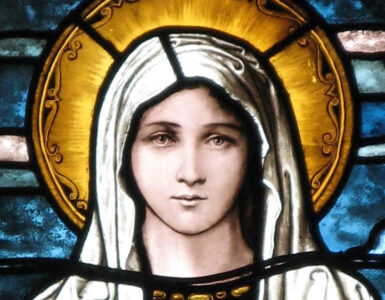

 Deacon Steve Greco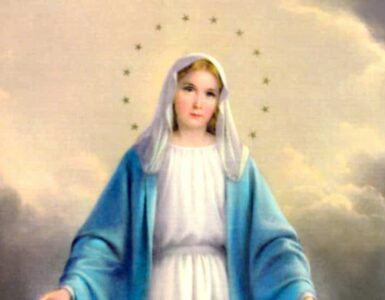
 Paul Suski