 Fr Joseph Esper
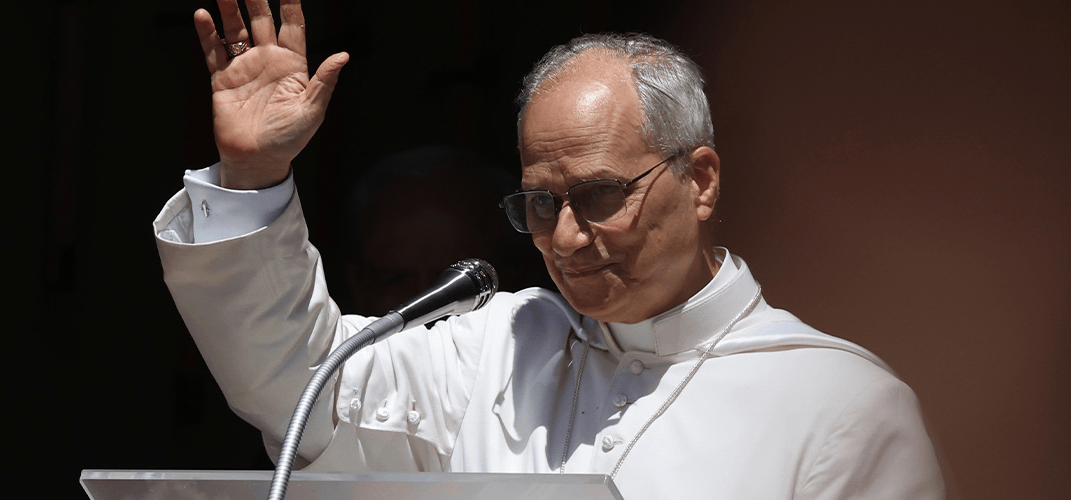
When a newly-elected Pope chooses his papal name, it often means he respects and wants to imitate the most recent Pope who had that same name. Thus, our current Holy Father sees himself following in the footsteps of Pope Leo XIII, who reigned for twenty-five years at the end of the 19th century.
Leo is perhaps best known for his historic 1891 encyclical, or official
teaching letter, Rerum Novarum, Latin for “Of New Things.” The “new things” Leo was referring to were the industrial revolution, capitalism, socialism, strikes by workers, and labor unions. There was a widespread perception that, despite her history of caring for the lowly, the Church was on the side of the rich and powerful, and opposed, or at best ignored, the working class and the poor.
Rerum Novarum changed that perception forever. Leo XIII’s encyclical—which became official Church teaching—strongly upheld the right to private property, and the duty of workers to give their employers a full day’s work in exchange for their pay. On the other hand, however, Leo insisted that workers deserve fair wages and safe working conditions, and are entitled to form labor unions to advocate for and defend their rights.
At that time there were those who believed in or practiced unrestricted
capitalism, such as the American “robber barons,” and others—known as socialists—who believed that justice and equality could only be achieved by abolishing or confiscating all private property. Leo XIII rejected both these extreme positions, and instead charted a middle course, calling for cooperation and mutual respect between owners and workers, and insisting that the government has the duty to intervene when necessary to protect the vulnerable and defend the common good. Rerum Novarum was revolutionary; suddenly the working class believed “the Church is on
our side,” and the encyclical was widely praised by Catholics and non-Catholics alike. It’s a cornerstone of the Church’s teaching on social justice, and most of the Popes since then— including Pius XI, John XXIII, Paul VI, John Paul II, Francis, and now Leo XIV—have developed or expanded its original ideas.
Based on Scripture and the teachings of Jesus, the Church emphasizes what’s called a “preferential option for the poor”—in other words, a
special concern for those who are forgotten, marginalized, or oppressed by society. We as Catholics can be proud of the many hospitals, nursing homes, adoption agencies, orphanages, schools, universities, soup kitchens, homeless shelters, pregnancy aid centers, and social agencies run by the Church. However, it’s not enough to applaud the Church’s efforts; Jesus expects us to get involved personally if and when the need and opportunity arises. It’s only by showing a loving and practical concern for others who suffer while we’re here on earth that we’ll become worthy of living one day in Heaven.
The Church’s teachings on social justice are sometimes controversial, and it is possible to overemphasize them at the expense of one’s personal spiritual growth in holiness—but anyone who ignores or rejects them completely is setting him or herself against the truth proclaimed in Sacred Scripture. Through the prophet Amos (6:1, 4-7), the Lord condemned the rich who ignored the sufferings of the poor, and in the Gospel of Luke (16:19-31), Jesus further develops this idea in His parable of the rich man and Lazarus. There’s no hint the rich man became wealthy in an illegal or immoral way, or by cheating or exploiting the poor; no, the sin that led to his condemnation was being so self-centered that he didn’t even see the suffering of the poor beggar on his doorstep. That’s why he and Lazarus ended up experiencing two very different fates.
Jesus expects His followers to recognize and respond to the suffering of those around them—and because, as St. Paul (1 Timothy 6:11-16) reminds us, Christ is King of kings and Lord of lords, we must take His commands very seriously. It’s possible to have honest disagreements on how much money should be spent on social agencies and poverty programs, and there’s much evidence that making people dependent on government handouts actually harms them, and society itself, in the long run. In fact, the Church promotes the principle of subsidiarity—namely, the idea that problems should be addressed on the lowest possible level. Local agencies and volunteer groups usually have a much better understanding of the needs of the poor than government bureaucrats, and the personal outreach and relationships that normally come only through parish Christian Service programs and local organizations are much more in keeping with the demands of human dignity and personal responsibility. It’s never enough to say “I pay my taxes, so let the government deal with these issues”; Jesus expects a more hands-on approach from us.
An important part of our Christian duty involves our personal finances; unless they’re very limited or we’re living on a fixed income, we should be sharing with the poor. This is where the idea of tithing comes in; those who give away 10% of their income invariably find that God’s blessings come back to them in wondrous and surprising ways. A good rule of thumb is to consider giving 5% of our income after taxes to our parish, and 5% to worthwhile charities of our choice. Additionally, we might volunteer at, publicize, or otherwise promote local agencies and organizations that care for the needy: soup kitchens, pregnancy aid centers, after-school literacy programs, senior centers and nursing homes, Church-run ministries such as the St. Vincent de Paul Society, and various other community groups and outreach efforts responding to human needs. Almost all of them can use more volunteers and supporters. Above all, we should pray: pray for all the victims of poverty and injustice, pray for those who suffer misfortune through no fault of their own, pray for the conversion and rehabilitation of those whose own bad choices have caused their suffering, pray that our society will cease exploiting the vulnerable and lowly and instead treat them with compassion and respect, and pray that the Lord will help us overcome our own blind spots and learn to recognize the needs and feelings of those around us who suffer in secrecy and silence.
No one is able to do everything, but everyone is able to do something. We must not sin by omission, as did the rich man when he ignored the distress of Lazarus; instead, we must be quick to respond whenever we have a chance to make a difference in someone’s life. Even the smallest act of kindness and compassion is pleasing to Our Lord, and consistent with the Church’s admirable traditions of social justice that began with Rerum Novarum. Let us strive to become rich in mercy and grace, so that we will indeed one day inherit heavenly treasure by becoming worthy of eternal life.


 Deacon Kurt Godfryd
 Vincent Ryan Ruggiero