
 Sarah Greydanus
On Sunday, September 7, the Church rejoiced as Pope Leo XIV added to the roster of canonized saints two Italian youths of the modern world, both known for their joyful, active temperament, deep devotion to the Eucharist, and uncompromising love for the poor: Pier Giorgio Frassati and Carlo Acutis. Both of these holy young men were well loved by those who knew them in life and even more so by the many who have come to know them since.
Yet, oddly enough, if one followed the canonization only through popular discussion, one might come away without realizing that more than one saint had been canonized. For reasons beyond the scope of this article, Carlo Acutis has been commanding most of the attention.
Of course, the enthusiasm for St. Carlo is a blessing, provided that it leads to a deeper understanding of him and his message (as recently noted by the director of the film Carlo Acutis: Roadmap to Reality). But given that Mother Church has just put before her children two witnesses of sanctity, it would be a shame to learn about only one of them.
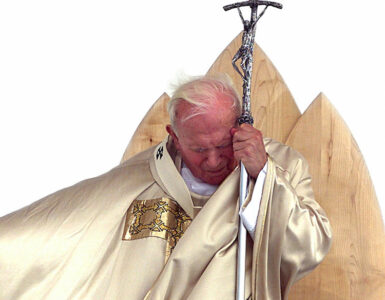
Can knowing about St. Pier Giorgio Frassati make a difference for Catholics today? It did for Pope St. John Paul II, who testified in 1989, after visiting Pier Giorgio’s original burial place, “I wanted to pay homage to a young man who was able to witness to Christ with singular effectiveness in this century of ours. When I was a young man, I, too, felt the beneficial influence of his example and, as a student, I was impressed by the force of his testimony.” A year later, in his beatification homily for his old role model, the Holy Father described Pier Giorgio as “the Man of the Eight Beatitudes.” Pope Francis, too, gave him high praise, listing him in Christus vivit (at §60) among twelve saints named as particular examples for young people. Most recently, in his canonization homily, Pope Leo declared, “Even today, Pier Giorgio’s life is a beacon for lay spirituality.”
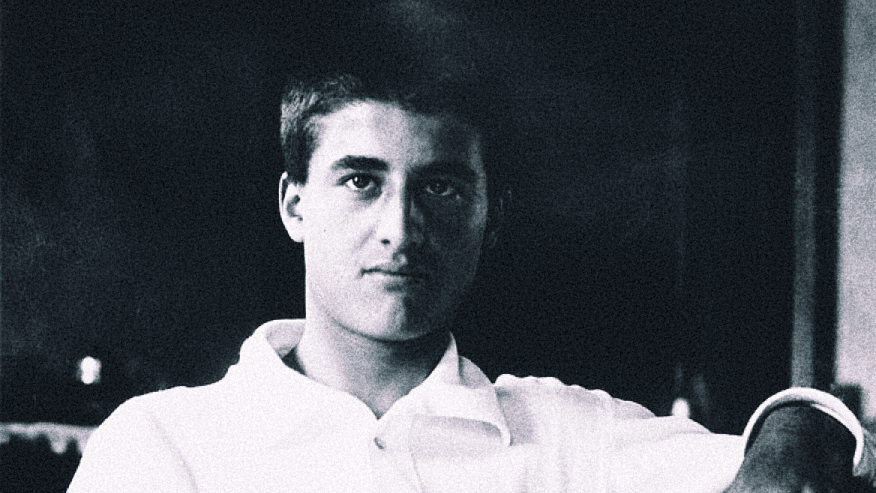
Who is this young man whom our recent popes have regarded so highly? To his parents, he was something of a mystery, pleasant and upright but far more invested in religion than they had expected or given him reason to be. To his friends—always a significant presence in his life—he was an endless source of joy, warmth, fun, and mischief. To countless poor in his native city of Turin, he was a dedicated, present friend, who visited them in their homes and helped them in their troubles. His story is of interest for anyone seeking examples of how an ordinary life can be lived with an extraordinary spirit.
That story began in 1901 in an ordinary family, neither the idyllic seedbed of sanctity that gave the world Thérèse of Lisieux nor the abusive horror survived by Germaine Cousin or Margaret of Castello. Pier Giorgio’s parents, Alfredo and Adelaide, were like many throughout the ages, a mix of common virtues and flaws. They were Catholic but not terribly devout; they loved and cared for their children, though they often didn’t understand their son, and their home life suffered from tensions in their marriage. Pier Giorgio had one sibling, his younger sister Luciana, with whom he was always very close.
The Frassatis also held prominent places socially: Alfredo was founder and editor of a major newspaper—and later also a senator and Italian ambassador to Germany—while Adelaide was an accomplished artist. Their children had every worldly advantage, a fact Pier Giorgio quickly sensed in contrast to the many needs around him. His first recorded act of mercy occurred when, at age four, he gave away his shoes to a poor child.
Pier Giorgio’s personality might be visualized as a comet: radiant with joy, burning with passion, and always on the go. His life refutes any misconception of saints as bland or dull. He had a great natural supply of enthusiasm and determination, which God’s grace channeled into a mighty force of love. An incident from his school years provides a good illustration: At twelve, studying at a Jesuit-run school, he was offered and eagerly accepted the opportunity to receive Holy Communion daily. His mother, however, was opposed, fearing (in keeping with a mindset still common then) that the practice would become mere mindless habit. Pier Giorgio proved her wrong by begging for permission for the next four days, until at last she gave in, and devoting himself to his daily appointment with the Lord for the rest of his life. As the rector of the school later described that day, “I heard a banging on my door: it was Pier Giorgio, jumping for joy to tell me, ‘Father, I’ve won!’”
That passionate spirit would not mean that everything came easily to him or enable him to overcome all obstacles. Most notably, Pier Giorgio struggled all through school, twice failing his Latin exams, to his deep distress. Even at his death at twenty-four, he remained just short of his degree in mining engineering. (Despite these difficulties, he had several intellectual interests in his private life, including language skills, demonstrating that academic trouble does not necessarily mean lack of intelligence.)
What his energy and enthusiasm did mean was an ability to give a great deal to a great many people and causes, consistently and over an extended time, a calling to which he said yes again and again. In his young adult life, his groups and activities included: the St. Vincent de Paul Society; the Italian Catholic Students Federation; Catholic Action; the Italian Popular Party; the “Milites Mariae” Circle of the Young Catholic Workers; and the lay Dominicans.
Yet it was not the multitude of activities but the love and generosity that went into them that made Pier Giorgio holy. His love was concrete and personal: This son of wealth and privilege visited his poor neighbors in their homes, befriended them, learned and provided many of their needs, from groceries to medicine to helping people find new homes and transport their few possessions there. He was known for giving away all the money he had on him and then walking (or running) home for lack of bus fare. His relationship with these needy souls was so committed that he would stay behind from family vacations to ensure that his friends would not be neglected.
If all the above wasn’t enough to fill any life, Pier Giorgio lived in times as rife with tumult and upheaval as our own. His teenage years were dominated by World War I; the period made a deep impression on the adolescent Pier Giorgio, who agreed with his father in opposing their country’s involvement in the conflict. In his young adulthood, he stood against the rise of fascism, joining the newly founded Italian Popular Party. This Catholic-founded party attracted him on account of its concern for the poor, following the principles Pope Leo XIII had laid out in Rerum Novarum; and he remained an active member.
In print, such a volume of activity might sound stressful. But while he certainly had to make an effort, sometimes a difficult one, to do everything he set himself to do, Pier Giorgio didn’t live in stress. Everyone who knew him testified to the bright, buoyant joy that surrounded him, and his humor and mischief as well. One priest who knew him recalled, “He was infused with constant joy, a joy that was sometimes explosive, and he surpassed just about everyone with his bottomless bag of noisy pranks.” He had an extensive network of friends whom he dearly loved, and knew how to have fun in many ways, especially athletic activities like swimming and horseback riding. He had a particular passion for mountain climbing; many of his photos show him high on a slope.
This flame of joy and love had always at its heart the great powering source that Pier Giorgio had put there as a child: closeness in prayer with the Lord, especially in Holy Communion. All the noise and laughter and endless to-do list fell silent when he came before the Eucharistic Jesus, at which time he showed such reverence and devotion that many who saw him wondered and described it later. He told someone who asked about his works of charity that he received the Lord’s visit daily in Holy Communion, and returned that visit in going to the poor. In keeping at the center of his life the “one thing [that] is needful” (Lk 10:42), Pier Giorgio found strength to do many things without becoming internally scattered.
He would especially need that strength near the end of his life. His parents were on the verge of separation; characteristically, amid his own sorrow Pier Giorgio did what he could to help his mother, even sacrificing his hopes of dating the girl he loved on account of the drama in his family. Meanwhile, his beloved sister Luciana married a Polish nobleman and moved out of Italy. A few months later, his maternal grandmother was in her last illness. No one, himself included, realized that his own death was imminent.
It is generally believed that Pier Giorgio’s many visits to dirty, disease-infested neighborhoods were the source from which he contracted polio. When his symptoms began at the end of June 1925, his family was preoccupied with his grandmother’s death and he told them nothing. The day after her funeral, however, he was unable to get out of bed. He would live only two more days.
Even as paralysis spread through his body, Pier Giorgio thought of others to the last. The day before his death, barely able to move, he wrote instructions for some things to be given to poor people he would normally have visited that day. Finally, he confided his worries for his parents to the priest beside him, who assured him, “You will not abandon them; you will live in spirit with them from heaven.” Only then could his loving soul leave this world in peace.
The truth of the priest’s words was soon proven. For Alfredo and Adelaide Frassati, their son’s death was the beginning of a new relationship with him. At his funeral, they were astonished to see crowds of people they had never met, all bringing grateful testimonies of the young man who had shown them such kindness. Thus the Frassatis discovered only afterwards what a life Pier Giorgio had truly lived. With an intercessor like that in heaven for them, more changes came into their lives: their marriage was healed, and Alfredo, long away from the practice of his Faith, returned in time to the Sacraments.
“He died rather young,” Pope John Paul II said at Pier Giorgio’s beatification, “but he made a mark upon our entire century, and not only on our century.” Ten years before that century ended, the Holy Father predicted that Pier Giorgio’s influence would endure, as it has for the many who have encountered him since. I shared that experience in my adolescent years, when I discovered him in Our Sunday Visitor’s John Paul II’s Book of Saints and never forgot him. Why should this young man make such an impact?
One likely reason is that he breaks through common expectations for saints. My mother recalls being puzzled as a new convert to see a picture of Pier Giorgio in the home of a Catholic friend; it didn’t look like a picture of a saint. Amid lists of saints still largely dominated by priests, religious, and figures from distant centuries, Pier Giorgio demonstrates that sanctity can wear modern clothes and live a life like ours. His story includes no miracles, visions, or other supernatural phenomena, simply an unstinting response to God. Laity relate to him, a layperson like them—and a single layperson at that, representing a group that greatly needs it.
Pier Giorgio attracts people because they recognize him as unmistakably real. Of course, every saint is a real person with a distinct character and life story, but often the passage of time, lack of details, and hagiographical writing obscure that full picture. Well documented by family and friends, Pier Giorgio’s personality shines through in all its vibrancy, at the same time witnessing what can happen when a human personality is handed over to divine grace.
This apostle of charity also represents a challenge to see someone else’s needs, for those in need are never far to find. He anticipated the advice of Mother Teresa, who would tell people not to join her in Calcutta but look for Calcutta in their neighborhood. Pier Giorgio found a lifetime of good to do without leaving his hometown. In a world increasingly deaf to voices of faith, the voice of Christian charity still resonates; and love like Pier Giorgio’s is a trumpet blast.
A different but not unrelated challenge may be found in his joy, that “constant” and “explosive” joy that so lit up his life. No examples need be cited to prove the constant temptations surrounding people today to fear, anxiety, and even despair. Joy can seem like an impossible luxury, to be snatched only in favored moments.
Pier Giorgio was not a stranger to these experiences. He faced brokenness in his family, misery in his city, and chaos in his country and world. He cared deeply about all of these, yet at the same time, he lived with a heart full of joy—not by ignoring or denying the evils all around him, but by filling his heart more and more with “the Light [that] shines in the darkness” (Jn 1:5) and must conquer all darkness in the end. He witnesses to our world something we badly need to see: that it is possible to possess joy, to live in and spread a genuine joy based not on distraction or illusion but on the most solid reality.
St. Pier Giorgio Frassati, pray for us!

 Fr Mario Attard OFM Cap
 Paul Suski
 Fr Joseph Esper