

 Fr Joseph Esper
A woman named Sarina was leaving her hotel when suddenly her left arm no longer worked; she dropped her purse, her arm went numb, and she was convinced she was having a stroke, or apoplexy. A stranger helped her down to the lobby and called for help. An ambulance was summoned, Sarina was admitted to a hospital, and an MRI was scheduled—even though she was claustrophobic, and terrified by the idea of an immobility mask covering her face. Sarina prayed, “God and my angels, please give me some mustard seed faith. Please let courage overtake my fear.” As she later wrote, “Then, it happened. A strange calm came over me, and my breathing relaxed. I saw six angels line up on both sides of my legs. Their soothing energy rose through my body. [The words] ‘Help comes in ways we can accept’ rang out in my mind. From that moment on, I responded to every instruction from the operator. I didn’t even react when she placed the immobilization mask on my face. She was amazed at this dramatic transformation. . .. From the minute I returned to my room, things changed. My appetite returned. I slept well. My sense of humor returned. I made friends with my nurses and even comforted the one who had a run-in with a nasty patient. My arm began to get better. I didn’t have full control over the muscles, but I was using it and was grateful for every movement. My faith came back. I was not scared anymore.”
Two days later Sarina—to everyone’s surprise—was able to leave the hospital with a fully-healed and functioning left arm. The doctors had no explanation for her amazing recovery, and none of the post-stroke issues they warned about—memory loss, unsteady balance, or trouble concentrating—came about. As Sarina later wrote, “Every time I hold my puppy or hug my husband with my two working arms, I send gratitude to the stranger who helped me, to God, and to my angels. And I keep a jar of tiny mustard seeds in my kitchen as a small reminder” (Amy Newmark, Miracles, Angels, & Messages from Heaven, pp. 111-113). This true story bears witness to Our Lord’s promise in the Gospel that genuine faith—even if it’s as tiny as a mustard seed—allows God to do great and wonderful things in our lives.
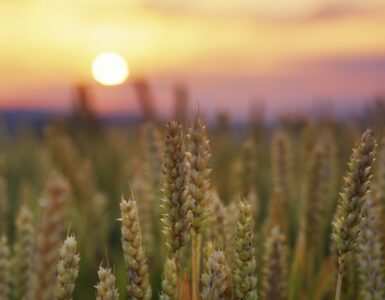
If we see God as an angry Judge eager to condemn us for our sins and failings, we’ll obviously want to avoid Him as much as possible—but if instead we see Him as a merciful and loving Father, we’ll quite naturally turn to Him in all our needs and express genuine sorrow for our sins. The Book of Wisdom (12:13, 16-19) teaches us that the Lord is gracious and forgiving, and welcomes the repentance of sinners, and St. Paul (Romans 8:26-27) reassures us that—even more amazingly—the Holy Spirit aids us in our weakness and even prays powerfully on our behalf. God orders all things for the good of those who love Him—but, unfortunately, there are those who try to take advantage of His kindness, as we see in Jesus’ parable of the weeds among the wheat (Mt 13:24-43). Unrepentant sinners sometimes like to hide among righteous persons, hoping their evil deeds will go unnoticed and their association with the holy ones will help them avoid God’s judgment. Jesus warns, however, that a final day of reckoning will come; the weeds will be separated from the wheat, and each group will experience one of two very different fates.
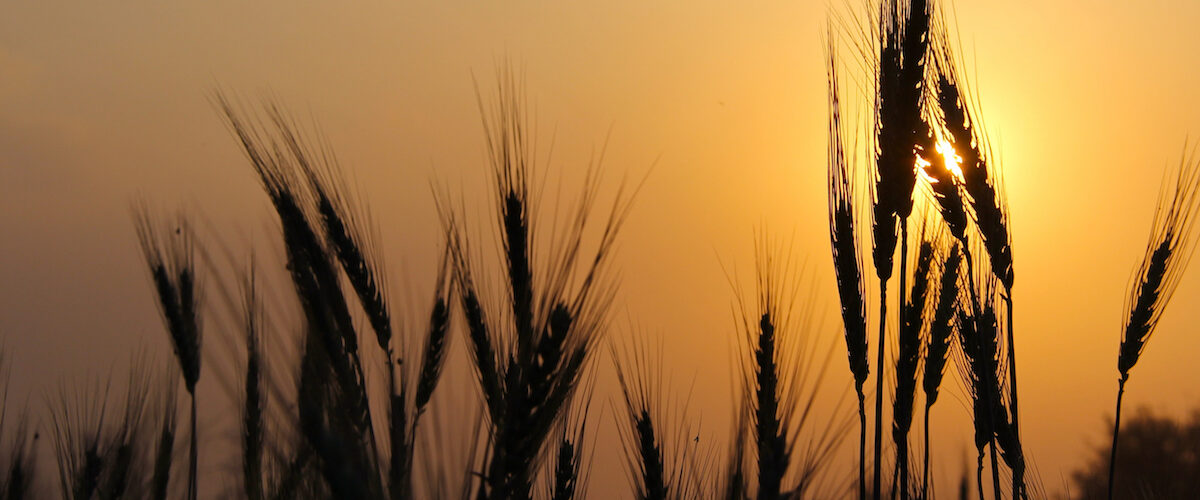
One Catholic author writes, “There’s a prominent weed in the Middle East called the ‘darnold.’ Darnold thrives in the agricultural conditions most suitable for the growth of wheat. Growing side by side, wheat and darnold appear almost identical to each other. This poses a serious problem. The way around the problem is to patiently wait until the plants mature to the point of harvest. Jesus voiced what the local farmers already knew. At the point of harvest, the ears of wheat turn a rich golden brown; the darnold turns black. At last, the good and the bad, the gold and black, were distinguishable. At harvest time, the uprooting of the wheat was no longer a problem. But the separation was vital precisely because the darnold was poisonous!” (Andrew Lee Sullivan, Ancient Bible Context, p. 193).
This commentary on our Gospel reading offers us several important lessons. First, things aren’t always as they seem. Someone who appears friendly and trustworthy may be trying to deceive us, especially in religious or spiritual matters; someone else who seems to be simple and unremarkable—the type of person we can easily take for granted—may in fact be very close to God and capable of praying powerfully on our behalf. Therefore, we must be very prudent or careful in our judgments and pray to the Holy Spirit for guidance in choosing our friends and deciding whether to open our hearts and share our secrets with someone else. Secondly, just as darnold is poisonous, so are some relationships. If an acquaintance is constantly gossiping or bad-mouthing others, for instance, or has a hard and unforgiving heart, or simply makes us spiritually uncomfortable or leaves us with a sense that something about him or her displeases God or just isn’t right, that isn’t the type of person we want to associate with. We should always pray for that person’s conversion but not allow him or her to influence us in any way. Thirdly, we must always remember that it’s not our job to sort out the wheat from the weeds. God will do that, and at the time of His choosing. Our job is to become like that tiny mustard seed capable of growing into something great and valuable, or like the yeast necessary in helping bring about true spiritual growth in others. Instead of comparing ourselves to others—which is often a foolish and premature attempt to classify people we know as either wheat or weeds—we must focus on answering our own call from God, letting His grace work through us in the simple events and encounters of daily life.
Sarina asked for God’s help in overcoming her fears during a medical emergency, and her prayer was answered in a powerful and even miraculous way. The Lord continues to care for His people and lovingly responds to their needs and prayers for assistance. The evil one and his human servants often try to interfere in this plan, but they are doomed to failure and judgment. God protects us, nourishes us, and gives us the chance to grow—and the more we allow His grace to be at work within us, the more our inner peace, our holiness, and our happiness are assured.


 Fr Dino Vanin

 Michael Baglino
 Deacon Kurt Godfryd