
 Deacon Gregory Webster
Permanent deacons know, or at least they are told, what they are getting into.
From the earliest stages of formation, candidates for the permanent diaconate are reminded that their marriage and their ordination are intimately connected. They are taught that if their wife dies after ordination, they are called by the Church to embrace a life of celibacy. This expectation is not a surprise. It is part of the commitment they make when they receive Holy Orders.
Yet knowing something intellectually and living it personally are two very different realities.
For many permanent deacons, the commitment to celibacy after the death of their spouse seems distant during formation. While a man is happily married, deeply connected to his wife, the possibility of becoming a widower may seem like something belonging to an uncertain future. The commitment is real, but the emotional and spiritual weight of that commitment often remains abstract.
The reality changes dramatically when the moment arrives.
A man who has shared his life with his wife for thirty, forty, or even fifty years suddenly finds himself alone. The relationship that shaped his identity, his daily routines, his family life, and often his ministry comes to a profound and painful end. The deacon does not simply lose a spouse; he loses a partner in life, a companion in faith, and often the person who understood his vocation most intimately.
The permanent diaconate is unique because, for married men, their vocation has always been lived through the intersection of two sacraments: Holy Matrimony and Holy Orders. Their wives are not ordained, but they have often shared deeply in the deacon’s ministry. They have sacrificed time, offered encouragement, endured the demands of formation, supported parish commitments, and frequently served alongside their husbands in works of charity and pastoral ministry.
When a deacon’s wife dies, something sacred and foundational is altered.
The deacon remains ordained. His call to service remains. His identity as a minister of the Church remains. But the human context in which that ministry was lived has changed forever.
The Reality of Entering Celibacy Later in Life
The Church’s requirement that a widowed permanent deacon remain celibate is rooted in the theology of Holy Orders. A man who receives the sacrament of Holy Orders enters into a permanent sacramental relationship with Christ and the Church. For married permanent deacons, this does not erase the sacrament of marriage. Rather, the two sacraments coexist together in a unique vocational harmony.
When a deacon’s wife dies, the Church recognizes that his marital vocation has been fulfilled through death, and he is called to continue his ordained ministry in celibacy.
Theologically, this is a beautiful witness. The widowed deacon becomes a visible reminder that every Christian vocation ultimately points toward the Kingdom of God, where “they neither marry nor are given in marriage.” (Matthew 22:30) His life can become a profound testimony to fidelity, sacrifice, and total availability for Christ.
But the beauty of a vocation does not eliminate the difficulty of living it.
A priest or religious who embraces celibacy generally enters that vocation knowing that celibacy will shape his entire adult life. Seminary formation, religious formation, spiritual direction, and communal living provide years of preparation for this reality.
A widowed permanent deacon enters celibacy differently.
He does not enter it as a young man preparing for a future he has never known. He enters it after decades of marriage, after decades of companionship, affection, intimacy, shared decisions, and mutual support. His experience of celibacy begins not with anticipation but with loss.
This distinction matters pastorally.
The Church has extensive structures to support priests and religious in living celibacy. Seminaries, houses of formation, priest support groups, spiritual directors, clergy gatherings, and presbyteral fraternity all acknowledge that celibacy requires ongoing formation and support.
But what support exists for the widowed permanent deacon?
Too often, the answer is unclear.
The Loneliness After the Funeral
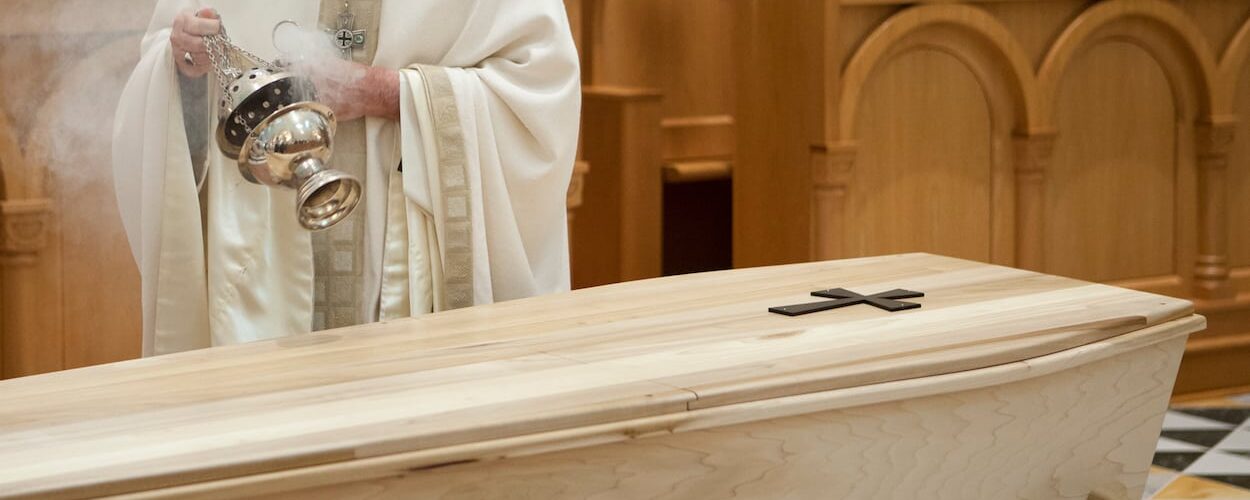
The immediate period following a spouse’s death is filled with activity. There are funeral arrangements, family gatherings, condolences, meals, and expressions of support. The Church rightly surrounds grieving families during those initial days and weeks.
But eventually the flowers fade, the visitors return to their routines, and the funeral becomes a memory.
Then there remains a man who must learn how to live a completely different life.
For many widowed permanent deacons, ministry continues. They continue preaching, baptizing, witnessing marriages, presiding at funerals, visiting the sick, serving the poor, and assisting their pastors. To the outside world, they appear to continue functioning.
But internally, many are likely navigating profound loneliness.
The person who shared their daily life is gone. The person who knew the joys and struggles of ministry is gone. The person who understood the sacrifices of being a deacon’s wife is gone.
The Church asks these men to continue serving, but often provides few structures to help them rediscover how to live.
This is not a criticism of individual pastors, bishops, or diocesan leaders. Many sincerely care about their deacons. Rather, this reflects a broader pastoral gap. The permanent diaconate has grown significantly in the United States, but many of the support structures surrounding the vocation were designed primarily around married ministry.
The Church has developed excellent formation programs for men entering the diaconate. It has developed continuing education programs for active deacons. But it has not always developed adequate accompaniment for deacons who experience the death of their spouse.
The Challenges of a New Reality
A widowed deacon faces challenges that are rarely discussed openly.
One challenge is maintaining appropriate relationships with women. A widowed man may naturally seek friendship, companionship, and human connection. Yet because he is ordained clergy, his interactions can be viewed differently by others.
A simple dinner with a female friend, participation in a social activity, or companionship outside ministry can sometimes create misunderstanding or even suspicion. The deacon must navigate the legitimate need for human relationships while also protecting the integrity of his ministry and avoiding situations that could cause scandal.
Additionally, some women may misunderstand the situation of a widowed deacon. Because he is no longer married, they may assume he is available for a romantic relationship. Yet the deacon’s commitment to celibacy is not simply a personal preference; it is a promise connected to his ordination.
This creates a unique tension: the deacon remains fully human, with legitimate needs for friendship, companionship, and community, while also being called to a different way of living.
The older the deacon is when he loses his wife, the more challenging this transition may become. A man in his seventies or eighties who suddenly becomes widowed may face not only emotional loneliness but also practical isolation. Children may live far away. Friends may be declining in health. Retirement may have reduced daily social interactions.
For some, the experience can become spiritually and emotionally overwhelming.
A Call for Greater Ecclesial Accompaniment
The Church must ask an important question: Where is the support?
If a widowed permanent deacon struggles with loneliness, does he have a place to turn? If he questions how to live celibacy after decades of marriage, who accompanies him? If he wonders how his identity has changed, who helps him discern the next chapter of his vocation?
Unfortunately, some widowed deacons feel that their only option is to seek laicization. Yet many of these men do not desire to abandon their vocation. They do not want to stop serving the Church. They do not want to walk away from their ordination.
They want help living the vocation they have received.
The solution should not simply be removing the vocation. The solution should be supporting the vocation’s new phase.
The Church has recognized a similar challenge among priests. Increasingly, conversations are taking place about the difficulties priests face living alone and whether greater fraternity and communal living arrangements might strengthen priestly life. The same pastoral wisdom should be considered for permanent deacons.
Exploring Communities of Support
One possibility is for dioceses to explore communal living opportunities for widowed permanent deacons, particularly those who desire greater fraternity. This does not necessarily mean creating traditional clerical residences. Rather, it could involve creative partnerships with existing Catholic communities.
Many Catholic senior living communities, retreat centers, and pastoral residences once relied upon priests for spiritual ministry but now struggle to find clergy available to live on-site. A widowed permanent deacon could provide an invaluable presence.
Although a deacon cannot celebrate Mass, he can offer many forms of pastoral care:
- Daily celebration of the Liturgy of the Hours with residents
- Communion services when appropriate
- Scripture reflection and catechesis
- Pastoral visitation
- Grief support
- Spiritual accompaniment
- Coordination of charitable outreach
- Assistance with parish connections
In exchange, the deacon would no longer experience life in isolation. He would have community, purpose, and a daily environment that supports his vocation. Such arrangements would honor both the dignity of the deacon’s ordination and the legitimate human need for companionship.
A Pastoral Responsibility for the Future
In the United States, more than 20,000 men currently serve the Church as permanent deacons. Most of these men are married, and demographic realities suggest that a substantial percentage may experience the death of their wives before their own deaths.
The question is not whether this will happen. The question is whether the Church will be prepared when it does.
The permanent diaconate is a gift to the Church. These men have given years of service to God’s people. They have baptized children, preached the Gospel, witnessed marriages, buried the dead, served the poor, visited the imprisoned, comforted the suffering, and stood alongside families during moments of profound joy and sorrow.
When they lose their wives, the Church should not assume that their life simply continues as before. Their vocation continues, but their circumstances have changed.
A widowed deacon is not a problem to be solved. He is a servant of Christ to be accompanied.
The Church that calls men to permanent diaconal service must also walk with them through every season of that vocation, including the painful transition from marriage to celibacy after the death of a beloved spouse.
The question remains: Where is the support?
And perhaps even more importantly: How is Christ calling the Church to respond?

 Fr Charles Irvin
 Deacon Don Grossnickle