 Fr Joseph Esper
In 18th century France, a royal princess, a daughter of King Louis XV, had become very self-centered and conceited while living at the royal court. On one occasion she severely reprimanded one of her ladies-in-waiting, or handmaids, for a non-existent offense, but the young woman—a devout Catholic—gently informed Her Majesty that she was being unjust in her accusation. The princess wasn’t used to being corrected, even in a very respectful way, and in her anger she shouted at the handmaid, “Do you not know that I am the daughter of a king?” Quickly praying to the Holy Spirit to find the right words, the young woman responded, “And do you not know that I am a child of God?” These humble but confident words made a powerful impression on the princess—so much so that, after careful prayer and reflection, she renounced all her royal privileges and entered the Carmelite Order, and spent the rest of her life in the convent as a nun (Devotion to the Holy Spirit, TAN, p. 28).
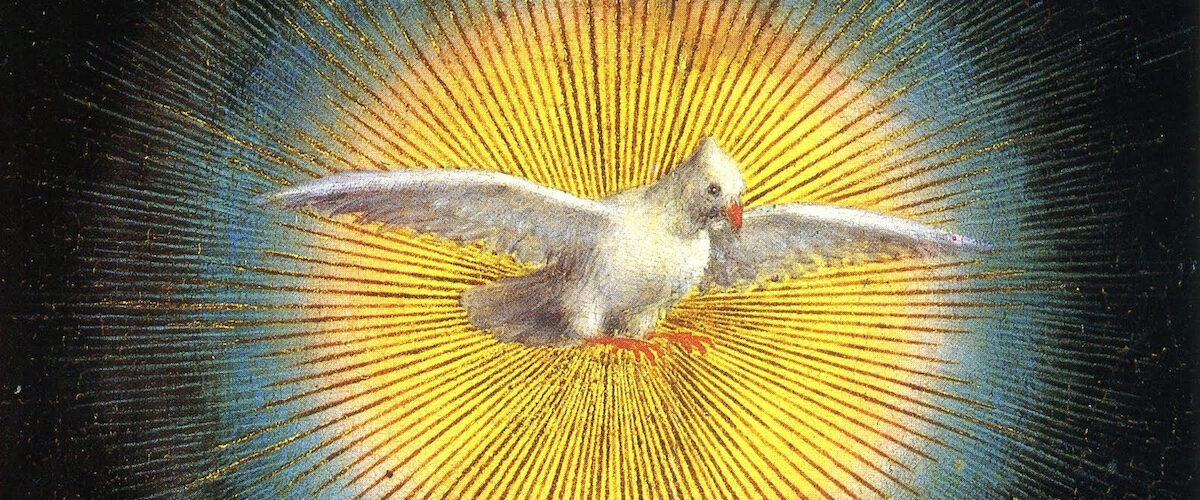
The Holy Spirit can not only give us the right words to say in a difficult situation, as happened for the maid servant, but can also open our eyes to the truth and give us the strength to change ourselves and grow in grace, as happened for the princess. On Pentecost, the Church prays: “Lord, send out Your Spirit, and renew the face of the earth.” This is meant to be a very personal prayer, for if we offer it sincerely, The Holy Spirit will also come into our hearts and renew our lives.
The reason we are here on earth is to be made ready for life in Heaven—and every single interaction we have with God is geared to this all-important purpose. God the Father created us in love, intending to share His divine life with us as His beloved children. However, through the misuse of our free will, we ruined God’s original plan—but He did not abandon us to the fate our sins deserved. The Lord sent His Son Jesus to rescue us from sin and eternal death, and our Savior did so by dying on the Cross in obedience to His Father’s will. Christ’s resurrection on Easter Sunday destroyed the power of sin and transformed death from a hopeless tragedy into a potential entry into a new and glorious life. We see in the Gospel that on that very evening of Easter Sunday, when Jesus appeared to the apostles, He bestowed upon them the Holy Spirit—a gift that was repeated on Pentecost—and gave them the power to forgive sins in His Name, so that through the ministry of the Church all people might have the chance for salvation. The Holy Spirit enables us to carry on Christ’s work. The Acts of the Apostles (2:1-11) describes how the Spirit emboldened the apostles and allowed them to proclaim the Gospel in a powerful way, resulting in the conversion of many sinners. The gift of salvation, which comes through the Church, is intended for us not only as individuals, but also for all those who are influenced or touched by our lives. St. Paul tells us that it is the Holy Spirit Who enables us to acknowledge Jesus as our Savior, and Who inspires us to use our spiritual abilities and gifts for the well-being of others. Through our unity in the Spirit, we together form the Body of Christ, and our living and growing fellowship in Jesus is meant to be an ongoing sign and invitation to as many people as possible to share in the new life of God’s Kingdom.
When we were preparing to receive the Holy Spirit in the Sacrament of Confirmation—a Sacrament most of us received many years ago—we learned that there are seven Gifts of the Spirit: wisdom, understanding, counsel, fortitude, knowledge, piety, and fear of the Lord. Looking at each of these Gifts is a way of examining our own consciences and measuring our spiritual progress, so as to see if we are truly achieving the purpose of our life on earth.
Wisdom means seeing things as they truly are in God’s eyes, and judging everything according to His standards, not those of the world. Therefore, we should ask ourselves: Do I give sufficient attention to the fact that one day I will have to render an account to God for how I’ve lived my life? Do I try to grow in wisdom by spending quiet time with God and by reading His word in Sacred Scripture? Do I engage in regular spiritual reading, and rely upon the Church’s teachings when making moral decisions?
Understanding is the spiritual Gift that helps us comprehend the mysteries and doctrines of our Catholic faith, giving us confidence that the Church’s teachings are true even when they don’t completely make sense to us. We need to ask ourselves: Do I try to learn more about my religion, especially through reading, watching or listening to Catholic podcasts, shows on TV, or on the radio, or by attending Bible study, adult education courses, or presentations? Do I take the teachings of the pope and bishops seriously, even when they conflict with my own opinions? Do I truly value my Catholic faith?
Counsel is the Gift that helps us make choices pleasing to God. We might ask ourselves: Do I seek God’s guidance in all my important decisions? When I’m in a difficult or confusing situation, do I ask myself “What would Jesus do?” Do I place God’s will ahead of my own?
Fortitude or courage is the Gift of the Spirit that enables us to do what’s right even when we’re opposed by other people. We should ask ourselves: Do I resist giving into peer pressure or going along with the crowd when I know something’s wrong? Do I defend my Catholic faith when it’s being attacked? If necessary, would I be willing to die for my faith in Jesus Christ?
Knowledge refers primarily to self-knowledge and self-awareness, in which the Holy Spirit helps us recognize and overcome our weaknesses, and discover and use our talents and abilities. We might ask ourselves: Do I honestly admit my faults, and sincerely desire to overcome them? Am I humble enough to accept criticism and correction when it’s justified? Do I try to develop and use my talents for God’s glory and the well-being of other people?
Piety or reverence means a deep and loving respect for God and His creation. We need to ask ourselves: Do I try to avoid taking God and my religion for granted? Do I use His Name respectfully, and dress and behave properly in church? Since everyone is made in His image and likeness, do I try to preserve the dignity of other people and treat them with respect?
Fear of the Lord means a sense of wonder and awe, and a desire never to displease God. We should ask ourselves: Do I try to come closer to God each day? Do I really mean it when I pray in the Our Father “Thy will be done”? Do I obey God as a sign of my love for Him?
If we can answer “yes” to most of these questions, it’s safe to say that the Holy Spirit is acting in our lives in a powerful way. If, however, we’re failing in several of these areas, we need to seek God’s forgiveness and ask the Lord to renew the Gift of His Spirit within us. God orders all things for our salvation, but it’s up to us to open our hearts to and live in the power of the Holy Spirit. This is how life achieves its purpose, and this is how we truly become children of God.


 Alexandra Bochte
 Deacon Steve Greco
 William Borst