 James S. Anderson
The five Protestant tenets are Sola Scriptura (Scripture Alone), Sola Fide (Faith Alone), Sola Gratia (Grace Alone), Solus Christus (Christ Alone) and Soli Deo Gloria (Glory to God Alone).
Catholics agree with three, but two are problematic simply because they do not align with Scripture, ironically a must for all Protestant dogmas. [1] In fact, both Sola Fide and Sola Scriptura are contradicted by the Bible. What follows delineates precisely why one cannot affirm these two classic Protestant tenets.
Regarding Sola Gratia, Scripture could not be clearer. Indeed, both Catholics and Protestants agree that grace is a completely unmerited gift from God, so much so even our prompting and choosing of God is understood by both groups as purely God’s work and a gift. The Gospel of John is explicit on this point. John 6:44 reads, “No one can come to me unless drawn by the Father who sent me; and I will raise that person up on the last day.” Grace is not something we can obtain on our own. Thus, Sola Gratia, is agreed to by both groups, though Catholics do contend one must subsequently cooperate with this great gift of God and do certain things, such as obey the moral law as Jesus commands (John 14:15). Some Protestants take issue here and argue all you have to do is accept Jesus and you are saved, which the Bible does not say. Recall Jesus very own words: “Not everyone who says to me, ‘Lord, Lord,’ will enter the kingdom of heaven, but only the one who does the will of my Father in heaven” (Matthew 7:21). Furthermore, some Protestants, though not all, will go so far as to contend “once saved always saved,” which again nowhere appears in Scripture.
Thus, a pivotal difference arises in that Catholics contend one must cooperate with God’s grace, as the Bible repeatedly makes apparent, and one can rupture their relationship with Good due to sin, hence the Sacrament of Reconciliation to receive forgiveness after already having received sanctifying grace through Baptism and subsequently sinning. The Sacrament of Reconciliation brings one back into right relationship with God through a means Christ instituted, which can be seen in the Bible. He gives his Church the power to administer this grace in the Sacrament. Matthew 16:19 reads, “I will give you the keys of the kingdom of heaven, and whatever you bind on earth will be bound in heaven, and whatever you loose on earth will be loosed in heaven.” John 20:21-22 reads, “Jesus said to them again, ‘Peace be with you. As the Father has sent me, so I send you.’ When he had said this, he breathed on them and said to them, ‘Receive the Holy Spirit.” Common sense and our intuition no doubt attest to the fact that one can have grace and be saved but after committing murder it does indeed impact our relationship with God and jeopardize our salvation. Scripture attests to this much as well. This is common sense.
Sola Fide
In terms of salvation, one must confess Jesus with their lips (Roman 10:9), but in addition the Bible explicitly says one must be baptized. Acts of the Apostles 2:38 reads, “Peter said to them, ‘Repent, and be baptized every one of you in the name of Jesus Christ so that your sins may be forgiven; and you will receive the gift of the Holy Spirit.’” First Peter 3:21-22 reads, “And baptism, which this prefigured, now saves you—not as a removal of dirt from the body, but as an appeal to God for a good conscience, through the resurrection of Jesus Christ, who has gone into heaven and is at the right hand of God, with angels, authorities, and powers made subject to him.” Thus, Baptism now saves. This text explicitly states this much, and from the first Pope, Peter. Recall John chapter 3 is all about Baptism, not accepting Jesus and being saved as many have supposed when not read in context. This all-displays Sola Fide is an issue, but there is more.
Forgiveness seems to be prerequisite for our salvation, a point often forgotten. Matthew 16:14–15 reads: “For if you forgive other people when they sin against you, your heavenly Father will also forgive you. But if you do not forgive others their sins, your Father will not forgive your sins.” This does not square with Sola Fide; it simply does not cohere with faith alone. Jesus also made know that the love of God and neighbor are required of us in the Gospels [2] (on the necessity of charity in one’s heart in terms of salvation, see 1 Corinthians 13:13; Matthew 22:37-40 and CCC 2008), not to mention following the moral, natural law, such as what is found in the 10 Commandments, for Jesus fulfilled the law but did not abolish it (Matt 5:17).
This is not even to mention that in the Gospel of John, Jesus shockingly and explicitly states that unless one eats his flesh and drinks his blood, they have no life in them (6:53). We do this in the Eucharist. So, it is rather difficult to square Jesus’ words with the misguided Protestant notion of faith alone, especially when Scripture explicitly says salvation is not by faith alone (James 2:24). It is a bit more complicated than faith alone and one simply cannot cogently argue for this Protestant tenet from Scripture, full-stop.
A favorite theologian of both Protestant and Catholics, St. Augustine of Hippo, actually writes, “In the first place, we feel that we should advise the faithful that they would endanger the salvation of their souls if they acted on the false assurance that faith alone is sufficient for salvation or that they need not perform good works in order to be saved.” Thus, one cannot murder and expect their salvation to be guaranteed even after sanctifying grace has been conferred on someone through Baptism. However, the wonderful news is that the Catholic Church offers the Sacrament of Reconciliation as a means of forgiveness from God after sins that separate one from Christ have been committed, as we all fall short and sin (Romans 3:23). The Sacrament is mediated through the Church, as Christ instituted such which can be seen in the Bible as note above. The grace of forgiveness granted flows from the work of Christ on the cross. All the sacraments for that matter flow from Christ’s grace because of his atoning work for humanity on the cross.
Sola Scriptura
Turning to the next Protestant tenet, it must be noted that nowhere does the notion of Sola Scriptura appear in the Bible! In fact, it is contradicted in Scripture. “So then, brothers and sisters, stand firm and hold fast to the traditions that you were taught by us, either by word of mouth or by our letter” (2 Thessalonians 2:15). This reference to “word of mouth” underscores the importance of Tradition for the early Church. In fact, the early Church had no New Testament to pass on the Tradition of Christ for several hundred years. What was authoritative were the oral traditions of the Church. It was not until later that councils of the Church affirmed the Canon of Scripture, specifically at the Council of Rome in 382 and later regional councils of Hippo (393) and Carthage (397). As part of the later Counter Reformation, the Council of Trent in 1546 affirmed the Canon of Scripture once again. One must recall that it is the Church and these Councils that give us the Canon of Scripture, our Bible. Thus, when Protestants accept Scripture, they are implicitly accepting the authority of the Catholic Church. The Catholic Church and its Tradition gave us Scripture. That is hardly Sola Scriptura.
Thus, the oral tradition passed on by the Church has always been deemed authoritative and this can be seen in Scripture. Oral tradition is what the early Church had to go on at first. Early home churches gathered to celebrate the Eucharist as the writings of Justin Martyr display. They eventually had the written Hebrew Scriptures and likely only one Gospel and a letter of Paul, if even that. So, the oral tradition of the Church was what mattered and how the gospel of Christ was passed on at first, not via a collection of texts. Interestingly, later the term New Testament, even in the Gospels, was at first only a reference to the Eucharist, not a collection of texts! This is the case because New Testament is a translation of New Covenant and Christ called the Eucharist at the Last Supper the New Covenant/Testament in his blood (Lk 22:20). This is an astonishing and beautiful fact hiding in plain sight before our eyes pointing to the centrality of the Holy Eucharist.
Tradition safeguards Church teaching, as does the teaching office of the Church’s Magisterium today (See Vatican II’s Dei Verbum on the relationship between Scripture and Tradition). In safeguarding, Tradition and the Magisterium of the Church not only do so in terms of what constitutes Scripture but also its interpretation. Sometimes interpretations of Scripture can become rather erroneous at best and bizarre at worst, which can regrettably and dangerously lead many a soul into error. For example, it is often argued today the Bible displays UFOs in the text or one can see references to the Twin Towers in the book of Revelation, both really a complete misunderstanding of how Scripture operates. Without the guidance of Tradition today as in the past, the Bible is opened to an infinite number of opposite and irreconcilable interpretations, thus a Magisterium is needed to adjudicate competing voices. Providentially, Christ left a Church and hierarchy to do so according to Scripture, as noted in Matthew 16 and in John 20 above and elsewhere in the Gospels. In Luke 10:16 speaking to his disciples, Jesus says, “Whoever listens to you listens to me, and whoever rejects you rejects me, and whoever rejects me rejects the one who sent me.”
Regrettably, when schismatic groups break away as in the Protestant Revolution, there is a rupture in apostolic succession and tradition, and all groups therefore end up setting themselves up as the final arbitrators of truth. Some have even called this a form of idolatry. Such a break leads to continued ruptures that can be seen in the thousands of denominations today all claiming the same source of authority but with wildly differing opinions. There is no end to it because of the arrogant refusal to submit to the authority Christ established (Matt 16:18-19). Tradition and the Magisterium therefore serve as a safeguard to protect one from errors and spurious interpretations of the Bible, as well as issues that arise in each era. [3] Though the Church allows some leeway in interpreting texts, a guardrail is needed to protect from wild views, as we are all fallible. However, we can be confident in the Church, for it is guided by the Holy Spirit.
It should also be recalled, “First of all you must understand this, that no prophecy of scripture is a matter of one’s own interpretation, because no prophecy ever came by human will, but men and women moved by the Holy Spirit spoke from God.” (2 Peter 1:20-21). A caveat is in order here: there are many a wonderful and faith-filled Protestant who are under God’s grace; it is just suggested here that a lack of education exists in regard to the difference between Protestants and Catholics and where the fullness of the faith resides. There is no doubt that one is not sinning if they are in ignorance on these matters and are striving to love and honor God and neighbor. God judges you based on what you know, as the Catechism of the Catholic Church explains (cf. CCC 1854-1864 on what constitutes sin and must be present for a sin to occur). The book of Romans is also helpful on this score (See Romas chapter 2).
Scripture & Tradition
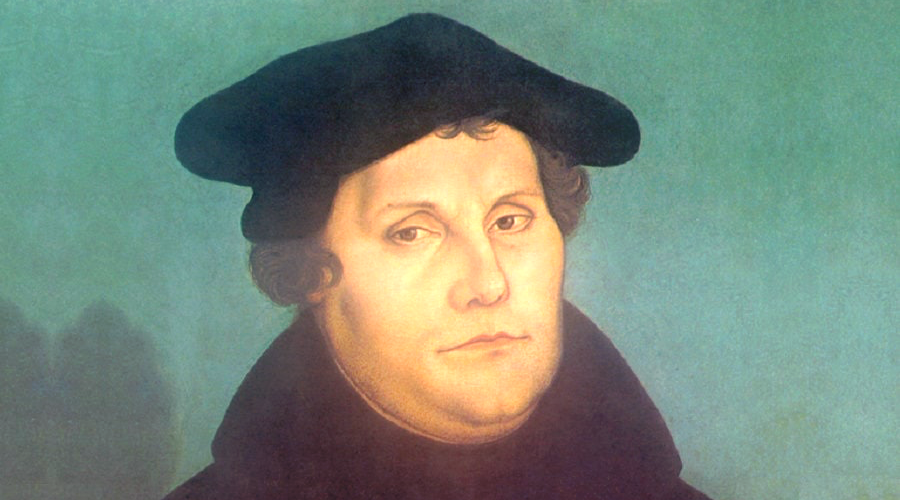
If Scripture and only Scripture is to guide the believer, it is of uttermost importance to define what scripture is. The problem is that nowhere does the Bible provide a list of biblical books to be considered canonical. Scripture itself does not define what Scripture is. The Tradition of the Church has done this, as noted above. Martin Luther, the first and most famous Protestant reformer, deemed the book of James a ‘book of straw’ and wanted it thrown out of the Bible because it did not fit his private, subjective interpretation of Sacred Scripture and theology. It is the Catholic Church that ultimately gave us our Canon of Scripture, though Protestants do not accept all the books in it, for some do not fit their theology, such as 2 Maccabees with its reference to a state of Purgatory (12:38-46). [4]
The Canon of Scripture of the Catholic Church, to a large degree, follows the Septuagint (the Greek translation of the Old Testament) and is the Bible Jesus had. In fact, it is the Scripture, the Bible, New Testament authors used and quoted. If it was good enough for Jesus and the writers of the New Testament, surely it is good enough for us, as the Church has maintained. This was not questioned for the first 1,500 years of the Church. To be fair, Catholic Bibles only contain seven more books (interestingly in Hebrew seven signifies wholeness and completeness) then Protestant Bibles and aside from Purgatory, these extra books really do not have an impact on any major doctrine or dogma. It is to be noted that Orthodox Bibles have even more books in their canon, but this exceeds the parameters of our discussion here. More often than not, the Greek translation, the Septuagint (LXX), transmits an older form of the biblical text than the Masoretic text, the base text most of our modern Bibles base their translations of the Old Testament off of. This Masoretic text used today surprisingly dates to 1,000 of the Common Era, specifically off to the Leningrad Codex housed in Russia.
In effect, Sola Scriptura for Protestants became a tradition of their own. In the end, what Paul stated in 1 Timothy 3:15 remains valid for Protestants as much as for Catholics. The Church of the living God is the “pillar and bulwark of the truth.” Scripture is not in itself always able to guide the believers in their quest of truth without the traditions of the Church, especially seeing the Church has to address modern issues biblical authors could not foresee. As the “pillar and bulwark” of the truth, the Church provided us Scripture and continues to guide us today in its proper interpretation and implementation. The Church also makes extensive use of Scripture it in its liturgy, so much so the first half of the Mass nourishes us with it in the Liturgy of the Word.
The absence of any objective principle to define truth and guide the interpretation of Scripture for Protestants allows each individual believer to decide what he or she thinks is best, if one can quote a few verses from Scripture. Inevitably, Scripture is always read through a particular lens, usually the lens or theology of each faith community. Often these are arbitrary lenses that cherry pick texts to cohere to a particular theology. Catholic Tradition makes a point to incorporate all of Scripture without neglecting any part; it takes it in its entirety. After all, it is all inspired and God breathed (2 Tim 3:16-17). Deprived as it is of the safeguard of the Catholic Magisterium, Protestantism is constantly splitting into an ever-growing number of denominations and sects, each claiming to know better than the other. In effect, each Protestant believer is potentially a self-proclaimed pope. It is often said a divided mind is contrary to Christ and His words in the Gospel suggest this much (cf. Mark 3:23-26). Again, the second letter of Peter clearly states that the interpretation of Scripture is not a private matter to be decided upon individually or by a small group: “First of all you must understand this, that no prophecy of scripture is a matter of one’s own interpretation, because no prophecy ever came by human will, but men and women moved by the Holy Spirit spoke from God” (2 Peter 1:20-21).
It is to be noted that much leeway in the interpretation of Scripture is in fact permitted in the Church and differing models for interpreting the Bible are allowed. Besides the hermeneutical tools of old, such as the historical critical method or understanding the different senses of Scriptures (literal, allegorical, moral/tropological and anagogical), biblical scholars are constantly experimenting with new tools of literary exegesis, such as psychological, post-colonial, ideological and many more ways of reading Scripture. The Church has no problem with these; however, Pope Benedict XVI wisely cautioned that scholars should not be too narrow minded and only use critical methods but rather be open to the fact that the Bible is from God and therefore contains deeper, spiritual meaning(s) as well. Thanks to archaeological, historical and philological discoveries, biblical scholarship is constantly improving our understanding of obscure readings, both in the Old and in the New Testament and the Church welcomes these.
The rise of new Catholic expressions and orders throughout the centuries shows beyond any doubt that the Catholic Magisterium has in no way quenched creativity and adaptability to new situations and contexts. Tradition is no fossil set once and for all in stone. In his 1845 Essay on the Development of Christian Doctrine, John Henry Newman cogently argued that though doctrine does not change, it becomes fleshed out and articulated more fully and better as time goes on. As part of the Tradition of the Church, doctrine can grow and expand, better articulating what has always been true. Doctrine through Tradition grows in no small measure to articulate eternal truths better within the cultures and times within which the Church finds itself, often in reaction to heresy. The creation of the Nicene Creed in reaction to Arianism in fourth century is a prime example. Previous expressions are updated without ever contradicting the old ones. Thus, Tradition is living and expanding in the Church; Tradition is not static. It is the life and breath of the Church. As already noted, all denominations produce some sort of tradition with which to read sacred texts and most do evolve to differing extents to keep up with the culture and address the burning issues of the day. [5] Newman cogently explains how Tradition for Catholics is like a seed that grows and flourishes into a tree. Contrary to what some Protestants surmise, both Scripture and the Tradition of the Church are living bodies, as Newman would maintain.
Conclusion
In closing, Sola Fide as well as the Sola Scriptura principle are thus ultimately fallacies. Bishop Fulton Sheen’s insightful sentiment that there are thousands who hate what they think the Catholic Church is, but there are merely a hundred people who hate what the Catholic Church truly is holds true, especially when one dives into looking precisely at what the Bible and Church teaches regarding these Protestant tenets, as well as other topics such as the Blessed Virgin Mary. So much of our disagreements are misunderstandings. And both sides, that is both Catholics and Protestants, too often caricature the other side and misinterpret them. We all too often talk past each other and do not take adequate time to listen and understand the other side and recall what we have in common, like that we all believe Jesus is God and his work on the cross saves us. Granted, there are many a difference on major issues impacting salvation from both vantage points. And we cannot and should not ignore this point. However, most frankly do not take the time to adequately dig into the Bible and the teaching Tradition of the Church to learn the truth to which it bears witness. Again, there is much Catholics and Protestants agree on; however, we must not be naive in that there is a lot in which we do not agree. And it should be acceptable to state differences, especially in matters of truth and topics that have eternal consequences. That is what has been done here.
It has been argued here that the age-old Protestant positions of Sola Fide and Sola Scriptura miss the mark and if these important topics are not examined and understood correctly, enormous implications follow that can lead people into grave error and more. These notions are not biblical and thus taught in the Bible, something Protestants undoubtedly always insist on for all matters of faith, morals and teaching. The Catholic Church always remains biblical and considers the entirety of God’s revelation and truth — the Bible, Tradition and the teaching office of the Magisterium (so Dei Verbum). Christ instituted the hierarchy of the Church and endowed it with the power and keys to be his representative on earth as was seen above. We therefore owe the Church with its hierarchy our allegiance, how much so in regard to differing pronouncements and documents of the Church, including conciliar ones, is a topic for another discussion (On this see, Jimmy Akin, Teaching with Authority: How to Cut Through Doctrinal Confusion & Understand What the Church Really Says. Catholic Answers, Incorporated, 2018). Thus, the Protestant tenets of Sola Fide and Scriptura when examined from the lens of Scripture and Tradition are not feasible or reasonable considering the evidence presented here; there is no doubt one must reject the often well-meaning but misguided notion of Sola Fide and Scriptura. From a Sola Scriptura lens alone, undoubtedly a vantage point a Protestant would welcome, neither position is tenable.
+++
[1] One should recall that Protestant means one who protests against the Catholic Church.
[2] When Jesus is questioned as to which is the greatest commandant of the law (Mark 12:28-34; Matt 22: 34-46; cf. Luke 10:25-37), He answers by quoting what is known as the Shema in Judaism: “The first is, ‘Hear, O Israel: the Lord our God, the Lord is one.” Jesus then continues: “You shall love the Lord your God with all your heart, and with all your soul, and with all your mind” (see Deut 6:4-5 cf. Mark 12:30). Jesus explains this is the greatest and most important commandment (see Mark 12:28-29; Matt 22:40). He then goes on to explain there is as second commandment and he then quotes Lev 19:18. Matthew 22:39-40 reads, “‘You shall love your neighbor as yourself.’ On these two commandments hang all the law and the prophets.” Mark 12:31 adds Jesus explaining, “There is no other commandment greater than these.” In distilling the entire law down to its essence, what comes to the fore is that Jesus points to one salient requirement – love.
[3] Another wonderful guardrail is the Nicene Creed. It says succinctly what the Bible says at length. Essentially all Christians accept it. It actually arises out of Tradition, specifically two Councils of the Church.
[4] In this book, we read that some Jewish soldiers who were killed in battle were prepared for burial, and sacred tokens they were forbidden to wear were found on their corpses. Their comrades decided to pray “that the sins they had committed might be wholly blotted out” (2 Maccabees 12:42). This presupposes a state of purgation that coheres with other texts in Scripture.
[5] It is interesting to note essentially all Protestant denominations use to deny that contraception was morally permissible and now they all seem to view it is morally acceptable. The Catholic Church has never wavered on this precept of moral theology and does not bend to the culture. What constitutes right and wrong does not change.

 Fr Charles Irvin
 Deacon Joseph Hulway
 Paul Suski
 David Seitz