
 Vincent Ryan Ruggiero
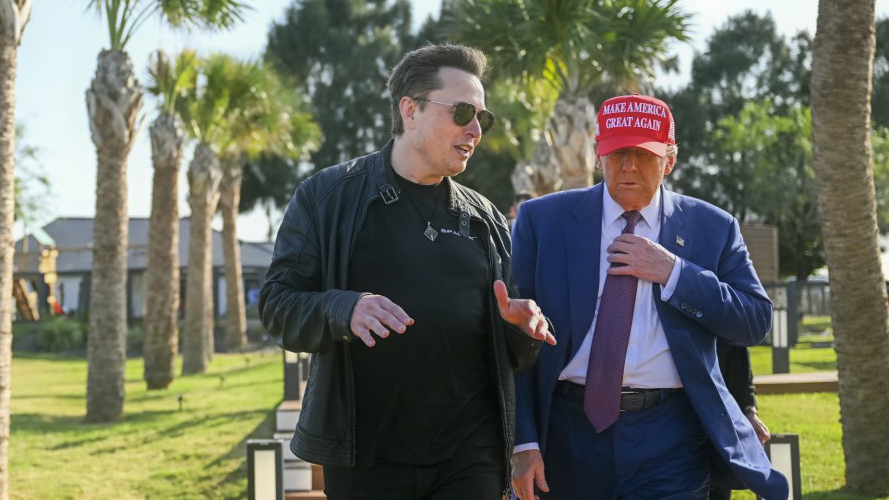
The Department of Government Efficiency (DOGE) was created by Trump and supervised by Elon Musk. Its purpose was to streamline government agencies by eliminating “waste, fraud, and abuse.” Musk estimated DOGE would save taxpayers between one and two trillion dollars. In its first six months, it saved over 5.5 billion. Then Musk became upset that Trump’s “One Big Beautiful Bill” did not provide anywhere near the savings he had outlined, and that the American people deserved. As a result, he stepped aside from DOGE and has since been vocal in expressing anger at Trump’s decision.
Democrats were not upset (and perhaps even happy) to see the Trump/Musk relationship falter. Some Republicans were simply surprised. Others expected from the outset that such successful men with strong egos could not avoid a major clash for long. My reaction was mostly disappointment.
I feel sympathy for both men, but I don’t think that personalities and egos were a major factor in what happened. Both certainly learned the importance of eliminating waste, fraud, and abuse while in private business. Both also understand that governments are notorious for their inefficiency. And both likely approached the challenge of improving government with shared excitement.
So what went wrong with their relationship? The answer, I believe, is that a significant frustration arose that one of them anticipated and was prepared to deal with, but the other was disillusioned by and refused to accept.
That frustration was one I experienced as an industrial engineer in the late 1950s and early 1960s For those unfamiliar with what industrial engineers do, they “analyze workflows, identify bottlenecks, and streamline processes by “eliminating waste, reducing costs, and increasing productivity while maintaining quality standards.” This expertise “enables them to make informed decisions and implement . . . improvement.”*
My specific job as an engineer entailed doing time and motion studies; methods, equipment, and layout analyses; as well as standard cost plan maintenance, to make my company more effective and efficient.
One important lesson I learned as an industrial engineer is that many people in positions of authority have a very strange habit of resisting improvements, especially when they are offered by “efficiency experts.” They seem to think that since they are in charge, they have nothing to learn from outsiders. This habit is evident even when the improvements being offered will help them by making them look proficient and increasing their status and salaries! That experience quickly taught me that my challenge was therefore not just to develop the improvement, but to persuade those in authority of its value.
It is a fair assumption that both Trump and Musk, as owners of large companies, are more open to improving efficiency than even their best subordinates. More importantly, both men are used to implementing such improvements without the approval of subordinates, let alone large numbers of other people.
But only Trump has endured four years of submitting his ideas to two houses of Congress, large numbers of whom opposed those ideas, often for no sound reason. Musk never had that experience and, despite his exceptional intelligence, was probably unable to wrap his mind around having to cast aside a number of brilliant ideas in order to implement other ideas, some of them patently unworthy. His thinking would have understandably been something like “Every good idea deserves implementation and every bad one should be trashed. Anything less than that is an insult to our intelligence and an abandonment of our integrity.”
Trump, of course, shared Musk’s disgust with the requirement of having to placate Congress to get legislation passed. Yet he also knew that an “all or nothing” approach with Congress would have resulted in total failure. Whether he tried to make that fact clear to Musk has not, to my knowledge, been revealed. But it seems clear that Musk not only rejected it but concluded that Trump had dishonored them both. That would explain why he publicly attacked Trump and suggested he was considering starting a third political party. (He reportedly called Trump later and apologized.)
I believe both Trump and Musk are not only unusually intelligent but also decent and honorable. Sadly, both are frequently maligned, and their own and their families’ lives threatened. We should not be surprised by this. Throughout human history people who deserved admiration have instead been hated and punished. There is no good reason for such behavior.
Thankfully the Bible gives us a simple way to determine whether someone is good: “By their fruits shall you know them.” For those who don’t own a bible, common sense and simple fairness will suffice. Here’s how to proceed: First determine whether the person in question made meaningful promises and how difficult they were to fulfill. Then, more importantly, learn whether he/she actually carried them out. Finally, learn the extent to which others, in the case of Trump, the American people, benefited. This simple test will tell you whether the person or persons produced “good fruit” and therefore deserves to be lauded.
When I say the test is “simple” I do not mean it can be accomplished carelessly. If the source you consult is too filled with hate for the person in question to report honestly, the information you receive will be false. And if you regularly consult such a source without testing it for fairness, you will be habitually wrong. The Bible cautions about such behavior as follows:“The naïve believe anything, but the wise give thought to their steps.” (Proverbs 14:15)
If you carefully examine Trump’s and Musk’s efforts to improve government efficiency and effectiveness (notably in DOGE), you will realize they have given our country an incomparable gift that many leaders have promised but no one else has delivered! And you will thank them both and pray that others will follow their example.
* https://www.careerexplorer.com/careers/industrial-engineer/
Copyright © 2025 by Vincent Ryan Ruggiero. All rights reserved.




 William Borst