


 Fr Joseph Esper
A woman from Texas named Stacy was driving her two young children and her teenage nephew to visit Disneyland in California. While entering the freeway after a rest stop, her twelve-year-old Oldsmobile began having transmission problems, and wouldn’t shift out of first gear; unable to drive faster than twenty miles an hour, Stacy was forced to stay on the shoulder of the road. Her grandfather, an auto mechanic, had taught her that sometimes it was possible to jump or “kick” a car into gear by suddenly accelerating, then letting off the gas, followed by another quick stomp on the accelerator. She tried this several times without success. A road sign announced that the next exit was at Lordsburg, New Mexico—forty miles away. Not wanting to worry her children, Stacy was whispering, “Lord, help me make it to Lordsburg”—but then things went from bad to worse. Water began spraying from beneath the hood, so she had to pull over. A radiator hose had sprung a leak. She and the kids—who were crying by now—were stranded in the desert in July heat, in the days before cell phones. Stacy said, “God will help us; we must pray that He help us in some way.”
Her teenage nephew, in frustration, kicked a rock into the distance, and it hit something unexpected: a discarded piece of radiator hose that Stacy was able to cut to the perfect size to cover the area that was leaking. She tied it in place with some strips she cut from a pillow case, and filled the radiator with water. The engine started up, but she was still unable to kick it out of first gear; not wanting to risk stripping out the transmission entirely, she inched along while praying, “Lord, please get us to Lordsburg.” A few minutes later, however, Stacy’s six-year-old daughter said, “Mommy, try that kick thing again; I just asked God to make it work.” Worrying about how she would console her daughter if it still didn’t succeed, Stacy said, “Good girl,” and tried once again—and this time the car shifted into gear. At Lordsburg she was able to pull into a service station just as her patchwork repair of the radiator hose fell apart. Not only were the station owners able to fix the problem—a broken governor valve that cost only $40 to replace—the grandmother of their family also fed Stacy and the kids a wonderful meal while they waited. For years afterwards, Stacy kept the broken radiator hose as a reminder—not only of an enjoyable visit to Disneyland, but, more importantly, of the power of prayer (Miracles, Angels & Messages from Heaven, Amy Newmark, p. 275). As Jesus promises, childlike faith and trusting persistence can make our prayers very powerful.
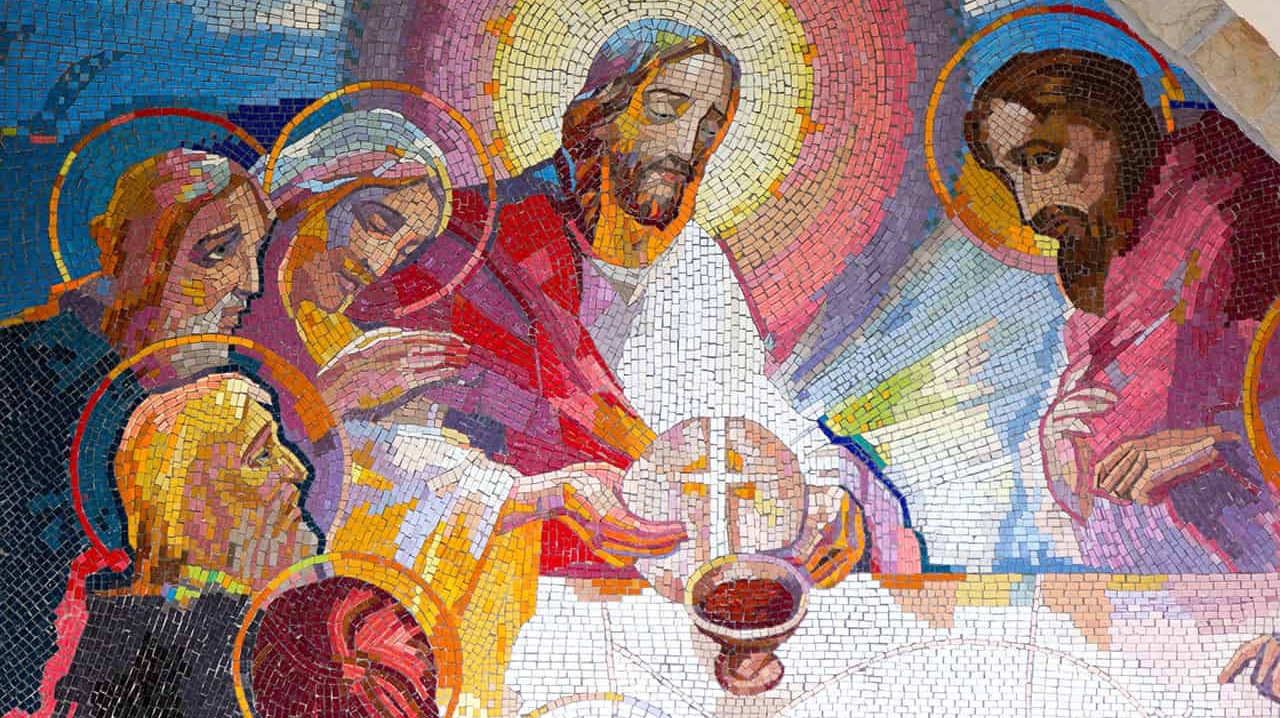
God is perfectly just—and perfectly loving. The evil cities of Sodom and Gomorrah (see Genesis 18:20-32) truly deserved to be destroyed for their sins, but God in His mercy was willing to allow Abraham to intercede on their behalf. If Abraham had continued bargaining, the Lord would have continued being merciful. The happy ending that did not occur in this story from the Old Testament did take place in the New Testament. As St. Paul tells us in the Letter to the Colossians (2:12-14), through baptism God graciously brings us to new life in Jesus, despite our sins and transgressions; Our Lord’s saving death on the Cross has forever unlocked the fullness of divine love and mercy. That’s why Jesus (Luke 11:1-13) is able to promise us that “everyone who asks, receives; and the one who seeks, finds; and to the one who knocks, the door will be opened.”
This is wonderful news—except many people seem to have a very different experience: apparently unanswered prayers, a sense of being ignored or abandoned by God, instances in which praying only seems to make things worse, seeing other people having an easier or more enjoyable time in life than themselves, wondering if God really loves them, and so on. Why is life sometimes so hard for persons truly trying to live by the Gospel? Every situation is different, of course, and sometimes we’ll never know or understand God’s plan in this life—but it is possible to speculate why certain prayers aren’t answered in the way or when we desire and expect. First of all, we may—without realizing it—be asking for something that would actually be bad for ourselves or someone else; if that’s the case, our heavenly Father is certainly not going to grant our request. It’s also possible that our timing is off, and that we’re not yet ready to receive the blessing we desire. Perhaps the Lord is giving us a chance to grow in patience and faith and trust. Maybe God wants us to exercise persistence; as Jesus describes it in the Gospel, a refusal to stop asking for what we need can certainly be a virtue. Possibly the experience of doing without the desired blessing will help us discover and develop an ability or a part of our character that would otherwise have remained unused. Perhaps learning how to handle disappointment is necessary to prepare us to make the most out of a future opportunity, or to face a coming challenge successfully. If we’re seemingly at a spiritual dead end, maybe it’s a sign that we need to change our direction or our priorities.
One other possibility can be illustrated by a story from the French Revolution, which occurred late in the 18th century. Some regions of France remained fiercely loyal to the king and especially to the Catholic Church, and the revolutionary government sent its troops to conquer and punish them. On one occasion the Catholic soldiers captured some of their opponents, and intended to execute them. Their commander tried to dissuade them, but when his men insisted on killing their enemies, he agreed—if they would first all pray aloud the Our Father. The soldiers did so, but when they said “forgive us our trespasses as we forgive those who trespass against us,” the commander interrupted them by shouting, “Do not lie to your God!” Stunned by this outburst, the men thought about the words they had just said, and about what they were about to do—and so the prisoners were spared (“France’s Catholic Genocide,” Samuel McCarthy, Church Militant website, January 31, 2023).
If we are unwilling to forgive, we have no right to receive God’s mercy and blessings—and so, if our prayers seem to be unanswered, we may need to examine our consciences to see if there’s someone we haven’t forgiven, or if we’re holding a grudge that’s getting in the way of what the Lord wants to do in our lives. As Jesus teaches, prayer is very powerful—but it’s not magic, nor is it a transaction in which, if we say the right number of prayers, we automatically receive the requested blessing. Prayer is about the love of our heavenly Father for each of His children, and about our belief in and response to this love. If Stacy had lost hope and started cursing God, or snapped at her daughter when she suggested trying to shift gears one more time, the outcome of her story might have been very different. Fortunately, inspired by her six-year-old’s simple faith, Stacy put her trust in God, and everything worked out for the best. Jesus wants us to open our hearts to God in a similar manner. If we do, we will likely be surprised, challenged, stretched, tested, corrected, humbled, rebuked, renewed, restored, and ultimately rewarded—and all of this can lead us to genuine and lasting peace, joy, and blessing.

 Msgr John Kasza
 Fr Dino Vanin
 Deacon Gregory Webster

 Carolyn Humphreys, O.C.D.S.