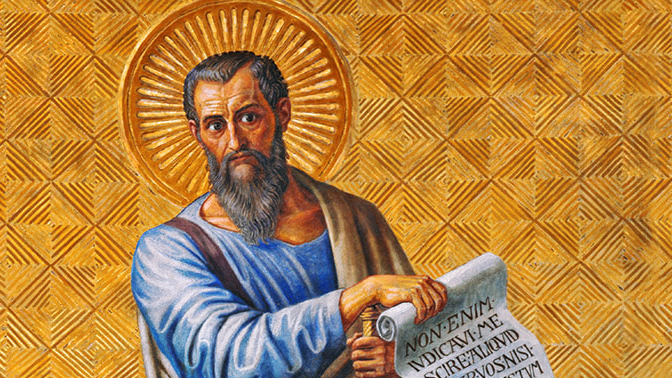
 Deacon Gregory Webster
Therefore, putting away falsehood, speak the truth, each one to his neighbor, for we are members one of another. (Ephesians 4:25, NABRE)
Recent events in the Catholic Church, particularly the firing of noted theologians and bishops who have openly criticized the papacy highlight the enduring tension between honest inquiry, the obligation of ecclesial unity, and the virtue of obedience. These challenges call Catholics to reflect deeply on how the Church balances the freedom to explore doctrine, the need for ecclesial discipline and the command to seek truth in charity.
The Case of Sacred Heart Major Seminary
In July 2025, Archbishop Edward Weisenburger of Detroit unexpectedly dismissed three respected professors from Sacred Heart Major Seminary: Ralph Martin, Eduardo Echeverria, and Edward Peters. It seems that all three had raised published concerns regarding some actions and teachings of the late Pope Francis. Dr. Martin, who served since 2002, reported he was told only that the archbishop had “concerns about [his] theological perspectives,” with no specific allegations offered, leaving faculty and observers shocked and confused (McDonald 2025; Brown 2025).
Questions have also arisen as to whether Sacred Heart followed its own due-process protocols for faculty dismissal, particularly regarding written notice, grounds for termination, and the right to appeal. Observers note that a process bypassing these safeguards risks undermining faculty trust and academic integrity (La Rosa 2025). Echeverria signed a non-disclosure agreement and Peters retained legal counsel, underlining the gravity and opacity of these events.
Historical Perspective: The Church’s Tension With Theological Dissent
The challenge of balancing faithful dissent with unity is not new. In the decades after the Second Vatican Council, theologians (many Jesuit) publicly questioned papal authority, teachings on sexual morality, and ecclesial structures. While some were eventually censured (e.g., Hans Küng), outright dismissals were rare. More often, dissenters left by choice or faced mounting informal pressure (Hitchcock 1984).
Both Paul VI and John Paul II repeatedly warned that unchecked dissent harms the Church’s unity and risks confusing the faithful. They emphasized that while theological debate can clarify and enrich doctrine, open contradiction or public undermining of Church teaching (especially by clergy and teachers) sows division and can no longer be tolerated if it scandalizes the community (Hitchcock 1984).
The Francis Era: New Fault Lines over Doctrine and Discipline
Pope Francis’s pastoral reforms, particularly those regarding same-sex blessings, have generated new debates about Catholic teaching and ecclesial identity. In December 2023, the Vatican allowed non-liturgical blessings for same-sex couples, insisting these not mimic or validate marriage. This gesture, meant as a sign of welcoming for those in “irregular situations,” was hailed by some Catholics as a compassionate step, but drew sharp criticism from others who saw it as a departure from settled doctrine (Chicago Sun-Times 2023). Yet, some priests, notably Fr. James Martin, publicly “pushed the envelope” in a manner that some thought was going too far.
In Germany, bishops supporting such reforms have prompted warnings of schism from conservative prelates, with some urging papal discipline for what they term “heresy” (Reuters 2023). On the other hand, the removal of Bishop Joseph Strickland of Tyler, Texas demonstrated that the Vatican will act against voices (even episcopal) when public dissent devolves into divisiveness and scandal for the faithful (Jansky 2023). Strickland’s dissent was acted upon. Why have these German bishops remained in office?
Theological Freedom, Just Dissent, and the Catholic Path Forward
Catholic tradition acknowledges the duty of theologians to probe the depths of faith and clarify doctrine but expects this to be done within the boundaries of charity and obedience. Respectful questioning is permitted, and indeed necessary, as long as it is directed toward a fuller understanding and not the subversion of magisterial teaching or the unity of the Church (Hitchcock 1984).
There is an important distinction between faithful disagreement (which operates within the Church and submits to her judgment) and harmful dissent, which is public, persistent, and seeks to rally opposition rather than foster deeper communion. The example of the Jesuits shows how unchecked opposition can erode institutional cohesion and ecclesial trust, despite initial intentions (Hitchcock 1984).
Even when bishops or theologians perceive serious ambiguities or errors, their response should aim at clarification, charitable engagement, and fidelity to ecclesial discipline. Public challenges to the pope or overt defiance of settled teaching, when not accompanied by due reverence and humility, can easily become occasions of confusion or scandal (Ephesians 4:14-25; John 10:27).
Canonical, Procedural, and Human Considerations
Canon law provides bishops and superiors with real discretion but also demands due process, clear cause, and care for justice; especially in academic or teaching positions. Failure to observe proper procedures risks not only injustice to the individual, but damage to the Church’s witness to truth and justice (La Rosa 2025).
Equally, as illustrated in recent events, the difference between respectful questioning (as by Ralph Martin, who by all accounts remained civil and constructive) and scandalous defiance (as by some more polemical critics) must be observed. Public dissent, especially via modern media, carries grave responsibility. As with any hierarchical institution, public undermining of authority apart from legitimate channels can quickly erode trust and unity.
Martin Was Not Strickland
Anyone who works in industry knows that publicly ridiculing their boss will lead to job consequences. We are trained not to publicly endorse or speak about the company- even at family gatherings, and especially not on social networking. We must route all presentations and publications for legal review before submission. We know how such communications can lead to consequences. Strickland’s dismissal would be consistent in this regard: he publicly and intentionally caused scandal. He was challenging the Magisterium in ways that were directly challenging to the Pope- and lost. Sadly, his good works and a full seminary were lost too.
Ralph Martin was dismissed from his seminary job and not told why. Most have surmised it was because he had the audacity to ask questions about some of the teachings of Pope Francis. Dr. Martin noted that the day before he was fired, he was giving a lecture to a group of Deacons at the NDICE Conference in Belleville, Illinois. I was there.
I found him delightful, engaging, and joyful as a man of faith. At this conference, his presentations were not controversial; he promoted Catholic spirituality. As such, I was amazed and dismayed at his firing. I also reached out to sources to find out more. Frankly, while not always agreeing with Pope Francis, I found no record of any of the theologians recently fired from Sacred Heart Major Seminary being disrespectful. Perhaps, it was simply in doing their jobs as theologians that the bishop took issue.
Dr. Martin was no such radical as Bishop Strickland. His work with Renewal Ministries is wonderfully supportive of the faith. Despite what too many think today, questioning and seeking clarification is not disrespectful or scandalous. It is what we are called to do as Catholic Christians seeking to “live the truth.”
These then are the things you must do: Speak the truth to one another; judge with honesty and complete justice in your gates. (Zechariah 8:16, NABRE)
Even without seminary procedures, bishops need to respect people enough to explain why their flock is having actions taken upon them. Tell them the truth in love. Do they really need to be reminded of the Imago Dei?
Truth, Justice, and the Church’s Mission
Now more than ever the Church is called to engage in and foster real theological reflection in a spirit of faith, dialogue, and discernment, while guarding her unity. Recent controversies remind Catholics to:
- Seek and speak the truth “in love” (Ephesians 4:14), always in openness and without personal agendas.
- Defend unity and avoid scandal or divisiveness, especially in public forums.
- Recognize both the privilege and the limits of theological dissent, distinguishing between humble inquiry and corrosive opposition.
- Pray for wisdom, courage, and charity for all leaders and teachers, trusting that God will guide the Church through every trial and purification.
As Proverbs 3:7-8 reminds us:
Do not be wise in your own eyes; fear the Lord, and turn away from evil. It will be a healing for your flesh and a refreshment for your body.
References:
Brown, Lauretta. “Detroit archbishop fires 3 Sacred Heart Seminary theologians who criticized Pope Francis.” National Catholic Reporter, July 26, 2025. https://www.ncronline.org/news/detroit-archbishop-fires-3-sacred-heart-seminary-theologians-who-criticized-pope-francis
Chicago Sun-Times Editorial Board. “Catholic Church’s willingness to bless same-sex couples is welcome step forward.” Chicago Sun-Times, December 21, 2023. https://chicago.suntimes.com/2023/12/21/24009435/catholic-church-blessing-same-sex-couples-editorial
Hitchcock, James. “The Pope and the Jesuits.” Crisis Magazine, July 1, 1984. https://crisismagazine.com/vault/the-pope-and-the-jesuits
Jansky, Briana. “Joseph Strickland was my bishop. Here’s why he had to go.” National Catholic Reporter, November 15, 2023. https://www.ncronline.org/opinion/guest-voices/joseph-strickland-was-my-bishop-heres-why-he-had-go
La Rosa, Michelle. “What is Sacred Heart Seminary’s protocol for firing professors?” The Pillar, August 1, 2025. https://www.pillarcatholic.com/p/what-is-sacred-heart-seminarys-protocol
McDonald, Matthew. “Firing Was ‘A Shock’ for Theologian Ralph Martin.” National Catholic Register, July 24, 2025. https://www.ncregister.com/news/firing-shock-for-theologian-ralph-martin
Reuters Staff. “Pope should punish ‘heretical’ German bishops, cardinal says.” Reuters, March 24, 2023. https://www.reuters.com/world/europe/pope-should-punish-heretical-german-bishops-cardinal-says-2023-03-24


 Deacon Steve Greco
 Fr Joseph Esper
 Donald Wittmer
 James S. Anderson
 Fr Dino Vanin