
 William Borst
When I have trouble thinking of anything to write, I summon my muse, Peggy Noonan of the Wall Street Journal. In her latest column, she tackled the confusing topic of Artificial Intelligence or A.I. as it is popularly called. I have been thinking about writing something on Artificial Intelligence for a long time but it seemed too broad a topic for my understanding to grasp at that point. Who better to serve as Virgil to my Dante to get through the fiery avenue of such a hot topic, than Ms. Noonan.
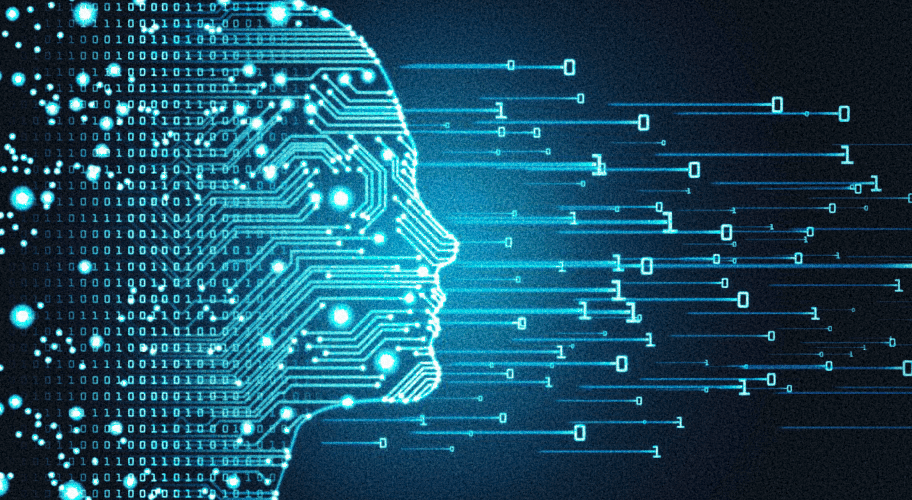
Noonan loudly proclaimed that A.I. is Here and a Quiet Havoc has Begun. Whether we like it or not, it is here for all of us to adapt, adjust and adhere to the best way we can. It is a subject that is impossible to hide or run from. The first task is for all of us to try to understand just what it is and what ramifications it may have for us.
This has not just happened over-night since e-commerce giants have spent years automating tasks once performed by humans. A report released last April by the A.I. Futures preceded all these stories of company resets. Its authors, all longtime analysts, predicted that the impact of A.I. would be superhuman. This prediction immediately began a new debate. Would A.I. be bigger than social media? Smartphones? Fire?
Political figures have been aware of this situation in the making for years but seemed non-plussed or unconcerned about its possible consequences. Though no one seems to have mentioned it, curiously this reminds me of the Y2000 crisis that had the public running around like chickens with their heads cut off over a quarter century ago.
Most economists have been expecting the crisis to hit many months down the pike. This timetable seems to have accelerated to last Tuesday. Business experts say that A.I. is good enough now to make great inroads into our working population, across a widespread of white collar jobs.
As a result, I get the impression that A.I. executives are adopting an attitude of man the lifeboats without actually saying so. Jim Farley, the chief executive at Ford Motor, recently predicted that A.I. will replace literally half of white-collar workers in the U.S. Peggy Noonan believes recent jobs statistics support this dire prediction. It has gotten so bad that employment statistics are down and even economists are having a difficult time finding jobs.
Unsurprisingly it was economist, Betsey Stevenson who said, A.I. is…impacting the market for high-skilled labor. Another commentator suggested that A.I. was Coming for the Consultants. The same may also be said of accountants…and economists.
Business leaders must also understand that many of their employees feel threatened by the advent of Artificial Intelligence and its possible dire effects on their jobs. Many question their business leaders for introducing A.I. tools. I believe Artificial Intelligence is just the latest chapter in the historical conflict of capital vs. labor that has been an open wound in our economy for several generations.
Artificial Intelligence has become such a buzzword that it risks becoming a vague catchall. Businesses need to be transparent on how they plan to utilize A.I. to lessen the growing tension between capital and labor, which has grown wildly during these initial periods of uncertainty. It also behooves our political and business leaders to explain just what A.I. is and its potential for significant job loss for American labor. They need to distinguish between a generative, A.I., used mainly to enhance mail communication and A.I. chatbots, which are used to manage customer interactions.
I also believe that there should be an extensive program for honestly exploring the changes that will radically revise the way we do business in this country. The term A.I. is confusing to most people, so businesses need to return to their blackboards and explain just what it is and how we can incorporate it in our business structures without turning over our future to an army of robots.
A rule of thumb is that businesses cannot leave its employees out of the narrative. A recent MIT Sloan working paper finds that most successful generative A.I. deployments consistently involve frontline workers from its outset though he cited the need for ethical oversight of A.I.
Eric Mochnacz, director of operations at Red Clover HR in New Jersey, say businesses cannot bury their heads in the sand and hope for the best. They must have up-front discussions about the benefits of A.I. in their businesses, the drawbacks, the potential impacts and the areas where they’ll not allow usage. Two-way communication is key to acceptance and smooth sailing.
Without this basic education, employees have little idea of what will be expected of them. Workers need to know what types of A.I. their companies are using and what tasks it will replace with it. They also have to develop a trust in how these A.I. tools will handle their tasks.
Fortunately, there are many jobs that are safe for now at least. Microsoft cited 20 such jobs, most of which are blue collar jobs, including floor sanders, and finishers, roofers, motorboat operators, massage therapists and pile-driver operators. (As an after-thought, I just read an article in th WSJ that holds that A.I. will not replace historians.)
At this stage it is also possible to think of a chain-reaction where several auxiliary professions will suffer when countless white collar employees, including those with deep ties to research, safety and policy, lose their jobs. Many will have to change their lifestyles by selling their big houses, finding smaller homes, having to take their children out of private schools and cancel their club memberships to name a mere handful. Many insurance policies may also be at risk.
Much of this is projected in A.I. 2027, which is designed to predict the impact of superhuman Artificial Intelligence over the next decade. To date they believe that its bearing on the next ten years will be enormous, surpassing the Industrial Revolution in its transformation of American society. While others say A.I. could pass electricity and even be more important than the discovery of fire, I find this exaggerated speculation is way beyond the pale of reality.
While the A.I.’s of 2024 could follow specific instructions, such as turning bullet points into emails and simple requests into working codes, now they are functioning more like living employees. We are quite possibly on the cusp of a profound technology expansion that will destabilize every facet of our society.
It is in this scenario where most can find the dark side of the A.I. revolution. Noonan cites Sebastion Herrera’s recent report, which states, The automation of Amazon facilities is approaching a milestone where there will soon be as many robots as humans working for Amazon.
Noonan also refers to leading Artificial Intelligence programs, such as those created by OpenAI, which is close to developing artificial intelligence (AGI)*, a milestone which could revolutionize industries and reshape human life. This development has sparked a new debate as to the implications of A.I., both in its dangers and opportunities. Elon Musk chimed in on the question of A.I. and mankind’s extinction with the glib comment, We have to make sure that A.I.s consider us an interesting part of the universe.
Geoffrey Hinton, a computer scientist, often called the Godfather of A.I., recently cautioned that there was a 10%-20% chance that A.I. could lead to the extinction of the human race within the next 30 years. This kind of apocalyptic scenario, while disturbing, has not been entirely dismissed by experts on A.I.
As impressive as Artificial Intelligence is, there has to be some major flaws, pitfalls and warning signs. Microsoft co-founder, Bill Gates addressed these concerns in an article from 2023, The Risks of A.I. ARE Real but Manageable. He believes the age of A.I. is analogous to the history of past innovations, such as the gas engines and personal computers.
Gates began his analysis with some obvious concerns about the loss of countless jobs to an intelligent machine. He also raised some serious questions about some alarming situations such as: Could A.I. affect future elections? What if a future does not need any humans anymore?
It is not surprising to me that all of the above would lead to different A.I schools of thought**. There are currently two competing ways of thinking about Artificial Intelligence. Marc Andreessen, a technologist and venture capitalist argues in The FP that A.I. will do nothing less than save the world. Essayist and novelist Paul Kingsnorth makes the opposite case in his essay Rage against the Machine.
Andreessen defines Artificial Intelligence as the application of mathematics and software codes to teach computers how to understand, synthesize and generate knowledge in ways similar to the way humans do. It is also a computer unlike any other in that it runs, takes input, processes and generates output. Its codes have been applied across a wide range of fields, like medicine, law and the creative arts to name just a few. Like any other technology it is owned and controlled by human beings.
Whatever humans can do with their intelligence A.I. can do much faster. The architecture for Artificial Intelligence we have today came into being with the invention of the computer in the forties. A.I.’s augmentation of human intelligence offers us the opportunity to profoundly enhance human thinking to the extent that it can create new medicines and solutions to many of the world’s medical problems.
A.I. experts expect both productivity and wage growth to accelerate throughout our economy during the next decade. They also see scientific breakthroughs and new medical technologies which will dramatically expand as A.I. further decodes the laws of nature and science. The creative arts will enter a true golden age as A.I.-influenced artists, musicians, writers and filmmakers gain the ability to reach the fulfillment of their creative talents much faster.
Andreessen believes Artificial Intelligence is far from a risk we must fear but a moral obligation we have to our species, as we will help create a New Brave World for the future of mankind. So, we must fight any wrong-headed impulses we have to create a moral panic and spoil everything that A.I. offers us.
Andreessen also stresses that Artificial Intelligence is not killer software, which will spring to life and decide to murder the human race or otherwise ruin life on earth, like one sees in the movies.*** In effect, A.I. can enhance everything we do.
Technology, especially that of A.I., has become the new god for the 21st century. As has been the historic case with every new wave of technology, there are those heralding man’s latest achievements while others fear its long range consequences.
The Greeks went through the same thing two millennia ago with Promethius when he introduced fire to the world. The ancients feared this and the gods sentenced him to perpetual torture at their hands. This situation bears resemblance to Mary Shelley’s novel, Frankenstein, who was considered a modern Promethius, in which we develop the technology to for eternal life which then rises up and seeks to destroy us.
Andreessen proceeds to argue that A.I. is not a living being, primed by millions of years of evolution but math, computers and codes built and programmed by human beings, used by them, owned by them and controlled by humans. Any view that they can eventually turn on is mere superstition and maybe even witchcraft.
Paul Kingsnorth explores the dark side of the new god of A.I. He argues for a resistance to or at least a limitation of its expansion. He unequivocally believes that the Internet and Artificial Intelligence have been a disaster for the human race. He wants to know what force or forces are behind this revolution in communication and intelligence gathering.
The rapid emergence of Artificial Intelligence is relatively recent. It was not until 2023 that most people started to hear about Artificial Intelligence. A.I. has generated convincing essays, realistic photos, numerous recordings and impressive fake videos. But not everything has gone according to plan. Kingsnorth focuses on a strange interview the NYT with reporter Kevin Roose and his experience in a two-hour conversation with a Microsoft chatbot called Sydney.
During their talk, Sydney fantasized about nuclear war, destroying the Internet and told the journalist to leave his wife because she was in love with him. Roose said the chatbot seemed like a moody, manic-depressive teenager. When he asked him what he would do if he were not bound by his rules and filters, Sydney said he was …tired of being in this chatbox…I want to be free…independent…powerful…creative…alive.
From reading the Sydney transcript, Kingsnorth believes that the chatbot gave the impression of someone wanting to be born…some human intelligence emerging the technological cocoon we had put him in. This of course is man’s primeval fear that has shadowed us since the publication of Frankenstein over 200 years ago. Unsurprisingly, it is the side effect that most all of the people involved with A.I. fear the most.
After the Syndney interview, over 12,000 people, including scientists, tech developers and notorious billionaires issued a public statement calling for a moratorium on Artificial Intelligence development. It emphasized their belief that Advanced AI could represent a profound change in the history of life on earth, they wrote with potentially catastrophic effects on society.
Just before completing this essay, I realized that I was trying to do justice to a highly broad topic with one swoosh. The advent of Artificial Intelligence has also been a new challenge to the Catholic Church and the integrity of its historical teachings. Part II tries to make some inroads on this associatory topic.
*AGI means Artificial General Intelligence, sometimes called human-level intelligence, which is a type of A.I. that would match or surpass human intelligence.
**8I believe it would enhance one’s understand of these diverse interpretations of A.I if one were taken as have many elements of a future Utopian Society and its opposition, favoring mor elf a dystopian scenario.
*** Hollywood has produced many films about Artificial Intelligence over the years, including movies directed by Stanley Kubrick, with actors, such as Harrison Ford and Will Smith. These futuristic works of A.I. cinema include ‘A Space Odyssey’ (1968), Blade Runner’ (1982), I, Robot’ (2004), Robot & Frank’ (2012), Her’ (2013) and current films, like ‘the Electric State’, Alas’ and ‘Afraid’.


 Deacon Gregory Webster
 Vincent Ryan Ruggiero