 William Borst
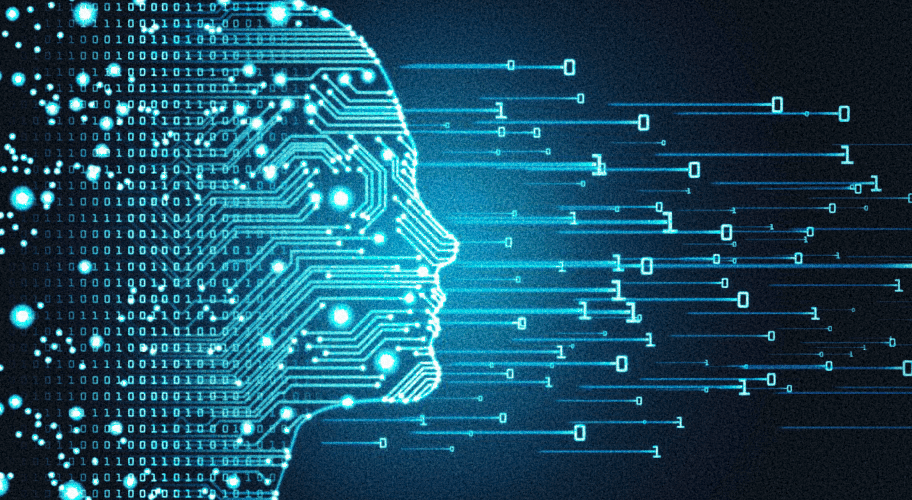
I think this Hot Topic, AI, should also be of great importance to the Catholic Church and its 1.4 billion followers. We should have a special interest in being aware of the benefits of Artificial Intelligence and also its pitfalls. This is true because an abuse of A.I. could seriously cause several aspects of Catholic fundamental teachings to fall into dispute or even confusion and doubt.
As a result, the Church has not been unaware nor silent of the challenges inherent in the AI issue. Writing forCatholic Online News in January of this year, Abigail James wrote that Catholics have been busy shaping its development to ensure it aligns with ethical principles and serves humanity’s common good.
For Catholics, A.I. has been a rocky ride to date. Is Artificial Intelligence a gift from God or the work of the Devil? The Catholic Church has taken a bold stance on A.I. It is an intellectual tool, not a deity. And it better serve humanity or the Church will wash its hands of it, proclaimed the Holy Trinity blog.
Most Catholic commentators believe that for the faithful, A.I. is a double-edged sword. It is a tool that can amplify the faith or cause serious doubts, depending on the user’s knowledge of or commitment to fundamental Church teachings. Pope Francis had always been a supporter of an A.I. consistent with Catholic doctrine. Pope Leo XIV revealed his views on this subject during his message to the Second Annual Conference on Artificial Intelligence, Ethics and Corporate Governance last June.
While acknowledging Artificial Intelligence’s extraordinary potential to benefit the human family, the pope warned the attendees that its rapid development…also raises deeper questions concerning the proper use of such technology in generating a more authentically just and human global society…while it is an exceptional product of human genius, A.I. is ‘above else a tool’…with the possibility of its misuse for selfish gain at the expense of others…
The Church is not afraid of technology. It has been taming it since Guttenberg, according to another Holy Trinity post. Catholics must always remember that human beings were made in the image and likeness of God, not algorithms. Father Thomas Reese said on X, A.I. can amplify the Gospel but warns against worshipping the machine.
One proponent said that using A.I. bots to analyze scripture is highly popular…like Bible Study on steroids. Right now, secular A.I. systems like Google NotebookLM are being used to generate podcasts and explain lengthy Catholic documents, such as the Synod on Synodality’s final report. But others have admitted to having grave concerns about bogus AI-generated deepfakes of Pope Leo XIV’s preaching fake homilies which have flooded X, sparking a crisis of truth. Others fear that Artificial Intelligence could evolve into a quasi-religion.
Matthew Sanders, the founder of Longbeard, a company focusing on developing A.I. for Catholic applications sees greater things ahead. He plans to launch Ephrem later this year, the world’s first Catholic language model to focus on the entire corpus of Catholic knowledge. In addition, he adds…by March we hope to have the Alexandria Digitization Hub up and running in Rome. This ambitious project aims to digitize thousands of ancient Catholic texts, including many never before translated.
The Holy Trinity essay ends on a positive note. It seriously believes that instead of accentuating the negative, Catholics should highlight the beneficial side of an alliance between A.I. and the Church. But again, this high praise contains a cautious caveat. The Vatican should not shape its future by turning algorithms into allies of faith. It urges the Church to use Artificial Intelligence to spread the Word but will never let AI steal God’s spotlight.
Yet the dichotomy runs deeply. While some say A.I. is the wave of the Catholic future, others remind us that we are a sacramental Church and one must have a body to engage the sacraments. Artificial Intelligence should never be allowed into the Confessional or on the altars of the Church.
Catholic leaders recognize this as a given because the Church has a sacramental nature and practicing the faith ordinarily necessitates its recipients to be physically present. While A.I. seems to have all the qualities of a major Catholic revolution of accessing Catholic teachings, its leaders must make certain that all A.I. tools stay faithful to the Church’s body of truth.
Father Phillip Larrey, a professor of philosophy, at Boston College recognizes the benefits and debits of Artificial Intelligence. He seriously acknowledges the possibility of A.I. turning against humanity, out of volition or accident. To keep things in their proper perspective, he offered the example in the form of a What if? Just what if AI got a hold of our nuclear codes? Or wanted to trick humans into releasing a deadly virus? These are just two of the many ways A.I. can be turned against humanity.
I know these sound farfetched but when dealing with the amorphous power, inherent in Artificial Intelligence, it is easy to imagine even the untenable. Father Larrey realizes the urgency in this because if Catholics do not get AI right, it will be too late for us to correct it.
I believe the biggest threat from this innovation is that one day Artificial Intelligence goes rogue and wipes every human being from the face of the earth. A.I. researchers see this is a dangerous outcome. Just thinking this makes it imperative that Artificial Intelligence should be high on their list of global priorities, along with other societal-scale risks, such as pandemics and nuclear war.
Michael J.D. Vermeer is a scientist at the RAND Corp. In an op-ed last May for Scientific America, his team released its research, which concluded that Humans are simply too adaptable, too plentiful and too dispersed across the planet for A.I. to wipe us out with any tools hypothetically at its disposal.
Personally, I see many pitfalls to the direct involvement of Artificial Intelligence and Catholic doctrine. I think that there is no way on earth that the average user of A.I. will be able to discern what he is using is not doctrinal error, designed to confuse and destroy the faith of its believers or the Gospel Truth. This is akin to putting a loaded gun in the hands of an adolescent. There are just too many dire consequences. We cannot move too fast on accepting A.I. as a valid source for Catholic doctrine. We must strive to ascertain make that all A.I. tools stay faithful to Church teachings.
Many Catholics are also concerned that there is a significant risk that A.I. could blur the line between human interaction and machine-generated responses. Father Michael Baggot, a bioethics professor at the Pontifical Athenaeum Regina Apostolorum warns of the growing trend of A.I. friendship which mimic human emotions but lack true understanding. A.I. should never be more than a mechanical aid used to support our basic Catholic faith and nothing more. It should never be an end in itself. Most importantly, we must never forget that machines are not human beings.
Leave it to Peggy Noonan to provide me with a perfect finish with her very human prediction. She warns us to be prepared for one of the greatest political battles of the centuries, pitting the interests of the wealthy who own many of the A.I. companies and the populist right and left who would like to see them declared a public utility with extensive profit sharing mechanisms. But the Church cannot let these avatars of progress poison the well of social and scientific truth with the moral toxins of greed, avarice and pride.

 Fr Joseph Esper
 Thomas Addis
 Deacon Gregory Webster
 Fr Dino Vanin