


 Fr Dino Vanin
Instead of being diverted by the oddities of this royal wedding feast (Matthew 22:1-14), we must focus on what the Lord Jesus, the Son of the Heavenly King, is conveying to us as the most heartfelt message ever. We shall overlook that the calves and fattened cattle are killed and everything is kept ready and delicious for an unrealistic lapse of time: enough for two invitations to go out, for the original guests to react in foolish and even criminal ways, and for the banquet hall to be filled with bad and good guests, randomly picked from the main roads. The first time Jesus told this story (Mt. 22:1-14) he had as audience the chief priests and the elders of the people. They were those who had all the scriptural and theological means necessary to appreciate and live out the vision of today’s 1st reading. (Isaiah 25:6-10)
Perhaps the most urgent, impossible-to-miss point is how come those who are chosen by God first can react in such irrational and self-destructive fashions. Could it be that the oddity of having the royal banquet ready for a long, long time indicates that the disdain or appreciation for the invitation to the wedding of the Heavenly King’s Son is something for which we can lose interest or for which we build up appreciation and longing from one day to the next, until our earthly life ends?
Many are invited. but few are chosen. (Mt 22:14)
Among the many are those who ignore the invitation. Hence, we must be among the few who grow in appreciation of the Heavenly Banquet by meditating frequently on the various descriptions of Heaven found in the Bible and in other books. If, especially whenever tried to the limit of our endurance, we do not dream of Heaven, we are bound to find a “farm” or a “business” that will occupy us fully without serious thought about the Heavenly Banquet which the King of Heaven keeps ready. If we are not truly humble, we might reach the point of refusing God’s unmerited gifts. We would insist on paying for what we want. After all, that’s the way we deal with people. We cannot bear the thought of being indebted to them. Fine. However, there is no way we can deal the same way with God. Therefore, if we are not truly humble, we might find our debt to him, i.e., the price of Christ’s blood on the cross, so irritating that we would react irrationally even without reaching the point of dealing violently with the divine messengers who are sent to tell us that God’s invitation remains totally and always undeserved.
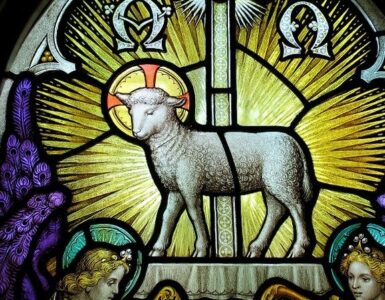
Therefore, to avoid what would be the most tragic mistake of our life with eternal, irreversible consequences, we should capitalize on every Eucharistic Celebration, especially those scheduled for Sundays and Holy Days of obligation. They are all “rehearsals” of the endless wedding banquet of the Lamb. As he holds the Host over the Cup of Christ’s blood, by saying: “Behold the Lamb of God, behold him who takes away the sins of the world. Blessed are those called to the Supper of the Lamb” the priest should stir genuine hope in our hearts. If, foolishly, for the whole preceding week, we were absorbed in pursuits not conducive to increasing our longing for Heaven, Holy Communion with the Lord is even so designed to make us “impatient” for what God has prepared for those who love him.
“What eye has not seen, and ear has not heard, and what has not entered the human heart, what God has prepared for those who love him,” (1 Corinthians 2:9)
This unusual parable ends with a stern reminder about the need to wear the wedding garment. Simply put, the wedding garment is one of the many unmerited gifts the Lord provides for us, free of charge:
Put on then, as God’s chosen ones, holy and beloved, heartfelt compassion, kindness, humility, gentleness, and patience, bearing with one another and forgiving one another, if one has a grievance against another; as the Lord has forgiven you, so must you also do. And over all these put on love, that is, the bond of perfection. And let the peace of Christ control your hearts, the peace into which you were also called in one body. And be thankful. (Colossians 3:12-15)
Now, our Heavenly King is so farsighted that he provides also “heavenly cleansing” through the Sacrament of Reconciliation if our wedding garment gets soiled due to our human weakness.
Today, what he expects of us is that we increase our appreciation of the invitation to the wedding feast of heaven and that we wear the wedding garment to cover our unworthiness and fully display our joy.


 Fr Joseph Esper
 Deacon Donald Cox