

 John Cussen
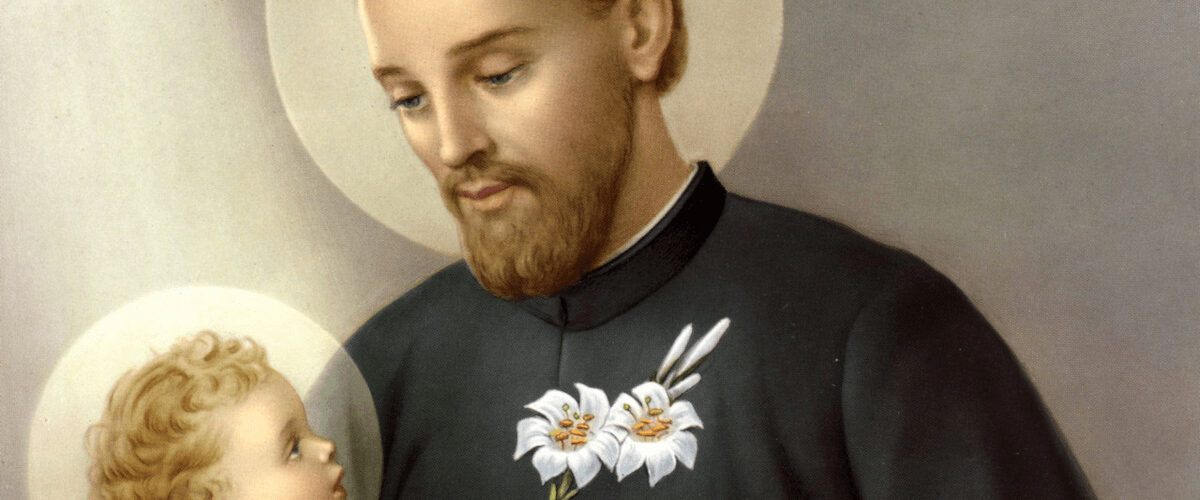
With cause I return to the scurrilously inflected Saint Cajetan of Thiene/Sister Laura Mignani allusion in Gabriel García Márquez’s virulently anti-Catholic, 1994 novel Of Love and Other Demons, a reference that I first wrote about not long after that fiction’s first English-language publication.[1] The opportunity to recall on or near the saint’s feast day, August 7th, with the readers of the Catholic Journal, Cajetan’s and his cloistered nun friend’s chaste, epistolary relationship is the first of my reasons for returning to that theme.
However, I have other motives too—motives that pertain to my day job, that of literature professor and scholar. In that realm, I am pushed by several recent, stinging discoveries to go back to the allusion and to defend both its sureness and the thought I attached to it as I made its identification—namely, the idea that García Márquez’s real target in deriding the Saint Cajetan/Sister Laura story in his Of Love and Other Demons is not the pair per se, but instead his and their Father God, the author, that is, of the sexual ethics that, against the writer’s wishes, lead to, yes, regrettably, the distinction between legitimate and illegitimate progeny, but that, too, have the possibility of lifting one and all of us up closer to God Himself, even as they put order and civilization into our earthly lives. Unfortunately, in this essay’s tight space I won’t be able to tell you of all the biographical, as well as scapegrace/convenient, reasons why the writer would prefer sexual ethics other than those that result in the legitimate/illegitimate distinction, nor will I be able to tell you of all the writing I’ve been doing as I try to redress in the scholarly places where I feel they need to be redressed the stinging discoveries. On the other hand, I can and will tell you here of the discoveries themselves, that is, of my writing’s causes. For, hearing of them, you will get some notion of what ruinous conditions are spiritual blindness and spiritual contrariness, of their unfortunate rule over the contemporary García-Márquez scholarly space, and, lastly, of how those two things can come to rule our own individual and communal hearts too if we’re not on the lookout to stop them. For, no glory to me, I know how that last thing can happen, as I shall shortly, autobiographically relate (see below). Then, after that, I’ll tell you about the Saint Cajetan and Sister Laura relationship.
the allusion and why it matters
But first what allusion am I talking about in Of Love and Other Demons, and why give a darn about it anyway? As to the second of those questions, you need to care about it because its author/perpetrator, the now deceased Gabriel García Márquez is, by the reckoning of most scholars, “one of the most revered and influential writers of the 20th century.”[2]Among other things, back in 1981, he was the winner of the Nobel Prize in Literature, and, fourteen years before that, the author of One Hundred Years of Solitude, the Latin American novel that more than any other from that part of the world made its mark in international culture. Thus, if either you or your children are going to college these days, both you and they will likely be sold the idea that, for all sorts of postcolonial, postmodern, and post-God reasons, his books are sources of enlightenment. Admittedly, since the publication in 2004 of his disturbing swan-song novella Memories of My Melancholy Whores (whose premise involves a 90-year old’s sleeping repeatedly with a bought and drugged 14-year old!), and its making the whole show of the fiction’s adult/early-teen sex scenario as opposed to its going to it only in commercial breaks (which is what his earlier fictions did), some of this professorial proselytizing has diminished. And, yet still, you and/or your children need to be warned up against it because it does indeed persist.[3]
As for the allusion, it occurs, as I say, in the writer’s mid-90s novel Of Love and Other Demons (hereafter OLOD) when in that New Grenada fiction of the late 18th-Century García Márquez names the story’s preposterously ineffectual priest character Father Cayetano Delaura, and thereby achieves a sneering, by-the-by reference to the Continental, Catholic-Reformation, epistolary, saints-pair, Father Cajetan of Thiene (1480-1547) and Sister Laura Mignani (1480-1525). As for the allusion’s import, it should matter to us because by way of it the writer expresses his contempt for Catholicism’s chastity ethics. The pair, you see, were for a handful of years, say their hagiographers, epistolary correspondents, who wrote spiritually passionate letters to one another even as they retained their commitments to chastity. That’s baloney, says García Márquez—who, not believing in the story and wanting to discredit it, brings it into his novel, which, even without it, had been working hard at making Catholicism’s chastity ethics look silly. Indeed, that might be regarded as the chief point of his novel’s plot—wherein the 36-year-old priest Delaura, a consecrated celibate, falls head-over-heels in love with the incarcerated, supposedly demon-possessed 12-year-old girl whose exorcism he has been put in his charge of: namely, that chastity is a crock. And, lastly, as per the allusion’s import, that opinion of the writer’s is a maximally destructive one because, think about it, allow him to pull away or discredit the capstone virtue of Catholic sexual ethics that is chastity, and the whole structure collapses. Well, that’s what García Márquez is trying to do here. In sum, as you go to college, be on your guard against what you read in this book, for it’s a sly one, and read casually, it will indeed get you thinking loopily about the priest’s feelings for the child. Yes, it will.[4] Also, too, it goes without saying, be on your guard against what your professors say about the book. For, trust me, they’ll be talking a different ballgame than the one I’m talking now.
why I return to it
And now the discoveries that bring me back so many years later to this allusion: They begin, to be honest, with my noticing not long ago that my identification of the reference had been dismissed by the distinguished Latin Americanist Gene H. Bell-Villada in his García Márquez: The Man and His Work. Specifically, that great promoter of the García Márquez legacy said this about the identification in his yet-still-influential, 2010 study of the Colombian: In Spanish-speaking countries, “Cayetano is not that unusual a handle.”[5] Yes, Ouch! Stung and given cause to return to the identification was I when I read that sentence! A judgment, as I say, rendered by one of the two or three most important protectors of the One Hundred Years of Solitude writer’s legacy as a Parnassian penman. Yes, no less a super-important scholar than Gene H. Bell-Villada had paused in the middle of the something brilliant he was saying about his favored author to observe about me, Cussen, that deluded was my Catholic math in putting two and two together and coming up with four when I said, as I’ve already explained to you, that the assignment of the name Father Cayetano Delaura in Of Love and Other Demons to the fiction’s catastrophically failed priest character is a clear and telling reference to the epistolary saints pair Cajetan of Thiene and Sister Laura Mignani.
Yes, reading that, I knew I had to respond—not only, however, because the dismissal had stung me personally but also because I knew it to be about something bigger than it appeared. Indeed, that was my very first thought when I read the dismissal. This is about something bigger than it looks. But what? I next asked myself. And almost immediately that question’s answer started coming to me: Why, it’s about the same thing that has been behind García Márquez scholarship in general’s more than two decades of near complete disregard of my sighting of that same allusion. For such had been (and still is) the sad, pathetic scholarly fate of the pair of postings in which I had announced the Saint Cajetan/Sister Laura identification. Save for Bell-Villada who wrote to dismiss them, no other scholar had ever said anything at all about them.
Again, the dismissal was also about the transparently big thing that has been, for sure, behind scholarship’s failure to respond for almost as many years to my sighting of another comparably nasty anti-Catholic allusion in the same writer’s works. That would be my flagging of the sex-ethics-focused, anti-Catholic feeling that he, García Márquez evinces in his novel Love in the Time of Cholera when he assigns to that fiction’s sexually abused teen in its disturbing América Vicuña episode a name that recalls in slighting fashion the Catholic, death-rather-than-sin story of the child, near-saint, Blessed Laura Vicuña.[6] Save in one brief, passing, censorious instance, no scholar has responded to that identification for some fifteen years either.[7]
Next, as per what it was all about, it was about the same thing that has been behind my GM scholar colleagues’ failure to see for a long, long time what I take to be one of the most common phenomena on the Nobel Prize winner’s many read and re-read pages, namely, his dependable affixing of a sex-focused, anti-Catholic, hagiographic allusion to each and all of those pages that offer scenes and situations of irreverent, arguably pornographic sex. Yes, find a passage in the celebrated Colombian’s work that will make a sailor not want to read any further, and, in particular, find one that involves adult/near-teen sex (which is not hard to do, given their considerable quantity in his pages[8]), and you will invariably find pegged to it a sneering, anti-Catholic allusion like the one to Saint Cajetan of Thiene and Sister Laura Mignani in the equivocally told, adult-minor sex tale that is fundamentally OLOD.
And, too, it was also about the same thing that has been behind this other observable, related reality in the scholarly community’s response to Catholic phenomena in García Márquez’s pages: their negligible interest in items Catholic save when they serve to confirm their own baked-in, anti-Catholic dispositions. Yes, howsoever reliable that community of readers may be in observing, as does one critic, that the action in García Márquez’s early novel In Evil Hour begins on October 4th, the feast day of St. Francis of Assisi, and in pointing out how cold-hearted is the fiction’s priest character’s behavior in that light,[9] or, again, in observing, as does another, the iniquitous cruelty that García Márquez imputes to the Catholic Church in naming the honor killers Peter and Paul in his novel Chronicle of a Death Foretold (recalling, of course, the Church’s first pope and its most prominent first-generation missionary),[10] Catholic inclusions that will take them in the opposite direction, they simply fail to see. And, trust me, taken in anything like a fair-minded, common-sense direction, allusions like the one to Cajetan of Thiene and Sister Laura in OLOD and to Blessed Laura Vicuña in Love in the Time of Cholera will take its recognizer in a direction that most García Márquez scholars don’t wish to go in. More about that later (see below).
And, lastly, behind the dismissal of my epistolary-saints’ allusion is the same scholarly determination that clearly guided the editing of the new, just-released, canonizing collection of scholarly essays about the author, The Oxford Handbook of Gabriel García Márquez—namely, this principle: for the harm they will do to his reputation, let’s not say anything about the writer’s frequent recurrence to equivocally narrated scenes and scenarios involving adult/minor sex. I say this because, despite the problem of the disturbing recurrences’ having surfaced big time in the popular press as well as in scholarly venues at the time of Memories of My Melancholy Whores’ publication,[11] and despite it’s having been a discussed issue in the raft of new and revised GM studies that happened to come out together in roughly 2010,[12] and despite its having received some exposure in Gerald Martin’s landmark, 2009 biography of the author, Gabriel García Márquez: A Life,[13] and despite the problem’s never having gone away (that I know of anyway), it simply gets no ink in this new Handbook.[14] And what’s up with that?
What’s up with that is the same thing that has been behind all these other scholarly phenomena that I’ve been telling you about: namely, scholarship’s little willingness to deal seriously with the questionable sexual stuff that is on so many of this writer’s pages, and, beyond that, to recognize their spiritual dimension. For, yes, clearly, they do have a spiritual dimension, one that is signaled by the sex-focused, anti-Catholic, hagiographic allusions that are pinned to each and every one of them. And, more important than that, one that, thought about for more than a minute, yields this profile of the author that the scholars don’t want to deal with: that of a writer shaking his angry fist at his Father/God with execrable stories of adult/minor sex. Yes, trust me, that’s a profile of their guy that the scholars absolutely do not want to recognize. Why? For this trio of reasons, of which the third is the most important: first, because it goes against the grain of their reading of GM as a man with no consciousness of a Father/God; second, because it goes against the grain of their own little belief in that God; and, thirdly, because it goes against the grain of their own favored understandings of him—namely, that of a guy healthfully, shaking his underdog’s warranted fist at the First World, at reason, at capitalism, at traditional prose poetics, and at so on with stories offensive to those entities. For those favored notions of him won’t last long if the idea of him as a writer shaking his angry fist at his Father/God over sex-ethics issues gets in there beside them. That idea is just too fundamental and, as a result, too undermining of the rest, that is, too suggestive that other notions of the guy are surface-before-the-depths readings. In short, if García Márquez weren’t mad at his Father/God over sex-ethics issues, he wouldn’t be losing any sleep over the imperialisms of the First World, of reason, of capitalism, of traditional prose poetics and of so on either. No, the scholars don’t want to see this feature of their favored author’s character, and, thus, they fail to see all its many manifestations in his work.
spiritual blindness
In a longer essay, I would tell you why García Márquez holds against his Father/God the sexual ethics that He authored; however, save to say that it has absolutely nothing to do with the unfortunate suspected culprit that is clerical sex abuse, but, instead, has its roots in a host of realities in the writer’s early life, including a sordid incident in which his father had him, then a twelve-year old, waylaid and raped by a prostitute,[15] I won’t do that here. Rather, I’ll move on to the theme of spiritual blindness and how it’s clearly got a hold over my scholar colleagues’ reading and thinking eyes. For that’s how spiritual blindness operates, isn’t it? On some fundamental level we make a commitment to something that we ought not or that we over value, and then we somehow succeed in not seeing the myriad evidences of the Truth that Jesus is trying to communicate to us? Yes, it is, says Jesus himself when he includes in his answer to his disciples’ question about his motive for teaching in parables this thought about the spiritually blind: “And their eyes they have closed [emphasis mine], Lest they should see with their eyes and hear with their ears, Lest they should understand with their hearts and turn, So that I should heal them” (Matt. 13:15). Then, too, once that commitment to close one’s eyes is made, Satan gets involved, says Saint Paul, when he writes, “He [the lawless one] will use every kind of evil deception to fool those on their way to destruction, because they refuse to love and accept the truth that would save them” (2 Thessalonians 2:10-12). And, lastly, I’ll quote St. Catherine of Genoa, the 15th-Century mystic whose writings influenced Cajetan of Thiene. Speaking of “human blindness” but in actual fact talking about the same blindness that we’re talking about, she says, It “holds pride for humility and humility for pride, and from [it] springs the perverse judgment which is the cause of all confusion.”[16]
Amen to that, St. Catherine! You got that right! And I should know, for having been for a long time a heady buyer into the Gabriel García Márquez scholarly mystique, don’t I know of its prideful delusions. Yes, now here comes the humbling autobiographical piece of my essay that I mentioned earlier. And it goes simply like this: that I, who am now so down on my scholar colleagues and their little spiritual attunement, was once little better than they. For how else do you become something of an expert in Gabriel García Márquez’s writings, and how else spend years reading all his diabolical pages (and, God forbid, teaching them!), save by being spiritually blinded? Almost as bad as all the rest, for many years was I, but not quite so bad either, as I think back on it. For at least during those bad years I didn’t stop going to church and stop believing, with the result that at the end of those years I had enough lingering sense of right and wrong in me to be shocked into reality by Memories of My Melancholy Whores and to thereafter read rightly the García Márquez pages that my profession made it necessary for me to look at. Not so, unfortunately, some of my colleagues, says the García Márquez Handbook that I’ve already pointed to, as well as too some other books that I endnote here.[17] The authors and editors of those texts, if they’re still thinking the way they did when they put them together, ain’t learned nothin’ from nothin’, as we used to say back on 188th Street! Or worse still, maybe in Melancholy Whores they did see the evil therein and decided to continue shopping its author anyway. Yes, that’s a strong possibility too. That the blind aren’t as blind as they seem! Beware when you get to college!
Saint Cajetan of Thiene and Sister Laura Mignani
And now the saints themselves: who were they? And what was the nature of their correspondence? The pair were contemporaries of Martin Luther (1483-1546), and, like him, so disturbed by their late-Renaissance Era’s debased ecclesial culture that they chose to respond radically to it. However, rather than drawing lines in the sand with their Church and calling for a revision of its theology, they, as did many of their pre-Tridentine, reform-minded contemporaries—Angela Merici, Maria Llorença Llong, Antonio Maria Zaccaria, Jerome Emiliani, Ignatius Loyola, Mattero da Bascio, John Fisher, and Gian Pietro Carafa (later Paul IV) among them—embraced Catholicism with a fervor every bit as stubborn and absolute as the 95 Theses monk’s principled refusal to make peace with it. Specifically, in Cajetan’s case, he chose to become a priest, a founder of hospitals for incurables, and the co-founder of the Theatine Religious Order, a sacerdotal group focused specifically on the reform of clerical culture. As for Laura Mignani, she chose to become a cloistered nun in the Augustinian tradition, a woman focused in her every convent moment and in her every chaste behavior on her Divine Savior.
So how did the two come to know one another and what was the nature of their relationship? From within her cloistered walls in Brescia, Republic of Venice, in addition to praying, Laura engaged in spiritual correspondence with those few select souls on the outside who appealed to her for spiritual guidance. For nuns and their male advisees of this era, this decidedly gender enlightened practice given the otherwise patriarchal Church culture of the day, that of the divina madre, was common, say Church historians.[18] And that’s how she and Cajetan came to know one another. He, having set in motion many, though not all, of the processes by way of which he would eventually extricate himself from the entirety of his considerable familial responsibilities and having, too, not long before, entered the priesthood at the relatively late age of 36, though yet still not entirely settled into the fiercely ascetical, fiercely mendicant lifestyle that would characterize the rest of his life, began writing in 1517 to Laura, the epistolary confidant of his junior spiritual friend Bartolomeo Stella. Thereafter, the two would exchange letters for the next four years, until, lastly, not too long after the last of the letters would go between them—and perhaps, too, not long after an alleged meeting between the two (see below)—Laura would pass away.
And now you begin to get more clearly the basic shape of García Márquez’s assault on Cajetan’s and Laura’s hagiographical history in Of Love and Other Demons. In writing a novel in which a thirty-six-year-old priest named Cayetano Delaura falls in love with the convent-incarcerated twelve-year-old whose exorcism he is put in charge of, García Márquez casts doubt on the supposed chasteness of the historic saints’ intentions towards one another and, by way of that doubt, on Catholicism’s sexual ethics—at the very pinnacle of which sits, as I say, the practice of committed chastity undertaken for the sake of the Kingdom.[19] Further, that late section of the novel in which the priest, now removed from his role as custodian of the incarcerated child, starts stealing into the convent by way of underground tunnels and starts spending the night with her—this, too, targets a supposed piece of the Cajetan-Laura story, their alleged meeting. For, yes, not long into their epistolary relationship, Cajetan of Thiene did indeed take up—haltingly, at first—another theme that was transparently important to him: his desire to actually visit his female correspondent in her convent. In one letter, he expresses his wish this way, “If you are not annoyed at my coming, I shall visit you for three hours to give you knowledge of one saved by your Charity” (74). In another, he says, “May the fiery knife of Divine Love cut through all obstacles so that I may come for the whole of August” (77). And, in the postscript to a third, he writes, “You know that I shall not come to you if you do not command me to do so, although I hope this may be the time, and if possible within ten days. May your charity pardon my very presumptuous familiarity” (79).[20] In short, howsoever romantically impassioned some of the things that the priest Cayetano says to his incarcerated, twelve-year-old charge in Demons, none of them out-pulses in their fervor several of the sentences actually written by the historic Cajetan to his, as he typically addressed her, “Venerable Mother in Christ,” Laura Mignani. García Márquez’s novel would remind us of this less than transcendental reality.
So how then should we think of the Father Cajetan/Sister Laura relationship? As chaste, say I, for these three reasons: First, because I believe in virtue and in its heroic performance by some few. And not just those officially canonized by the Church. For, yes, it has been my experience in life to repeatedly run into Catholic priests, sisters and religious who, as I discern their stories, once long ago assumed the hair shirt/royal robe that is the vow of chastity undertaken for the sake of the Kingdom, and, thereafter, from everything I can observe, have gone on wearing the garment to good effect. Thus, when I hear the singular choice in life that they made pronounced preposterous, as it is in the saints’ allusion in Of Love and Other Demons, I feel called upon, for their sakes, to offer oppositely. Secondly, though I am no expert on the matter, the appearance of lover’s sweet talk that is our contemporary first take on the priest Cajetan’s prose sent to his nun counselor is of no concern to me because the immense difference between norms of epistolary rhetoric in the saints’ day and in our own, if looked into, would explain away some forty to fifty percent of that appearance.[21] As for the other fifty to sixty percent, a few hours spent reading the masterworks of Catholic devotional writing circulating in and around Cajetan’s era—the pages of Thomas à Kempis, Theresa of Avila, John of the Cross, and Francis de Sales, among them—would erase that second, larger half of the problem, for his prose is stylistically in keeping with theirs.[22] And, yet still, thirdly, I admit it: there is the problem of letters going repeatedly between a man and a woman, and the little likelihood of no earthly feelings being bound up in them. Yes, that’s a problem. However, as it happens, quite ironically, it is García Márquez himself who offers that problem’s solution. He does so in his catastrophic Of Love and Other Demons near-ending, wherein the head-spun-around Delaura abandons his beloved when most the girl needs him. Thus, howsoever anti-clerical might be the thought García Márquez would wish us to take away from that anti-heroic “love story” outcome, its moral for me is primarily this one: that timidity is for the faintly virtuous no less a godsend than are courage and decisiveness for the truly virtuous. In short, no, nothing unchaste happened in the Cajetan/Laura Mignani meeting, if ever the meeting even occurred.[23]
[1] John Cussen, Untitled Review of Gabriel Garcia Marquez, Of Love and Other Demons, Studies in Twentieth Century Literature 21, no. 2 (1997), 515-517.
John Cussen, ‘García Márquez’s Of Love and Other Demons’, Explicator 55, no. 1 (1996), 53-54.
[2] Valdez, Marcela. “Gabriel García Márquez, Nobel Prize-winning explorer of myth and reality dies at 87,” The Washington Post, April 17, 2014, https://www.washingtonpost.com/world/the_americas/gabriel-garcia-marquez-nobel-prize-winning-explorer-of-myth-and-reality-dies-at-87/2014/04/17/a67b2f9c-c66b-11e3-8b9a-8e0977a24aeb_story.html. Accessed July 26, 2022.
[3] For its representative bypassing of the problem of adult/early teen sex in the work of García Márquez, see, for example, the 635 pages of the following “handbook” of the author’s life and work in which it is never confronted: Gene H. Bell-Villada and Ignacio López Calvo, eds. The Oxford Handbook of Gabriel García Márquez. Oxford: Oxford University Press, 2022.
[4] So hopes, for example, noted critic Aníbal González, “Fictions of Difficult Love in García Márquez,” The Oxford Handbook of Gabriel García Márquez. Eds. Gene H. Bell-Villada and Ignacio López Calvo (Oxford: Oxford University Press, 2022), 133-136..
[5] Gene H. Bell-Villada, García Márquez: The Man and His Work (Chapel Hill: University of North Carolina Press, 2010), 244
[6] John Cussen, “La Beata Laura Vicuña: the Nun’s Version, corrective of García Márquez’s.” Religion and the Arts 11 (2007), 373-405.
[7] Nadia V. Celis, “Del amor, la pefferastia y otros crímenes literarios: América Vicuña y las niñas de García Márquez,” Revista poligramas 33 (2010), 46 of 29-55.
[8] See, for example, Gerald Martin, The Cambridge Introduction to Gabriel García Márquez (Cambridge: Cambridge University Pres, 2012), 123-124.
[9] Robin Fiddian, “Before One Hundred Years of Solitude: the early novels,” in The Cambridge Companion to Gabriel García Márquez, ed. Philip Swanson (Cambridge: Cambridge UP, 2010), 52-54.
[10] Réuben Pelayo, Gabriel García Márquez: A Critical Companion (Westport: Greenwood Press, 2001), 129-130.
[11] See, for example, Lauren Weiner, “In Love with a Child Prostitute,” Review of Memories of My Melancholy Whores by Gabriel García Márquez. The Wall Street Journal, 29 Oct. 2005, https://www.wsj.com/articles/SB113053404983482912. Accessed 1 Aug. 2022.
See, too, Nadia V. Celis, “Del amor, la pefferastia y otros crímenes literarios: América Vicuña y las niñas de García Márquez,” Revista poligramas 33 (2010), 29-55.
[12] See, for example, Mark I. Millington, ‘García Márquez’s novels of love’, in The Cambridge Companion to Gabriel García Márquez, ed. Philip Swanson (Cambridge: Cambridge UP, 2010), 120-127.
[13] Gerald Martin, Gabriel García Márquez: A Life (New York: Knopf, 2009), 529-535.
[14] The one limited exception to this observation is the Adelaida López-Mejía’s essay, “Imagining the Afro-Caribbean in García Márquez,” which hints throughout of the writer’s unacceptable performance in terms of race and sexual ethics (145-168)
[15] Gerald Martin, 533-534.
[16] Catherine of Genoa, as quoted in The Spiritual Doctrine of Saint Catherine of Genoa, by Catherine of Genoa and Don C. Marabotto, her Confessor. Trans. Serge Hughes (St. Benedict Press [Tan Books], 2012), 144.
[17] Stephen M. Hart, Gabriel García Marquez. London: Reaktion Books, 2010.
Gerald Martin, The Cambridge Introduction to Gabriel García Marquez. Cambridge: Cambridge University Press, 2012.
David Streitfield, editor. Gabriel García Márquez: The Last Interview and Other Conversations. Brooklyn: Melville House, 2015.
Gene H. Bell-Villada, Gabriel García Márquez in Retrospect: A Collection. Lexington: Lexington Books, 2015.
Reuben Pelayo, Gabriel García Márquez: A Biography
[18] H.O. Evennett, ‘The New Orders’, The New Cambridge Modern History, Vol. II, Second Edition: The Reformation 1520-1559, ed. G.R. Elton (Cambridge UP, 1990), 327;
William V. Hudon. Theatine Spirituality: Selected Writings. Trans, ed, and introduced by William V. Hudon (Mahwah: Paulist Press, 1996), 40-41.
[19] Sara Butler, ‘Perfectae Caritatis’, in The Reception of Vatican II, eds. Matthew Lamb and Matthew Levering. (Oxford: Oxford UP, 2017), 208-233.
[20] Cajetan of Thiene, “Letters of Saint Cajetan of Thiene.” Theatine Spirituality: Selected Writings, 71-111.
[21] Peter Mack. ‘Letter Writing Manuals’, in A History of Renaissance Rhetoric, 1380-1620, ed. Peter Mack (Oxford: Oxford UP, 2011), 228-256;
Gideon Burton, ‘From Ars dictaminis to Ars conscribendi epistolis’, in Letter Writing Manuals and Instruction from Antiquity to the Present, eds. Carol Poster and Linda C. Mitchell (Columbia: University of South Carolina Press, 2007), 88-101.
[22] Cameron, Peter John. The Classics of Catholic Spirituality (New York: Society of St. Paul, 1996).
[23] Exemplary of the meeting’s discounting, see P. De Tracy, The Life of Saint Gaëtan, Founder of the Order of Théatines. Trans. Baroness Mary Elizabeth Herbert (Dublin: Christopher Smyth, 1873), 19.
Exemplary of its having happened, see Paul H. Hallett, Catholic Reformer: A Life of St. Cajetan of Thiene (Westminster, MD: Newman Press, 1950), 29.


 Msgr John Kasza
 Alexandra Bochte
 Fr Mario Attard OFM Cap
 Deacon Donald Cox
 Fr Dino Vanin