


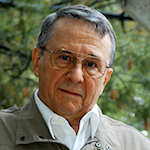
 Vincent Ryan Ruggiero
One of the easiest and most helpful ways to stimulate our minds is to read quotations from individuals known for their insight and wisdom. Doing so enables us to not only examine interesting thoughts, but to ponder their meaning and implication and develop new thoughts of our own. The quotations presented here are drawn from the book Inspiring Quotations and cover a range of authors. I have added comments that illustrate how they can aid our own thought processes.
“The real problem is in the hearts and minds of men. It is not a problem of physics but of ethics. It is easier to denature platinum than to denature the evil spirit of man.” Albert Einstein. Here is a man known for his brilliant work as a scientist claiming that our “real problem” is not a scientific problem but an ethical one. If this is correct, then correcting that problem requires understanding the “evil spirit” and how to overcome it. To do that, we need to study ethics and the related subject, religion.
“The political and social practices of our civilization derive from their Christian content–and they will not long survive unless they are replenished by faith.” Arnold Toynbee. Here an historian, who is not a religious man himself, not only claims that religion is important, but also that civilization requires it. But what is there about religion that, in his view, is so important? This question encourages us to read his writings and those of other knowledgeable people who agree or disagree with him and decide whether his claim is valid.
“Whether the man is an atheist or a Christian, I judge him by his fruits, and I therefore have many agnostic friends.” Reinhold Niebuhr. This author was a well-known religious scholar. He obviously believed that non-believers are capable of goodness, even to an exceptional degree. Yet many religious people avoid relationships with agnostics (or atheists). Clearly, they question the capability that Niebuhr affirmed. To decide which view is correct we need to learn how informed people on both sides of this issue explain their thinking and then draw our own conclusion.
“The only people with whom you should try to get even are those who helped you.” Mae Baloo. This brief statement is certainly clever. But it is also more than that. By using the term “get even” in such an unusual combination, she prompts us to re-think its meaning.
“Remember that worry will cause much pain over things that will never happen.” Thomas Jefferson. Surely Jefferson knew that at least some of the things we worry about will happen. He was therefore not really denying that fact. So what is he really saying? That worrying has no positive benefit and is therefore a waste of time.
“When you are angry count [to] ten before you speak; when you are very angry, count to 100.” Thomas Jefferson. What does this mean? Surely not that the more counting we do the more satisfied we’ll be, but instead that the more we pause before expressing anger, the more likely we will say something wise and helpful. (If we test that by recalling our own experiences and those we’ve witnessed, we will likely remember friendships being hurt or even lost because of ill-considered responses.)
“Money-giving is a good criterion of a person’s mental health. Generous people are very rarely mentally ill.” Karl Menninger. If we’ve never heard of this author, we may think this quotation was surely overstated and ignore it. But if we take a moment to check out just who he was, we will realize it deserves consideration. He was a well-respected psychiatrist who also wrote many books and worked diligently to solve social problems. If we then ponder his statement, we will realize that generous people focus more on others than ungenerous people do and therefore have less time to be self-centered. They also are more likely than others to feel the satisfaction that comes from doing good works. These factors make a person unusually contented with life
“A hundred times every day I remind myself that my life depends on the labors of other men, living and dead, and that I must exert myself in order to give in the measure as I have received, and am still receiving.” Albert Einstein. We might imagine that people who are accomplished devote much of their time remembering those things, feeling proud of them, and being encouraged by them to achieve more. But this quote from a great man says something very different. More than feeling accomplishment, he felt gratitude to others. That shows humility rather than pride, something we would all do well to practice.
“All truths are equally true, but not all truths are equally important.” Erma Allen. This seems like a rather obvious reality without any special meaning for us. But if we ponder it for a moment, we will realize the importance of using our time and effort wisely by concentrating more on important things.
“Of the twenty-two civilizations that have appeared in history, nineteen of them collapsed when theyreached the moral state the U.S is in now.” Arnold Toynbee. This statement is disturbing, especially coming from an expert in the history of civilizations. It raises questions like “what are the signs of this moral decline, what caused it, and what reforms are needed to reverse it?” Recognizing these questions will lead us to seek answers.
“I’d rather see a sermon than hear one any day; I’d rather one would walk with me than merely tell the way; The eye’s a better pupil and more willing than the ear; Fine counsel is confusing, but example’s always clear; And the best of all the preachers are the ones who live their creeds, For to see good put in action is what everybody needs.” Edgar Guest. This poem expands on the old expression “Actions speak louder than words” and makes us wonder how to be such a person ourselves and where to find models of that behavior for guidance. As I was finishing this essay, the news came of Charlie Kirk’s assassination, and as I listened to the comments of those who had been touched and encouraged by his positive accomplishments in his short life, I thought “Kirk was an excellent example of the kind of person Edgar Guest was praising.” The connection between the poem and a tragic historic event increased my understanding of both.
Copyright © 2025 by Vincent Ryan Ruggiero. All rights reserved.


 Deacon Kurt Godfryd
 Fr Joseph Esper
 Msgr Joseph Pellegrino

 Carolyn Humphreys, O.C.D.S.