
 Fr Joseph Esper
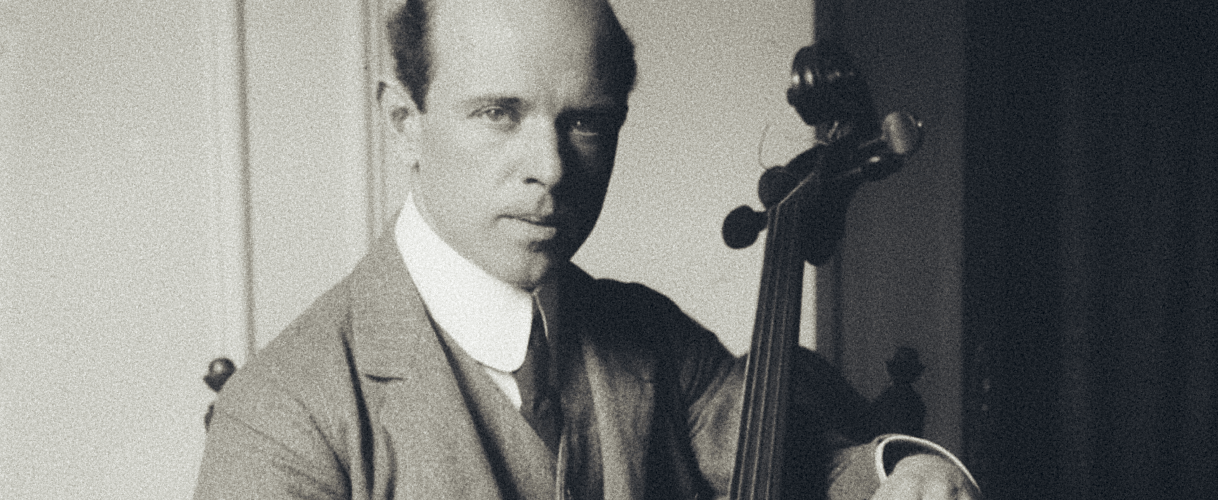
One of the greatest musicians of the twentieth century was the cellist Pablo Casals. A cello, of course, is a large violin; it’s not held beneath the chin, but rests upright on the floor between the knees of the musician. When Pablo Casals was age ninety-five, a reporter asked him a question: “Mr. Casals, you are ninety-five now and acclaimed as the greatest cellist who ever lived—so why do you still practice six hours a day?” Pablo Casals answered him, “Because I think I’m making progress” (Brian Cavanagh, Fresh Packet of Sower’s Seeds, #80).
That’s an amazingly youthful attitude from an older person, and an admirably humble response from a great performer. It’s also an example for us, and a reminder that God didn’t create us to sit back on our laurels, but to keep on learning and developing and using our talents for His glory. We are called to continue making progress in three ways in particular: by growing in our faith, by serving God and our neighbor, and by appreciating and defending the gift of life.
It’s very easy to become passive in life, either on the one hand feeling satisfied with ourselves and deciding we personally don’t need to change or to get involved in society, or on the other hand, becoming discouraged over our failures and the state of our society, and concluding we have nothing worthwhile to offer, and that there’s nothing we can do to make this a better world. Neither approach is suitable for a Christian.
Jesus calls us to set aside both self-satisfaction and discouragement, and to adopt a spirit of faith and trust. Our Lord told the apostles, “When you have done all you have been commanded, say, ‘We have done what we were obliged to do.’” In other words, following Jesus means seeking God’s glory instead of our own, serving the Lord with humility, and doing everything in a spirit of faith. The Gospel of Luke (17:5-10) tells us that wonderful and powerful things can be done by those who believe and by those who are willing to serve in a humble spirit. If we are the servants and God is the Master, this means that He has plans unknown to us and designs beyond our comprehension, and is thus perfectly deserving of our trust.
The prophet Habakkuk (1:2-3; 2:2-24) wondered why God’s plan seemingly wasn’t unfolding, and the Lord told him, “The vision still has its time, presses on to fulfillment, and will not disappoint; if it delays, wait for it, it will surely come.” Thus, our faith must be active and hope-filled, a confident belief that God will save His people and will do so at the proper time. As St. Paul says to Timothy (1:6-8, 13-14), “God did not give us a spirit of cowardice, but rather of power and love and self-control.” For us to become strong, loving, and wise in the ways of God, we must continue growing and continue using what God has given us. Paul told Timothy to stir into flame the gift of God; we too must make progress in our ongoing efforts to grow in grace and to use God’s gifts.
Each year the Church observes the first weekend of October as “Respect Life Sunday,” and has been doing so for roughly fifty years. Therefore, it’s entirely understandable if we want to repeat the question of the prophet Habakkuk, “How long, O Lord?,” and further ask, “When will the evils of abortion, euthanasia, and human cloning be overcome? When will the rising tide of violence and division that afflicts our country come to an end?” God is not offended by such questions, as long as they’re asked in an honest spirit of love and respect, but He does want us to understand that His ways are not our ways, that He is able to bring good out of any situation, and that He is both our Heavenly Father and the Lord of history, and will certainly exercise justice on behalf of His afflicted children.
What does all this mean for us? Simply that we must not give up or despair, but must continue bearing witness to the truth in all our words and deeds. In the Gospel Jesus instructed us to say, “We are unprofitable servants.” Unprofitable doesn’t mean useless; we can still please God, despite our sins and weaknesses and failures, and make a difference in the world by our humble and sincere efforts to live out our faith. In fact, if every Christian tried to do this, our combined love and witness would overwhelm the evil in our society and usher in a great moral and spiritual renewal. We as Catholics have a special responsibility, and opportunity, in this regard. October is the month of the Rosary, and many miracles and conversions have been obtained by praying it. If just 10% of all American Catholics prayed the Rosary each day, an irresistible spiritual power would be unleashed, and an era of blessing and peace would be granted to our nation. The Holy Father has called upon all members of the Church to pray the Rosary for world peace, and our prayers can make a real and lasting difference.
It would be so easy to give into indifference or even despair over the state of our world and our society—but doing so would be a serious mistake, and a dereliction of duty. In addition to our prayers, we as Catholic followers of Jesus have a moral obligation to speak out, to influence others, and to vote against evil and in defense of life. Every vote we cast, and every other moral choice we make, is recorded in Heaven, and God will hold us accountable for our decisions. The Lord doesn’t want us to sit back passively, but to continue making progress in our efforts to come closer to Him, to do His will, and to defend His gift of life. If Pablo Casals, the greatest cellist in history, could still practice six hours a day at the age of ninety-five, we are certainly capable of spending a few minutes each day praying and reflecting on which the Lord is asking of us. If, like the apostles, we say to Jesus, “Increase our faith,” He will say to us, “Use your faith; nourish it and allow it to grow, and one day you will see great and wondrous things.”


 William Borst
 Fr Dino Vanin
 Vincent Ryan Ruggiero
 Deacon Kurt Godfryd