

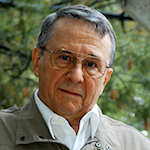
 Vincent Ryan Ruggiero
One of the saddest of human failings is the inability to recognize greatness in others. It is by no means new. Socrates was put to death because of it. Anaxagoras and Confucius were driven from their homelands. Aristotle was forced into exile and died there. Though bad enough in any circumstance, this failing is especially dangerous when common, as it seems to have become in the present age.
One example of the inability to recognize greatness was demonstrated during the life of the late Charlie Kirk, who was assassinated shortly before his 31’st birthday. An entrepreneur, his most notable achievement was the founding of Turning Point USA, a youth organization that promoted understanding of traditional American values through dialogue between people of differing philosophical, political, and religious beliefs. More amazing, he did so at a time when dialogue was widely shunned. An unusually gifted young man, he showed insight and wisdom far beyond his years and drew a large following not only among young men and women, but among all age groups.
Charlie was mourned and his great accomplishments acknowledged by millions of people in America and around the world. At the same time, however, many others not only mocked his legacy but publicly cheered and celebrated his assassination and hailed his killer. Though his accomplishments were widely known, these individuals could not grasp them, let alone acknowledge and honor Kirk for them.
An even more dramatic example of failure to recognize exceptional achievement was demonstrated during Donald Trump’s first term as President and continued ever since. It shows no indication of ending. Like Kirk, Trump had a large and dedicated following. Like Kirk, some people were unable to acknowledge his achievements, but for Trump that number was much larger. Moreover, it has lasted for an entire decade, and was marked by a constant stream of efforts to block his programs, impeach him, impoverish him, and send him and members of his family to prison.
Trump has had a number of impressive achievements during the first year of his present term. But one is positivelyastounding: ending eight wars and on the way to ending a ninth. Given that no one else in recorded history has come close to such an achievement, it might be expected that the haters and maligners would end their attacks, be thanked for his efforts, and recognize his accomplishments. But for the most part the haters have maintained their negative view of him. In fact, some have increased their contempt. And this attitude has led many to denounce the accomplishments and support opposite and, often as not, foolish or absurd alternatives!
What makes the failure to recognize greatness especially sad is that it harms not only those who suffer from it but also those who surround them. When spread widely, as it seems to have done in our country, it can weaken an entire culture in the following ways:
Undermining our motivation to excellence. The desire to do good, avoid evil, and make the most of our lives may to some extent be present in all of us. But it does not come with a blueprint. Before we can achieve these goals, we need to learn what is good, honorable, and praiseworthy, and what is not. The main way to acquire that learning begins in childhood and continues as we grow older—it is to observe admirable people acknowledged by our parents, teachers, and leaders in society, and then imitate the admirable examples. However, when we live in a society that denies greatness or, worse, calls it evil, instead of being motivated to excellence, we will be motivated to praise nonsense rather than wisdom, and evil rather than good.
Confusing us about truth and falsehood. When all around us many journalists, political leaders, and educators, and other respected individuals are denouncing genuine achievements as attacks on society, beneficial programs as harmful, and sensible views as foolish, it is difficult if not impossible to think clearly and judge wisely.
Separating us from God. The concepts of doing good, avoiding evil, and achieving excellence are rooted in religion and, in America’s case, the Judeo-Christian heritage. The concept of truth is similarly rooted, and God is its author. Refusing to acknowledge genuine greatness rejects God’s truth and replaces it with what we want to believe. And one thing we definitely don’t want to believe is that someone we hate could possibly be great. When truth is left to individual whims in this way, our culture is in great jeopardy.
Interestingly, Charlie Kirk’s wife commented on this separation from God eloquently during the celebration of Charlie’s life. She said “Freedom is doing the right thing,” but “Without God, Freedom becomes chaos.”
Copyright © 2025 by Vincent Ryan Ruggiero. All rights reserved.


 Fr Joseph Esper
 Fr Dino Vanin