
 Deacon Kurt Godfryd
Just give it to the poor!
Recently, those words were hurled at me by a friend frustrated with the current state of affairs in many U.S. dioceses. Specifically, with fewer practicing Catholics and a shrinking number of clergy, what will become of beautiful houses of worship where Eucharist was shared, marriages were celebrated, babies were baptized, children were confirmed, and funerals were prayed?
His solution? “Given that the Body of Christ has chosen to worship together primarily at Christmas and Easter, perhaps the time has arrived to abandon our tradition of brick-and-mortar and simply remit the proceeds to the poor.” Shortly thereafter, I shared his insights with another friend who happens to be a theologian with a specialty in liturgy. His response? “Street-corner worship from November through February might get awfully cold.”
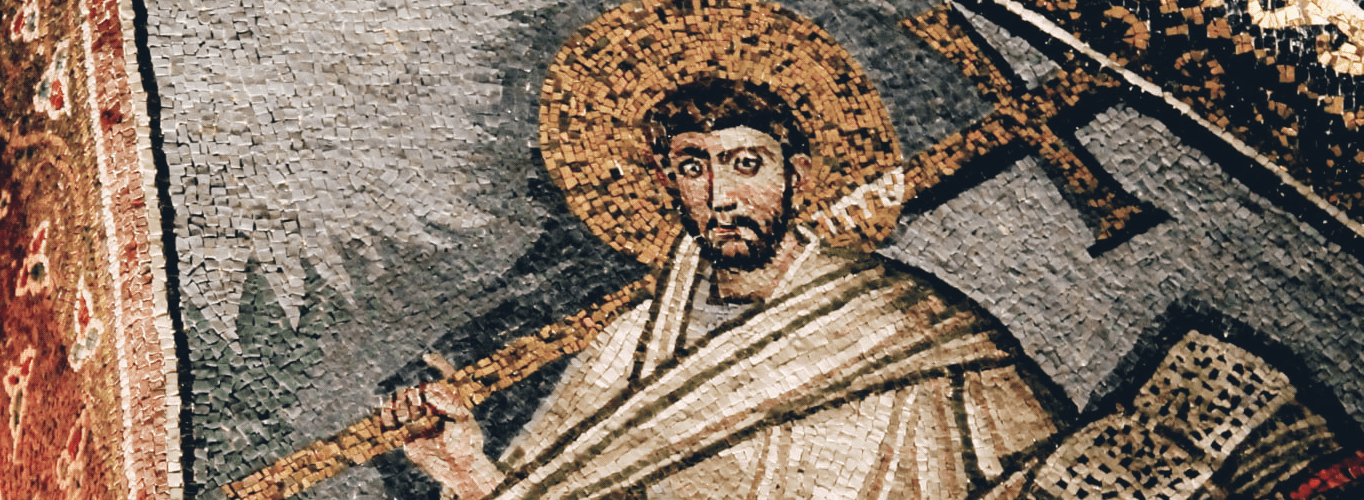
Now, when we travel back in time, Church history does provide us with examples of certain saints who took the “sell-it-all and give-it-to-the-poor” approach quite literally. For example, the ancient deacon, St. Lawrence, was one of the seven deacons of the Roman Church and was martyred on August 10, 258. If you remember, as a result of an edict pronounced by the third-century emperor, Valerian, all bishops, priests, and deacons were to be killed. In Lawrence’s case, his death came after he had followed the directions provided him by Pope Sixtus II. The Holy Father had instructed Lawrence to sell all Church property and distribute it to the poor. When the emperor demanded this earthly treasure, St. Lawrence instead brought before him the nameless poor throughout Rome. For Lawrence and Sixtus, they were the treasure!
Given all of this, an important question may be asked: Just who are the poor among us? For academics and journalists, the answer is a simple one. After proving poverty by our location on government income tables, they set out to reveal it through the lens of a camera. Their pictures are powerful and depict striking images of those living in substandard housing, single mothers unable to feed their children, and countless others who find themselves unemployed and homeless. For these so-called experts, poverty describes that which is absent or lacking. However, when combining this definition with the premise of my friend (that today, fewer people feel a need to worship God on a regular basis), it is clear that for a growing majority of us, something important is absent and lacking within our lives.
But when speaking about poverty, just maybe it is not about whether we are financially rich or poor. Rather, perhaps true poverty is an unrecognized poverty; spiritual poverty, that is. A veteran priest once told me that of the more than one-thousand funerals he’s presided at, not once has a casket been tied to a wheel barrel overflowing with cold, hard cash.
So, despite the mantra that “the one who dies with the most stuff wins,” it is clear that this line of thinking is misguided. Bluntly stated, the stuff of our lives should never define us let alone become our end! Why? Because our end rests in God. For having been created in His image and likeness, our earthly mission is to know, love, and serve Him so that one day we may live with Him in heaven. Upon arriving there, the only poverty that will be found is that which is lacking—in us! But nevertheless, God will have welcomed us home. For we are His treasure and He is our end! And in His kingdom, with our hearts pounding to the eternal beat, each of us will proclaim:
I have come home at last! This is my real country! I belong here. This is the land I have been looking for all my life, though I never knew it till now…Come further up, come further in!
C.S. Lewis, The Last Battle


 Guest Columnist
 William Borst
 Fr Dino Vanin
 Fr Joseph Esper