
 Deacon Gregory Webster
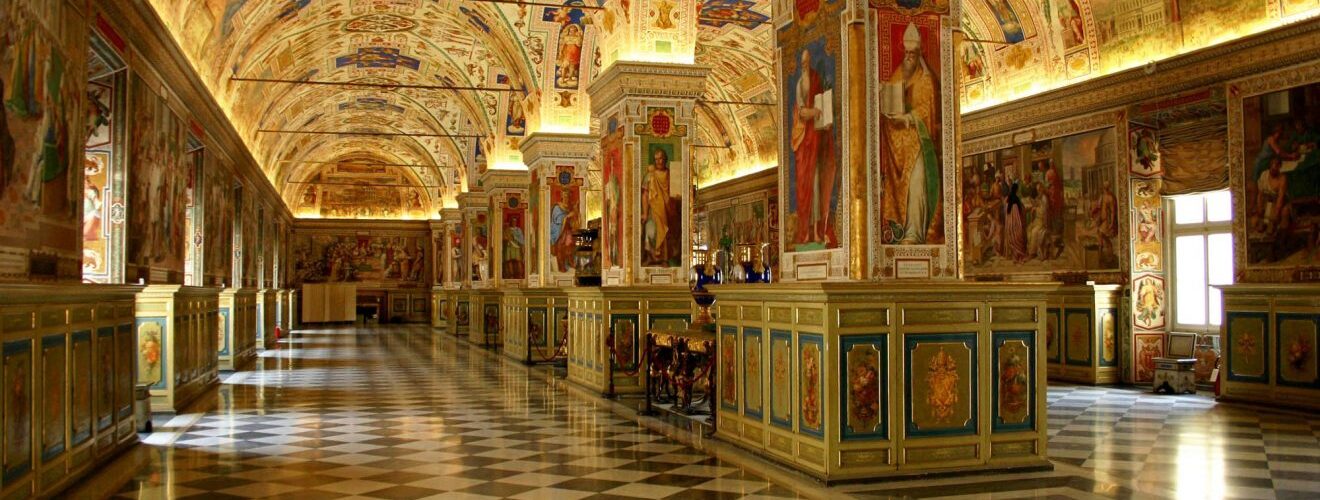
At first glance, the idea of providing a Muslim scholar with a small, private space to pray within the Vatican Apostolic Library may seem innocuous or even commendable. After all, religious hospitality is a shared value among many faith traditions, especially for those away from home in pursuit of knowledge. Yet, the decision to honor such a request within the heart of Catholicism has sparked a passionate debate resonant with centuries of theological, historical, and political complexities.
The Practical Request vs. Symbolism
Let’s begin with the practical dimension: a visiting Muslim scholar asks for a private room and a carpet to fulfill daily prayer obligations. For many, both inside and outside the Church, this seems a modest and reasonable accommodation. Indeed, Catholic social teaching upholds the dignity of the person and the importance of religious liberty. The Catechism of the Catholic Church (CCC 2106) affirms that every human being must be “immune from coercion” in such a way that nobody should be forced to act against their beliefs as long as this does not violate the common good.
But a deeper reflection triggers a cascade of questions. In the heart of the Vatican, the intellectual and spiritual center of Catholicism, should space be given to religious acts which explicitly deny core truths of the faith? Specifically, Islam’s rejection of the divinity of Jesus Christ marks a profound theological divergence. The Quran refers to Jesus (‘Isa) as a prophet, but neither divine nor the Son of God (Quran 4:171; 5:72), notions that for Muslims constitute theological error, even blasphemy. This should raise the stakes of such hospitality beyond mere logistics.
Historic Precedent and Memory
Such anxieties are not new. Catholic-Muslim interactions have been shaped by centuries of both violent conflict and peaceful engagement. The Crusades and the Reconquista, the fall of Constantinople, and the battles for the Holy Land left bitter memories on both sides. The conversion of historically Jewish and Christian sites into mosques, such as the Al-Aqsa Mosque on what was once the site of the Jewish Second Temple in Jerusalem, remains a sensitive flashpoint for Jews, Christians, and Muslims alike.
Thus, some see the Vatican’s decision as a form of ecumenical outreach in the spirit of Vatican II (Nostra Aetate, 1965), which encouraged dialogue with Muslims and recognized that “the Church regards with esteem also the Moslems.” Others, however, perceive it as an erosion of Catholic identity, a symbolic capitulation in a long, slow pattern of religious relativism, or even at its most extreme, a betrayal of Christ Himself.
The Church’s Distinction: Access and Accommodation
A crucial distinction must be made: The Vatican Library, as its Vice Prefect stated in interviews, is a universal, scholarly space open to researchers of all backgrounds. The Christian conviction that the pursuit of truth can never threaten Christ, but rather brings us closer to Him, underlies this invitation. Catholic tradition has long cherished the preservation and study of texts across all civilizations. Thus, there is nothing controversial in allowing Muslim scholars access to precious manuscripts, including ancient Qurans held in the collection. Knowledge, history, and dialogue are part of the Church’s intellectual patrimony.
However, permitting or even encouraging distinctly non-Christian worship within the Vatican’s walls is something else. The room in question is not a public mosque, but a “room with a carpet,” provided respectfully at request. The scale is limited: it is only for visiting scholars needing to fulfill religious obligations while engaged in research, not a general facility open to the public or to Rome’s resident Muslim population. And there is no evidence that Catholic liturgical or doctrinal integrity is being compromised by this practical courtesy.
But should the Vatican also accommodate everyone’s religious practices on its territory? While hospitality is good, it should not come at the expense of core Christian beliefs, especially in spaces so precious to the Church’s mission and symbolism.
Catholic Teaching on Hospitality, Truth, and Boundaries
Catholic teaching requires respect for the religious convictions of others (CCC 2104-2109), but also fidelity to the uniqueness and universality of Christ (John 14:6; Acts 4:12). The delicate balance is not neutrality. Catholicism does not view all religions as equal paths to God; rather, a recognition of the seeds of truth wherever they are found, and a hope for authentic dialogue that leads toward fuller encounter with the Gospel.
This means practical hospitality must be distinguished from syncretism or indifferentism. It is not a denial of Jesus Christ for a Catholic institution to permit a non-Catholic to pray according to their conscience in a private, non-public manner. On the other hand, making permanent, public arrangements for widespread non-Christian worship in officially sacred or ecclesiastical spaces could cross important boundaries (Dominus Iesus, 2000).
Muslim Perspective and Interfaith Hospitality
From a Muslim perspective, prayer is a non-negotiable pillar of faith, and missing ritual prayers is a grave matter. Yet Muslims are also accustomed to adapting, even praying in neutral spaces if they must. Islam teaches respect for Christians as “People of the Book,” but is clear about doctrinal differences, notably regarding the Trinity and Incarnation. There is also a strong Islamic precedent, rooted in the Prophet Muhammad’s example, for hosting adherents of other faiths with dignity.
Curiously, some of the strictest limits on non-Muslim prayer can be found in the holiest sites of Islam itself, where non-Muslims cannot enter the city of Mecca, while Christians have sometimes offered hospitality to Muslims in their own sacred spaces. This asymmetry adds fuel to the fire of controversy, especially for those who see their Church as uniquely open or, perhaps, vulnerable.
The Symbolic Dangers (and Opportunities)
Symbols matter. What can seem a simple granting of a private prayer room can take on vast symbolic significance when situated at the heart of the Vatican. Supporters may frame it as an act of Christian charity, consistent with the spirit of St. Francis of Assisi’s peaceful encounter with the Sultan, or with modern popes’ calls for interfaith friendship and fraternity.
Critics may ask: “Where is the boundary?” Is it enough to call it just a room with a carpet if the act is seen by some as a denial of the uniqueness of Christ as Lord of all? Is it proper for Christian spaces at the heart of the Church to be given for acts of worship contradicting the Gospel proclamation?
Maintaining Catholic Integrity While Honoring Dignity
Ultimately, the question becomes how to navigate the twin calls of upholding Catholic truth and manifesting Christ-like respect for every person. Catholic tradition warns against scandal (actions that lead others to sin or confusion), but it also upholds the law of love above all (Galatians 5:14). Providing a private, minimally furnished room within an academic institution for a particular scholarly guest may fit this careful balance.
What would violate this balance? Making such accommodations public, permanent, or open to all; allowing non-Christian worship in explicitly consecrated or liturgical spaces; or giving the impression that Catholic truth claims are suspended in the name of “dialogue.”
The line is not always easy to see. Yet, a Church secure in its identity can afford to be charitable, even to the point of surprising those within and without. Yet it must always do so with prudence and fidelity to the Lord, in whom all truth is ultimately found.
When Respect Becomes Compromise
The Vatican itself is territorially small and historically sacred. Should it accommodate acts which contradict what it stands for? Christian hospitality, even toward those who deny Christ’s divinity, can itself be a witness to the Gospel. The official Church view is not to seek out controversy but to meet the practical needs of its guests with dignity, clarity, and appropriate limits.
As society debates other boundary questions, such as males in womens locker rooms, the principle remains: Respect for persons is essential, but truth and order must be preserved.
Is providing a Muslim scholar with a private, temporary place to pray within the Vatican Library a step too far, or a model of practical hospitality?
The answer, as always, requires discernment in charity, prudence, clarity, and confidence that the truth will prevail. The history of Christianity and Islam has been marked by both confrontation and cooperation; the present, with its small acts of respect amid difference, offers no less a challenge. In the end, the drama of this controversy is not just about carpets or rooms, but about the Catholic Church’s ongoing struggle to remain both true to itself and open to the other. How it handles such matters today will influence the nature of interfaith relations for generations to come.

 Msgr Joseph Pellegrino
 Vincent Ryan Ruggiero
 Fr Joseph Esper