 Deacon Gregory Webster
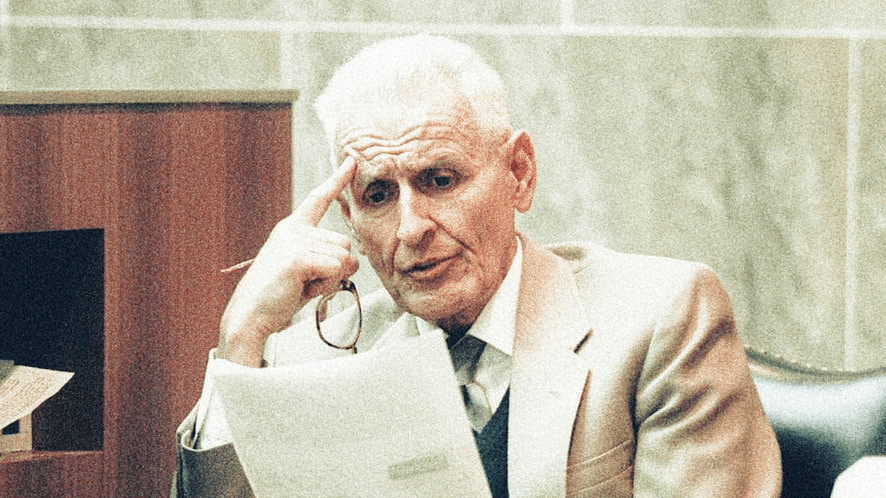
In a recent article in The Michigan Daily, (“Michigan Medicine should remember its best not its worst”), Kristin Collier and Scott Lyons highlighted Michigan Medicine’s recent celebration of its 175 most distinguished alumni and faculty that was intended as a fitting tribute to a storied institution. The honor roll, according to the editors, was to lift up those who have made positive contributions to the University of Michigan, medicine, and society at large. In the vast expanse of medical education, scientific research, global health, drug discovery, and compassionate patient care, many names shone for their brilliance and selfless service. However, the inclusion of Dr. Jack Kevorkian (a convicted murderer infamously referred to as “Dr. Death”) among the “leaders and best” has justifiably sparked profound controversy.
Kevorkian’s legacy, steeped in advocacy for physician-assisted suicide, flies in the face of our teaching on the sanctity and dignity of human life. His career, marked by proposals for the utilization of death-row inmates in lethal medical experiments and his role as a symbol for the euthanasia movement, does not reflect the vocation of medicine rooted in compassion and healing. Rather, it highlights the modern tension between utilitarian political trends and the enduring teachings of the Church.
Catholic Teaching on Human Dignity & Life
The Catechism is clear: “Human life must be respected and protected absolutely from the moment of conception. From the first moment of his existence, a human being must be recognized as having the rights of a person.” (CCC 2270)
This principle extends to all phases of life up to and including its natural end. The Church condemns both euthanasia and assisted suicide, viewing both as grave violations of the moral law. Pope St. John Paul II, in Evangelium Vitae (1995), powerfully reasserted that “euthanasia is a grave violation of the law of God, since it is the deliberate and morally unacceptable killing of a human person.”
Medicine’s highest calling to “do no harm” takes concrete form in Catholic moral reasoning. To relieve the suffering of another never justifies directly ending that person’s life. Palliative and hospice care, affirmed by the Church, aim to support and comfort the dying without hastening death. The Church urges medical professionals to see their patients as persons with infinite dignity and not as cases or burdens to be dispatched.
Kevorkian’s “Innovation”: A False Progress
Kevorkian’s claim to fame is not medical innovation or scientific advance, but the promotion of suicide as a solution to suffering. In this perspective, honoring Kevorkian in a hall of medical heroes would be just as silly as Augustinians listing Martin Luther as one of their Order’s most influential priests. Undeniably, Luther made a lasting impact; excluding its founder, he was, perhaps, the most famous Augustinian in history until Pope Leo. Yet, his legacy is regarded by the Church with sadness, given his central role in fracturing Christian unity.
Correspondingly, Kevorkian was influential. However, his influence is not cause for celebration by a school committed to healing. Just as the Church would never extol Luther among saints or the blessed, so the medical profession as one that embraces the vocation of healing cannot laud Kevorkian as exemplary.
Political Statements Versus Moral Witness
Many see Michigan Medicine’s inclusion of Kevorkian as a political statement, reflecting the rising tide of acceptance for physician-assisted suicide in American law. States now pass legislation allowing for euthanasia under euphemisms like “death with dignity,” even as they sidestep grave moral questions. This can be seductive to politicians as they seek notoriety as being on the vanguard of change and societal progress. Yet, as the Church cautions, the churning winds of political popularity must never overtake moral clarity or respect for human dignity.
Slippery Slopes & Institutional Memory
Public institutional memory is more than nostalgia. It reflects collective values, shaping how communities aspire and the boundaries they respect. To honor Kevorkian as a “leader” risks sending a message that the medical faculty condones suicide while confounding the role of healer.
This gesture mirrors the error made in the 20th century, when institutions like the University of Michigan named buildings after controversial figures such as Clarence Cook Little, whose eugenicist views were eventually repudiated. The University corrected its mistake by removing his name from prominence. Now, to retroactively elevate Kevorkian would be, in the words of Collier and Lyons, “a revisionist mistake.”
The Catholic Foundation for Healing
What, then, does Catholic teaching demand of the medical profession? At its heart, medicine is a response to suffering as an act of love and solidarity. Christ’s own healing ministry was marked by compassion, not calculation; Jesus restored, comforted, and affirmed the value of each person, never dismissing the inconvenient or burdensome.
Physician-assisted suicide short-circuits this vocation. Rather than facing suffering alongside the patient, it offers the illusion of control at the cost of fundamental betrayal: to relieve suffering by eliminating the sufferer. The Church’s witness offers a deeper, more challenging pathway: accompanying the dying with tender care, steadfast presence, and competent relief of pain while never succumbing to the despair that tempts easy solutions.
American Medical Association: A Secular Echo
Even outside explicitly religious frameworks, the American Medical Association has echoed Catholic concerns, stating that physician-assisted suicide “is fundamentally incompatible with the physician’s role as healer, would be difficult or impossible to control, and would pose serious societal risks.” The wisdom of this position is repeatedly borne out: where euthanasia becomes normalized, pressures subtle and overt mount for the elderly, the disabled, and the ill to “choose” death rather than burden families or public resources.
The Dignity of Every Person
The Catholic tradition asserts that each human person, regardless of age, illness, or productivity, possesses inherent dignity. This conviction is rooted in the belief that every individual is made in the image and likeness of God (Genesis 1:27). There is no suffering too great to erase this imago Dei, no disability so profound that it removes one’s claim to respect, care, and solidarity.
To accept Kevorkian as a leader is, perhaps inadvertently, to repudiate this teaching. It is to declare, however subtly, that certain lives are expendable; that medicine’s role may extend to facilitating death while not upholding and defending life. In the discordance of the modern age, such a stance marks a grave departure from the vocation of healing recognized by both Church and ethical secular reasoning.
The Path Forward: Healing, Not Harming
For Michigan Medicine and all institutions that shape the future of healing, the charge is clear. Celebrate the contributions of those who advanced patient care, scientific knowledge, and the dignity of medicine. Recognize the moral weight of institutional memory. Recommit to “do no harm,” not merely as a slogan, but as a lived reality. Compassion is measured not by shortcuts to suffering’s end, but by steadfast accompaniment.
To elevate Kevorkian is not an act of courage, but a surrender to trends that ultimately undermine the foundational vocation of the medical profession.
Conclusion
Catholic teaching in the medical field urges us to engage the dying and suffering with love shaped by both faith and reason. It calls us to see the patient and not just the problem, to honor life, not just manage death. In an era tempted by expediency, such witness is more vital than ever.
In the end, Michigan Medicine and all medical institutions that aspire to greatness, must remember and celebrate the best as those who advanced healing, science, and service with integrity and compassion. To retract Kevorkian’s name from its pantheon would not be erasure, but restoration: a recommitment to the foundational truth that every person’s life is worthy of protection and honor to its natural end. Medicine must remain the art of healing and not the science of death.



 Fr Joseph Esper
 Vincent Ryan Ruggiero

 Thomas Addis