
 Carolyn Humphreys, O.C.D.S.
Physical, mental, or spiritual issues are usually not an impediment to holiness. Rather, they can enhance holiness by decreasing our hold on superficial temporal distractions and increasing our need for the stability of our Christian faith that brings us closer to Jesus. There are several examples of people who lived in the shadow of the cross. Miguel Pro is known for the antics and disguises by which he evaded capture during the Cristero War in Mexico, suffered from chronic severe stomach pain that required three operations. Margaret of Castello was blind, lame, hunchbacked, a dwarf, and had a malformed left arm. She was hidden and then abandoned by her parents. She became a Dominican lay member and in spite of her physical difficulties visited prisoners, helped the sick, and comforted people who suffered. Many people admired her. Benedict Joseph Labre was considered eccentric, a wanderer and homeless. When he died in Rome, the city folk cried out saying, “The saint is dead.” Christina Mirabilis lived her life to please God. However, many considered her to be insane.
If we read the book Come be my Light by Mother Teresa and Father Brian Kolodiejchuk, we will understand that Teresa of Calcutta spent years in utter spiritual desolation. Many saints and blesseds felt rejected by God. Martin Luther King offers a choice, “As my sufferings mounted I soon realized that there were two ways in which I could respond to my situation, either to react with bitterness or seek to transform the suffering into a creative force. I decided to follow the latter course.”
Each one of us is a unique composition of body, mind, and soul. Our life’s journey will include pain in these areas. Body, mind, and soul can have diseases or conditions that leave us with significant pain from which we may not recover. When we have a serious disease, the cross becomes more real to us as it provides strength and courage. Jesus is our guide. His death on the cross changes suffering into salvation, tragedy into triumph, and grief into glory. It is a very good habit to unite our suffering with Jesus’ suffering on the cross. The mystery of the cross shows that pain is never isolated or separated from love. This unexplainable union transforms suffering into a positive force. Jesus manifests himself not only in transformational gifts present in the mundane, but also by lifestyle changes due to our disease.
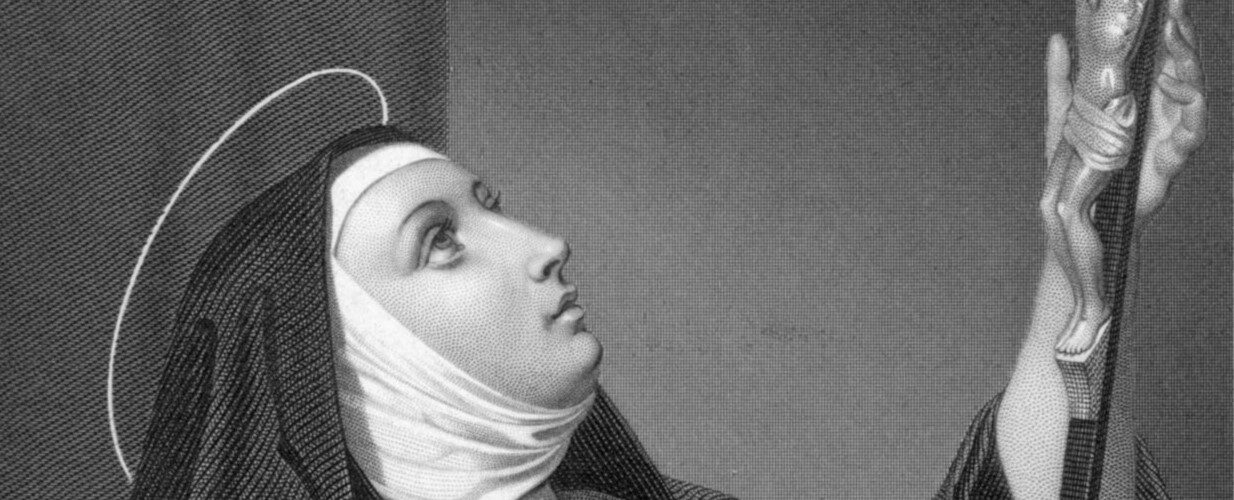
Teresa of Avila wrote, “One must not think that a person who is suffering is not praying. He is offering up his sufferings to God, and many a time he is praying much more truly than one who goes away by himself and meditates his head off, and, if he has squeezed out a few tears, thinks that is prayer.” Suffering refines us and helps us, and others, to get to heaven. We offer up our suffering for the good of our souls, the souls in purgatory, and for people on earth. Our Lord said to Rose of Lima, a lay Dominican, “Let all men know that grace comes after tribulation. Let them know that without the burden of afflictions it is impossible to reach the height of grace. Let them know that the gifts of grace increase as the struggles increase. Let men take care not to stray and be deceived. This is the only true stairway to paradise, and without the cross they can find no road to climb to heaven.”
Faith in God keeps suffering in the right perspective. Teresa of Avila wrote, “If we turn from self toward God, our understanding and our will become nobler and readier to embrace all that is good: if we never rise above the slough of our own miseries we do ourselves a great disservice.” Sometimes suffering can shake us out of a complacent or shallow lifestyle. Suffering can calm the restlessness in our heart and the questions in our mind and replace them with an inner inexplicable God given peace. It takes a huge amount of holiness to be grateful for, and find good in, hard times that cause suffering. This is easier when we remember God does not cause suffering. It comes from the evil in humanity and natural causes. Prayer strengthens faltering faith by providing courage that takes us beyond ambivalent feelings or hesitations. An exceptional maturity comes from interminable suffering. God is present and active in us even in difficult or troubled times. With God’s grace, we can accept negative experiences and find healing.
Healing is different from curing. Time can mellow the search for a cure for an incurable physical disease, and replace it with serenity in soul healing. Cure exists in the physical dimension which comes to an end. Healing occurs deep in the spiritual realm that will ever remain with us. Cure is the result of successful medical treatment. Healing is a process that transcends physical symptoms. Cure sees mystery as something to be understood or solved. Healing sees mystery as a channel for growth and a source of peace. Cure restores physical health. Healing restores an individual’s balance, harmony, and hope that were disrupted during the hard concerns of a disease.
Hope Evergreen
Hope is an important part of healing. Hope for a cure is only one aspect of natural hope. Natural hope may be limited to cure or stopping the disease’s progress. Natural hope may lead to a naïve optimism that focuses on extreme measures for a cure, such as more painful tests, unwise alternative or complimentary therapies, or extra hospital stays. More treatment is not always better. Sometimes there are no answers and the best that can be done is to control the symptoms.
Supernatural hope brings God, faith, and prayer into the situation. It replaces unrealistic expectations for recovery with a more profound and resilient orientation that springs eternal because we believe God is in control. We strive to accept challenges and suffering as a part of life. Supernatural hope lifts thoughts and desires beyond the physical or mental level by supporting a quality of life based more on who we are in the light of God’s love, and less on productivity, status or success. Herman Melville wrote, “Hope is the struggle of the soul, breaking loose from what is perishable and attesting to her eternity.” We move past the boundaries of our disease and use our time to do what matters most, such as being with family and friends, learning new things, repairing broken relationships, putting our affairs in order, and of course praying.
Jesus helps us to pray during times when we suffer. We realize anew that he entered into our humanity and took on our heartaches and our pain. In the dying Jesus, we see forgiveness, compassion, and mercy poured out. They are human characteristics when we are at our best. We pray to live them even when we are at our worst in suffering. Many different trials can crack our earthen vessels. Blessings from grace help us find beauty in these cracks. God’s living light shines into them and warms us with hope and courage. Drops of water fall from them and quench the thirst of others. Because of our cracks, we can help others with their cracks. God’s goodness is revealed to others through our help, however small. Serious disease can be a positive force that strengthens our integration and harmony, thereby creating a broader perspective of life. More importantly, it opens doors to, or increases our participation in, the spiritual realm of life.
Teresa of Avila exhorts, “We always find that those who walked closest to Christ our Lord were those who had to bear the greatest trials.” The way we respond to trials may change after the acquisition of wisdom and the passage of time. It is not what happens to us, but what we do with what happens to us that matters. Each one of us has talents, gifts or abilities that can be used for the common good. Serious disease may even reveal hidden gifts we never knew about. There is solace in stories like this one by M. R. Dehaan.
“A little piece of wood once complained bitterly because its owner kept whittling away at it, cutting it, and filling it with holes, but the one who was cutting it so remorselessly paid no attention to its complaining. He was making a flute out of that piece of ebony, and he was too wise to desist from doing so, even though the wood complained bitterly. He seemed to say, ‘Little piece of wood, without these holes, and all this cutting, you would be a black stick forever, just a useless piece of ebony. What I am doing now may make you think that I am destroying you, but instead, I will change you into a flute, and your sweet music will charm the souls of men and comfort many a sorrowing heart. My cutting you is the making of you, for only thus can you be a blessing in the world.’”
What hidden gifts will suffering awaken in us? Ongoing suffering draws us deeper into the mystery of God and the mystery of ourselves. Therese of Lisieux lovingly reminds us, “Trials help greatly to detach us from earth. They make us look to God, rather than to this world.” When we do not know what lies ahead, courage stands us up on our feet and gives us the push we need to move forward into suffering as a land of mystery.
Now you are with me, Lord of all Mercy,
author unknown
Always so patient, setting aright;
Help me be empty, open, receptive,
Always accepting, Lord of all Light.
Then I can follow where you are leading,
Walk the unceasing way of the cross;
With you before me, Suffering Servant,
Even in torment, there is no loss.
Only the awesome, mystery hidden,
Silent, redemptive, secret of pain,
In its self giving, full immolation,
Love is the secret, love is the gain.
Keep me, my Savior, little and humble,
Gratefully prostrate here at your feet;
Your mind is my mind, your love enfolds me,
Nothing else matters, I am complete.

 William Borst
 Fr Dino Vanin
 Fr Mario Attard OFM Cap
 Msgr Joseph Pellegrino
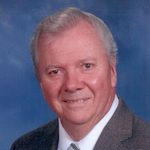 Deacon Donald Cox