
 Carolyn Humphreys, O.C.D.S.
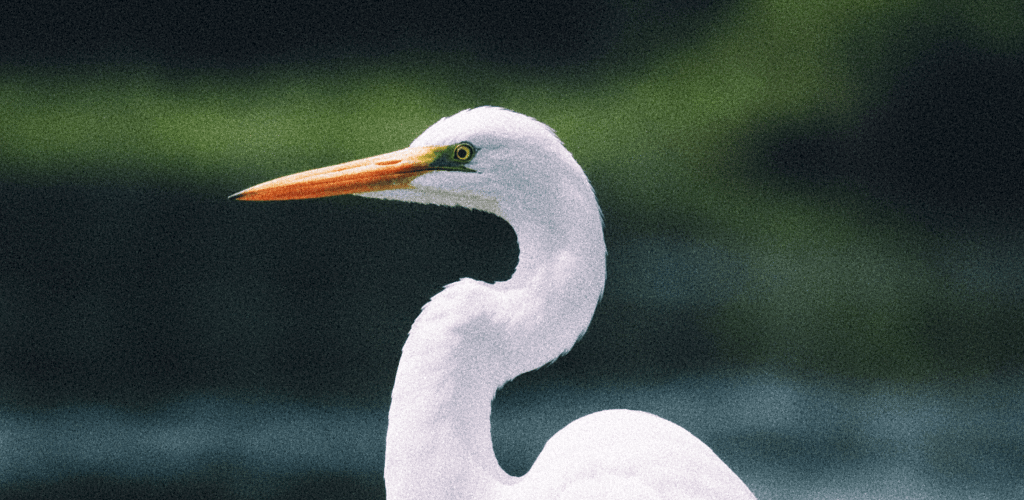
”Sadako was a little Japanese girl caught in the bombing of Hiroshima. She saw her mother and father and the rest of her family destroyed right before her eyes. She herself had severe radiation burns. She was in a hospital, essentially waiting to die, and she knew she did not have long to live. But instead of bemoaning her tragedy, she said, “This can never happen again to people. People cannot be this cruel to one another. So each day I am going to cut out and make a white crane, and I am going to send it to somebody and ask them to be a disciple for peace.” Well, Sadako did this every day for 683 days, and then she died. And those who knew this little girl had their choice. They could be so outraged over the bombings that they would be consumed by a desire to go out and bomb the rest of the world in revenge, or they could pick up on what she started. And so they made a 684th white crane and a 685th and a 686th, ad infinitum. Each of those white cranes goes throughout the world with the message that life can be better than it is now.” (From The Word in and out of Season by William Bausch)
Sadako’s brother said, “She let out both the pain of our parents and her own suffering with each crane. She hid her suffering and was very tolerant of the pain. She didn’t want anyone to worry. She didn’t complain to her friends or to us. Her spirit encouraged others around her to speak of her bravery.” This was reflected in her cranes. In Japanese lore, the crane was held in high regard. A crane is a symbol of peace, loyalty, hope, and resilience in the face of disaster. Through her resilience, Sadako transcended what happened to her and gave to others in a very practical and loving way.
Resiliency keeps internal dialogue neutral to positive regarding what we hear from others, and, more importantly, what we think about ourselves. We maintain our morals and do not lose heart. We stand up for what is right, even when there is opposition. Facts, evidence, and God’s strength shield us against influence and deceptions from political correctness, pettiness, prejudices, and other negative trends of today. We see them for what they are and do not yield to them. Speculations and theories about tragedies can go on forever. Discussions, dialogues, and debates are helpful to a point, but they only go so far and can easily digress from sustaining life. Dialogues can change into intellectual jousts, power trips, or other types of verbal exchange that dilute the culture of life and enhance the culture of death.
Because we are the inheritors of original sin and live in a world that is plagued by greed, abuse of leadership, hate, and other destructive or self absorbed factors that support man’s inhumanity to man, peace between all nations seems like a dream. We can strive to realize that dream, but before we do we must maintain an inner peace that flows from Christ. Jesus reveals that situations in the world may push us down, but he has overcome the power of evil so, with resiliency, nothing can keep us down. Reinforced by prayer, inner peace brings about a sturdy resilience as we release our grip on what we do not know about God, the unknowns in temporal knowledge, and the mystery that is us. Acceptance of God’s grace brings about an interior peace that transcends temporal woes and strengthens our ability to persevere and endure. As Christians, we are ambassadors of Christ’s peace in situations of conflict and oppression that we encounter. By the example of our lives, we offer Christ’s peace to others as an assurance of God’s presence, even in the face of evil.
Inner peace resides in our soul and is reinforced by resting in God’s love. When our soul is healthy, reposing in his love is serene and calm. Jacques Philippe likens a hale and hearty soul to a lake. “Consider the surface of a lake, above which the sun is shining. If the surface of the lake is peaceful and tranquil, the sun will be reflected in this lake; and the more peaceful the lake, the more perfectly will it be reflected. If, on the contrary, the surface of the lake is agitated, undulating, then the image of the sun cannot be reflected in it.” The sun is God’s love. Our soul, the most important part of ourselves, is the lake and can reflect God’s love only if she is well cared for.
Hope the Eternal Flame
Gregory of Nyssa wrote, “Hope always draws the soul from the beauty that is seen to what is beyond, always kindles the desire for the hidden through what is perceived.” However, there are times when things seem hopeless. Because life is as it is, pits are inevitable. Resilience requires being real about our struggles. We do not deny, exaggerate, or minimize them. When we are having a pit experience, we need to acknowledge and define why we are there. If we need help, we must find it, and this can take several attempts. However, we keep trying because God moves through our pain and through the people who come to our aid. We also need to mourn if there is a loss. Mourning is necessary and can range from feeling sorry for ourselves to thinking about something that could help others. The closer we come to thinking about something creative, the sooner we will be out of the pit.
At the bottom of the pit, we are in the dark. No matter how deep the pit, when we turn to God and look up, we see a candle flame glimmer of hope. It seems far away at first, but when we keep our eyes on it, we begin our way out of the pit. Hope helps us to discover God and find strength to climb to the top. A simple candle flame is a symbol of hope. It keeps the chill of darkness at bay by giving us light and warmth. Like a bird that sings in the dark before the dawn, a flame is a reminder that the sun will rise. May the flame of hope always light the way to the flame inside the Christian heart, which is a perpetual reminder of Christ the light.
“It is in that holy moment when the candlewick is snuffed and the yellow halo grows its black cord that the warm wax works its softness into us, wraps its way around our hearts, like the climbing smoke from the extinguished candlewick up the staircase of air—that moment of unmistakable nasality of candle scent in chapel dark that suffers us to realize that we are to be trimmed to burn again.” (Chet Corey, Spirit & Life May-June 2012, Benedictine Sisters of Perpetual Adoration)
In his Summa, Thomas Aquinas said that hope is an activity concerned with a future good that is difficult to accomplish, but that can be achieved, with the help of God. Hope puts us in the hands of God with confidence that he will not drop us. To maintain hope when a situation appears to be hopeless takes strong faith. “But they that hope in the Lord shall renew their strength, they shall take wings as eagles, they shall run and not be weary, they shall walk and not faint.” (Is 40:31) With God’s assistance we keep walking.
Viktor Frankl, in his classic book Man’s Search for Meaning, which was based on his experience in Nazi concentration camps, shows how most people who hold on to the hope of achieving something positive can survive the worst of human conditions. To believe that something good will be fulfilled is a strong incentive for life. Indeed, living in hope is healthier than living in fear. Resilience is our ability to withstand pain, and grow from it, in life depleting situations that we anticipate or experience. We believe a bad situation has something good hidden within it and we must try to find it. Through God’s grace and increasing wisdom on our part, we can change our view of pain and suffering from a narrow “me and my pain” to a broad upgrade for humanity in some way, no matter how small. We learn the value of redemptive suffering through personal experience which moves us closer to the suffering Christ and leads to more compassion and empathy toward others. We know a greater joy through experiencing the sadness of what put us in a pit, and a deeper peace because of our time in the pit.
Christian faith sustains us through times we would not be able to endure if we did not have it. Teresa of Avila had more than her share of complex, difficult times. Yet, she soldiered on, doing what she believed God asked her to do. Known as Mater Spiritualium (Mother of Spiritual Souls), she was an exemplary woman of prayer and found God everywhere, even among the pots and pans in the kitchen. Her faith sustained her and, with help from God, she was a woman of many extraordinary accomplishments. She is primarily known for fashioning a new way of life, with a deeper spirit of prayer, for nuns and friars in the Carmelite Order. She was misunderstood, misjudged, and opposed in her efforts to reform the Carmelite Order. Although her life included arduous struggles, she was never overcome by them. From her pain came wisdom, from her fear came courage, and from her suffering came strength.
Teresa shows us that there is a space between pain and our response to pain. If that space broadens, we live for something more than ourselves and our pain. That something more adds wonder and awe to our vision of life and a deeper splendor and mystery of God to our days. Teresa’s resiliency was manifest by her ability to maintain faith and trust in God. She drew strength from prayer and other sound Christian practices. She developed spiritually through learning and growing in adversity and distress. She was not intimidated or upset by insults, curses, name calling, and other affronts that were directed to her by people who judged reality by subjective truths and closed minds. Her negative experiences were guideposts, not stop signs.
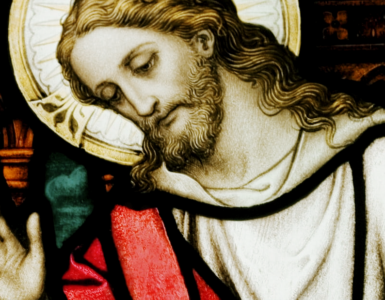
How we react to adversity is one area that defines us. Resiliency helps us manage adversity well. If we fall, we get up and try again. We straighten up after we have been bowed by the winds of defeat, disappointment, or suffering. When discouragements come, we focus on what is most important for us within the teachings of Jesus. He helps us keep our days right with God and harmoniously ordered. Paul the apostle guides us into the resilience arena: “We have this treasure in jars of clay, to show that the surpassing power belongs to God and not to us. We are afflicted in every way, but not crushed; perplexed, but not driven to despair; persecuted, but not forsaken; struck down, but not destroyed; always carrying in the body the death of Jesus, so that the life of Jesus may also be manifested in our bodies.” (2 Corinthians 4:7-10) We are those fragile jars of clay. We could easily break when struck or dropped. But we do not. Our strength is baked into us by our potter God. We are not totally self reliant but depend on God. With God we withstand the blows that come our way whatever they may be. And when we become cracked, the cracks let God’s light shine into us.
Reflections from the Light
For us, as Christians, resiliency is a beautiful trait. When we were in the pit, being there may have been our major identity. That is changed to minor and we find our major identity is being precious sons and daughters of God. We remain attentive to the here and now by not dwelling on dark memories or comparing ourselves with anyone. We set clear goals, see every day as a gift, and in the evening, thank God for blessings during that day. We make a decision not by the movement of emotions, but by weighing pros and cons, praying to the Holy Spirit, then discerning what is right for us. We dispel dismal thoughts by doing something active such as take a walk, jog or hike, wash the car or dog, or clean the kitchen or a junk drawer. There is contentment with what we have now, without undue grieving for what we had. We replace gloomy thoughts with something cheerful, a happy song, uplifting story, jocular poem or inspirational prayer. Most of all we adhere to Paul’s words, “We do not lose heart. Though our outer self is wasting away, our inner self is being renewed day by day. For this light momentary affliction is preparing for us an eternal weight of glory beyond all comparison, as we look not to the things that are seen but to the things that are unseen. For the things that are seen are transient, but the things that are unseen are eternal.” (2 Corinthians 4:16-18)
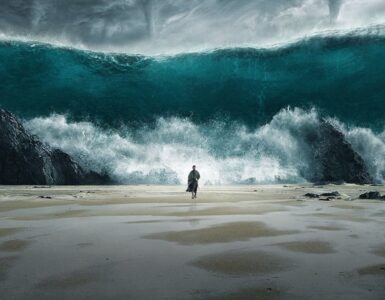
There was a woman named Mary whose example shows what faith filled resiliency can do. When she was a child, her greatest pleasure and delight was building sand castles at the beach. Her castle provided a home for a beautiful princess with walls that protected her from the crashing ocean waves. Mary dug a trench that surrounded the castle and marveled at the water swirling in her moat. Inevitably, the ocean spilled into the gateway and washed away the castle. Mary was neither upset nor did she complain, because she knew she could rebuild the castle. As an adult, Mary was diagnosed with cancer. Her resiliency, and faith in God, supported her through her cancer years. When something became problematic, or no longer worked, she tried something else. She learned how to compensate, found good things in the swirling waters of cancer treatment, and lived enthusiastically with the ups and downs of her disease. Her belief in God, daily prayer, and cheerful, upbeat personality defined how she lived. Yes, she was knocked down by many trials, but throughout them her resiliency remained in good form. Mary was a secular member of the Discalced Carmelite Order. Deep in her heart she believed and lived the often quoted words of Teresa of Avila.
Let nothing disturb you.
Let nothing frighten you.
For all things pass save God
Who does not change.
Be patient and at the last
You will find all fulfillment.
Hold God and nothing
Will fail you.
For he alone is all.
+++
A very interesting article: The Story of Sadako Sasaki
And give them away with the peace prayer of St. Francis of Assisi
Lord, make me an instrument of your peace:
where there is hatred, let me sow love;
where there is injury, pardon;
where there is doubt, faith;
where there is despair, hope;
where there is darkness, light;
and where there is sadness, joy.
Grant that I may not so much
seek to be consoled as to console,
to be understood as to understand,
to be loved as to love;
for it is in giving that we receive,
it is in pardoning that we are pardoned,
and it is in dying
that we are born to eternal life.

 Deacon Gregory Webster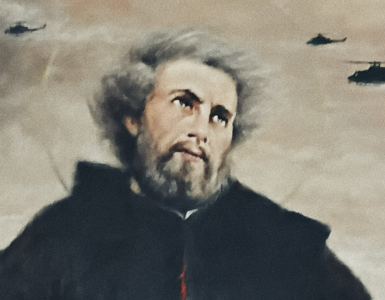
 Paul Suski
 Fr Dino Vanin
 Deacon Donald Cox