
 Deacon Gregory Webster
Fourteen years after the passing of my Dad, I do not miss him any less than the day he breathed his last breath in hospice. Time has not erased the moment. It has simply taught me how to carry it. What surprises me most is how often I still think of him in ordinary moments. A conversation with other parents, conflict within the family, a difficult day at work, walking my dog, or a problem I never expected to face will suddenly make me look upward and quietly say, “Sorry Dad, I didn’t know.” Now I do.
There is a social media post that circulates every so often reminding us to “forgive our fathers” because they were living life for the first time too. I understand the point. Every father is learning as he goes. Every parent makes mistakes. Yet when I think of my own father, I struggle to think of anything that truly requires forgiveness. That is not because he was perfect. He certainly was not. Only God is perfect. But he was faithful. By all standards, Dad was a good man. He was present. He carried burdens I never saw and responsibilities I did not understand until decades later. He did not live in the soft and therapeutic world of 2026 where every emotion is analyzed publicly and every hardship is expected to be verbalized. He came from a generation that seemingly got up in the morning, went to work, and carried the load placed before them.
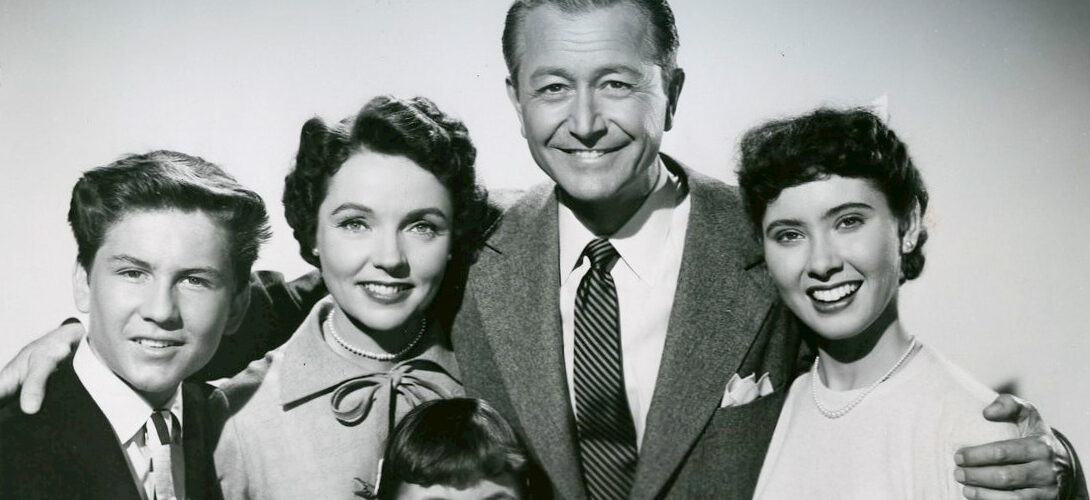
Sadly, as a father I was not Robert Young either, though too few people today would understand the reference. Robert Young played the ideal father on television, calm and wise, always knowing the perfect thing to say by the final commercial break. Real fathers do not get scripts. They get bills, layoffs, fears, disappointments, sick children, sleepless nights, arguments with their wife, and the constant pressure of wondering whether they are succeeding or failing at the task God entrusted to them.
Today I am feeling down because I thought I at least met the minimum bar these days as a father and husband: I showed up. Apparently, that is not enough. It is easy to be reminded of every mistake you ever made. These failures replay themselves loudly in your mind and often brought up in emotional times while the sacrifices made disappear unnoticed into history. But good fathers do not answer criticism with a list of accomplishments. My dad never did. Robert Young never did either. Neither will I. The funny thing about fatherhood is that the scorecard is usually written long after the game is over. Perhaps my children will someday see the things I tried to do right, probably fourteen years after I am gone as well.
I will not apologize that my children seldom saw me cry. My generation was taught to hold tears inside. When we were cut, we bled, but we rarely admitted it openly. Vulnerability was not considered strength where I came from. It was not cruelty that taught us this; it was simply the standard we were taught to meet. Men were expected to steady the ship, not become another passenger needing rescue. Maybe that was unhealthy in some ways, but there was dignity in it as well. My father carried himself that way. I am certain he told me he loved me, but honestly, I did not need constant verbal reassurance. His love was visible. He was there when I needed him. And when he could not be, Mom was. They were a team. Their marriage taught me more about love than a thousand speeches ever could.
For me, love and respect were inseparable. Respect was earned through consistency, sacrifice, honesty, and reliability. My dad earned it completely.
That mattered because I was hardly an easy son. I was a screwup more than once. Back then, and still today, my mouth got me into trouble. Being an introvert before people talked about “introverts” made life harder than I understood at the time. Still today I prefer to write my emotions rather than speak them. In the 1980s, nobody explained social anxiety, personality types, or emotional exhaustion. You were simply expected to adapt. I stumbled badly. I became a college dropout, when I probably should have started at junior college in the first place.
Pride and immaturity often travel together.
Eventually I found my way back. I earned several degrees over the years. Maybe some of that was compensation. Maybe some of it was proving something to myself. Perhaps it was both. Yet through all that wandering, my father never chained me to my failures. He expected me to grow up, learn, and keep moving forward.
That lesson became even clearer in my later years with him. Early in my career, my wife and I endured multiple layoffs and instability. Early in our marriage, I moved my family every five years chasing opportunities and fiscal survival. I knew it was hard on my children. I knew every move uprooted friendships, schools, routines, and security. Someday they may understand that it hurt me too, perhaps more than they realized at the time or even now.
Once, in discussing that period in my life, my father opened up about the disappointments and betrayals he faced in his own career. Until then I honestly believed he had moved through life untouched by weakness or fear. He taught me to appreciate a good boss because they are rare and often temporary. He reminded me that organizations discard loyal workers without hesitation. He told me about the times he had been burned professionally despite doing the right thing. I already knew my father was tough as nails and true to his word. But around age forty I learned something even more important: he bled too.
Oddly enough, that realization did not lower my respect for him. It raised it.
These days In OCIA, I often tell people that those fortunate enough to have loving parents can learn something profound about God through them. No human father perfectly reflects the Heavenly Father, but good parents provide glimpses of Him. My parents held high standards and expected us to strive toward them. Discipline was not evidence of a lack of love. It was proof they cared enough to correct us. Modern culture often confuses love with the removal of all discomfort, but real love desires the good of the other person, even when that requires sacrifice, correction, or difficult conversations.
When discussing the sinful pasts most of us have, I remind the group how no loving parent would want their child forever imprisoned by mistakes made years prior. Certainly, there may have been hurt, anger, and consequences at the time. Yet loving parents want growth and redemption for their children, not endless shame. If this is true of imperfect earthly parents, how much truer is it of God, our perfect Father? We are often the ones who chain ourselves to the past. God calls us forward. I may have chained myself to the past for years but my own father never did.
At Baptism, I remind those present that in this sacrament we become adopted children of God. As such, He will never abandon His love for us: it is we who pull away. Our loving God waits for and rejoices at our return. God may not like the many choices that we make in this broken world, but he never stops loving us. In this regard, our earthly parents may not model this love as effectively but I knew that my parents’ love was forever, as mine is for my children. Many of us have made choices we regret, leading to our own pulling away. That causes distance, not loss of love.
One of the unfortunate realities of growing older is realizing how little we understood our parents when we were young. As children, Dad seemed to have all the answers. It never occurred to me that while I was navigating my struggles, he was navigating his own. When I was focused on diapers and worrying about bills, his knees were probably hurting as much as mine hurt today. When I was enduring layoffs at the beginning of my career, he was enduring uncertainty near the end of his, at an age when recovery is far more difficult and financially more devastating.
At the time, I thought my burdens were unique. Youth almost always does.
The biggest lie we tell ourselves growing up is that our parents “don’t understand what we are going through.” The truth is usually the opposite. They understand more than we know because they already walked the road. When I was young, I never realized work exhausted Dad. When I was older, I mostly worried about how work stressed me.
Sorry Dad.
Yet through everything, Dad remained true to himself and true to me. There was a steadiness to him that I appreciate more every year. He did not pretend life was easy, but he also did not make himself the center of attention. There is a humility in that generation that modern culture often lacks.
Jesus did not spend His Passion explaining Himself. He did not come down from the Cross demanding recognition for all He endured. There was silence, sacrifice, endurance, and love. My father lived with some reflection of that same spirit. He carried pain quietly.
I was never as good as he was at masking hurt or responding calmly to pain. Perhaps that comes from being born between generations. My father’s generation often suppressed pain completely. Today’s culture sometimes elevates pain into identity. My generation sits awkwardly in the middle. We learned to acknowledge hurt more than our fathers did, but we were not yet taught to make our suffering the responsibility of everyone around us.
I was not Robert Young. But, I was not Darth Vader either.
Like most fathers, I lived somewhere in the imperfect middle: flawed, trying, stumbling, learning, sacrificing, failing sometimes, succeeding quietly other times, and hoping my children someday understand that much of love looks ordinary while you are living it.
Maybe that understanding only comes later.
Perhaps it takes fourteen years after the funeral, when we finally realize our father was never just teaching us how to live. He was doing so while struggling to live life the best he could as well.
May perpetual light shine upon you, Dad. May your soul and the souls of all the faithful departed rest in peace. Amen.


 Msgr Joseph Pellegrino

 Fr Mario Attard OFM Cap
 Fr Dino Vanin