

 Vincent Ryan Ruggiero
Artificial Intelligence (AI) has become the rage. And it is not only supposed to be a good thing, but also something that will “Unlock the power of automation for business productivity and everyday life.” Can it achieve those things? Is it truly the blessing it seems?
I recently read a popular book that makes the positive case for AI. (Master AI by Charlie Hansen.) Here are some excerpts:
[AI] “evolves around enabling machines to emulate human intelligence. . . It is capable of executing any intellectual task . . . Its algorithms . . . subtly influence digital consumption patterns without users being conscious of their actions.” . . . [Also] “It’s platforms offer strategies and techniques used in traditional therapy, helping users manage stress, anxiety, and depression . . . [and] understanding and managing their mental health.” [Moreover,] “AI can analyze current trends . . . and suggests innovative ideas based on data patterns it detects.” [Thus] “It relieves humans of repetitive tasks, allowing them to focus on creativity, strategy, and problem solving.”
The author summarizes by saying that “AI mimics human intelligence and [reveals] the fascinating world of machine learning, where computers learn from data to make informed decisions.”
What I found troubling about the book was that it has little to say about the role of humans in AI’s world. Though occasionally saying AI frees people of repetitive tasks so they can focus on more difficult things, it more often speaks of AI emulating humans, executing tasks, influencing patterns, and suggesting creative ideas. The message seems to be that AI displaces humans rather than assisting them.
But there is something that troubles me even more, and that is the author’s clear, though perhaps unintended, statement that AI has a subtle influence that its audience is not conscious of. I see it as a reminder that human operators of AI might use their influence in ways more detrimental than helpful. If that is the case, the unquestioning trust in AI that seems to be winning could leave many people in intellectual danger.
Britannica.com’s measured commentary on Artificial Intelligence is more helpful than those who have rushed to champion it. Here are some of Brittanica’s highlights:
“The term [AI] is frequently applied to the project of developing systems endowed with the intellectual processes characteristic of humans, such as the ability to reason, discover meaning, generalize, or learn from past experience. . .Despite continuing advances in computer processing speed and memory capacity, there are as yet no programs that can match full human flexibility over wider domains or in tasks requiring much everyday knowledge . . . AI has certain biases that are difficult to overcome without proper training. . . As humans are inherently biased, algorithms are bound to reflect human biases. In fact, AI has no real definition of intelligence to offer, not even in the subhuman case . . . In the absence of a reasonably precise criterion for when an artificial system counts as intelligent, there is no objective way of telling whether an AI research program has succeeded or failed.” (Emphasis added.)
In some respects AI can be a blessing. But whenever it undermines or weakens people’s thought processes, it is a danger to individuals and society.
The thinking process is as follows:
- Being curious about issues
- Examining the various viewpoints on each issue
- Evaluating the evidence supporting each viewpoint
- Determining, without bias, the most reasonable viewpoint
This process cannot be fulfilled by mindlessly embracing other people’s thoughts or those produced by Artificial Intelligence (AI). Those thoughts may be true or false, wise or foolish, and the intentions of the individuals may be honorable or dishonorable. The only way to form responsible thoughts is to complete the process oneself. Similarly, the only way for a society to avoid confusion—and decline—is for parents, educators, and other influential people to practice the thinking process themselves and encourage others to do the same.
Copyright © 2026 by Vincent Ryan Ruggiero. All rights reserved


 Deacon Gregory Webster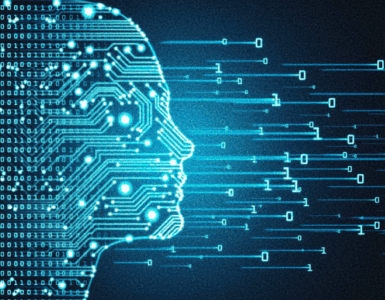
 William Borst