
 Fr Dino Vanin
Is it true that “we are what we eat?” It depends on what one means by it, I guess; but it is true for those who heed Jesus’ challenging words: Whoever eats my flesh and drinks by blood remains in me and I in him. (Jn 6:56)
Italians have a distinctive way of interpreting many aspects of life through the symbolism of eating. It extends to personal relationships and anything else that would enrich one’s life. In finding an adorable, simpatico baby or toddler, many Italians, especially mothers, would pick up the charming infant and mimic the action of eating his/her face while covering it with warm, slobbering kisses. Come to think of it, this urge to possess through nutritional assimilation whomever and/or whatever is desirable is also present in this country. Some passionate lovers nibble the face of their beloved. A little girl, who waited for ten years to have a baby brother, confessed to grandma that she is often tempted to cover his little toes with Ketchup and “eat them!”
In the first reading (Deuteronomy 8: 2-3; 14-16) for this Solemnity of the Most Holy Body and Blood of Christ, there is an intriguing interpretation of the nexus between the trials and afflictions that pepper life’s journey and manna, the celestial food that God sent, daily, upon his people in the desert. It is at least a “curious” way of looking at the afflictions and challenges of life in terms of God’s repeated invitation to read in the food (manna) this subtle message: “Everything is under control; I love you; I care for you; I want you to be mine and me to be yours…”
Back then, Moses had to clarify the Lord’s intention to find a concrete means “to possess” his chosen people, and for his chosen people “to possess” him through nutritional assimilation of his manna and of his word, because God was still inaccessible and beyond what their weakened senses could perceive. But Jesus is God in human flesh, totally accessible, totally visible, totally perceived by the senses. Thus, as he reiterates the Father’s desire for intimacy, he chooses to adopt a terminology that is so graphic, so crudely realistic that it smacks of cannibalism.
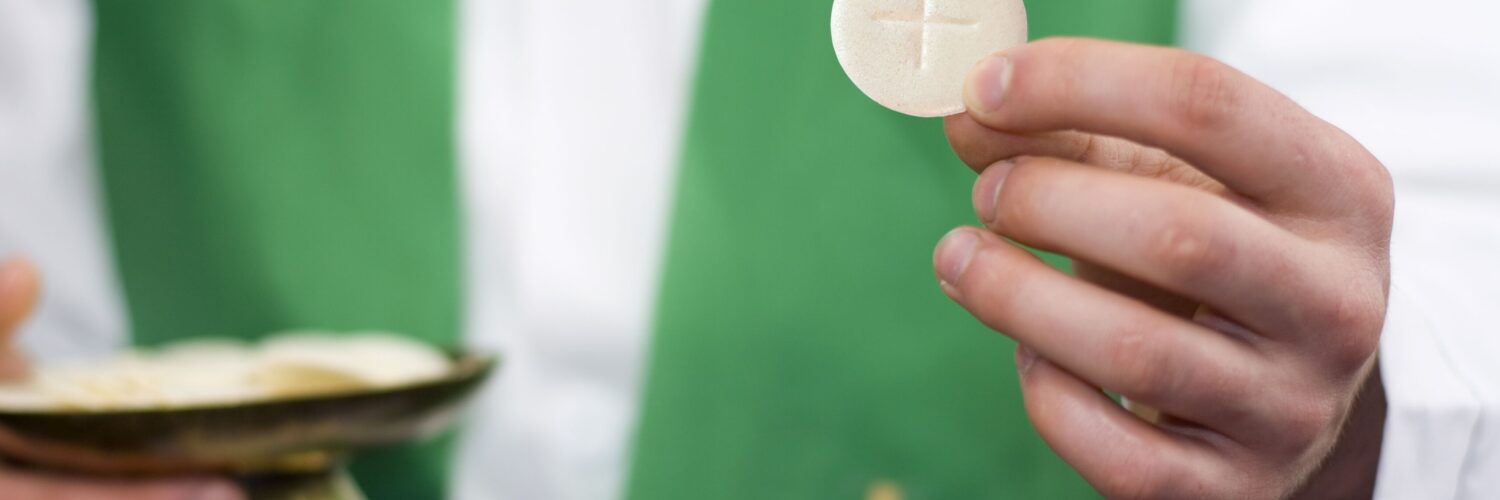
Accustomed as we are to receiving the Body and Blood of our Lord in Holy Communion, we cannot imagine the horror that Jesus’ purposely selected words “to feed on,” “to gnaw on” his flesh” and to gulp down his blood had on his first audience. (John 6:51-58) Yet, Jesus felt that only these very crude, shocking terms could convey unmistakably his desire to make us his by sharing with us his “divine DNA!” “Just as the living Father sent me and I have life because of the Father, so also the one who feeds on me will have life because of me.” (John 6:57)
All symbolism is emphatically avoided.
For my flesh is true food, and my blood is true drink.
John 6:55
There are at least two instances in Holy Scripture that speak symbolically about nutritional assimilation by eating a scroll of God’s Word (Ezekiel 3: 1-ff. and Revelation 10: 9-ff). Had Jesus softened his jargon by hints of symbolism, his description of how this mutual indwelling of God in us and of us in him, his first audience would have not be so horrified. The immediate conclusion we must reach from this consideration is that, with every Holy Communion, we should be able to confess with an ever-increasing degree of confidence what St. Paul confesses about himself: “yet I live, no longer I, but Christ lives in me.” (Galatians 2:20)
Let us face it: whenever we do Eucharist, we proclaim the death of the Lord until he comes again (1 Cor 11: 26). This should not be a bland, perfunctory assertion by someone who is symbolically feeling one with Jesus, but conscious, full compliance with the Holy Trinity’s desire to be in us and we in the Father, Son and Holy Spirit. The proclamation that Jesus wants of us every time we do Eucharist is nothing less than measurable progress towards generous becoming of one mind and one heart with Jesus and of one will with the Father. Therefore, we are not proclaiming the death of the Lord unless we are ready for self-immolation with the Lord Jesus. There must be a participation of our whole self in the Blood and Body of Christ (cf.1 Corinthians 10: 16-17).
Once we have sufficient trust in the power of the Holy Spirit in proclaiming correctly the death of the Lord, we can tackle the second inescapable conclusion: Holy Communion is the best and most effective way offered us to implement the New Commandment: “I give you a new commandment: love one another. As I have loved you, so you also should love one another.” (John 13:34)
Hence, it is painfully evident that we have yet a long way to go before becoming what we eat, before having assimilated “God’s DNA!” Yet, I am rather confident that what would be pleasing to the Lord, from this day onward, would be our enduring, ardent desire to become like him, to have him living in us; and our sincere effort to bring this to fruition before he comes again in all his glory.

 Fr Joseph Esper
 Deacon Gregory Webster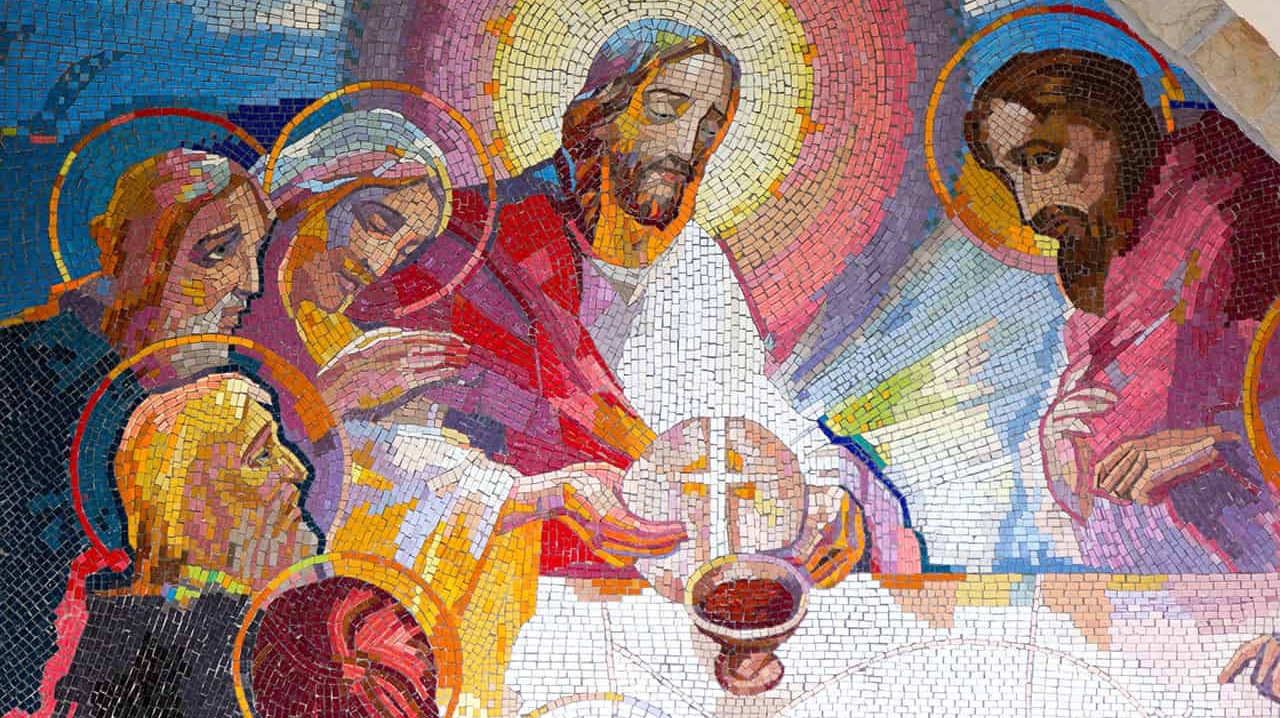
 Msgr John Kasza