
 Fr Dino Vanin
Arguably the most difficult challenge to our salvation is the call to forgiveness. Be merciful, just as your Father is merciful. (Luke 6:36)
However, fraternal correction must be just as difficult. Mind you, fraternal correction is not at all like the spontaneous, angry reaction when someone exposes our flaws to humiliate us. Personally, I feel I am readier to forgive grievous offenses than to walk up to a brother or a sister in the Lord and, tactfully, point out to them their mistakes.
How about you? Perhaps many of us do not even dream of having this duty within the Church.
So, the question is: how do we get enough motivation to carry out this delicate task? The goal, common to all of us, is to be … like God for we are meant to be in him for all eternity, and he be all in all. (Cf.1Jn. 3:2) Now, since God is love, our preparation as individuals and as a community of faith is to wholeheartedly allow love to reach perfection in us.
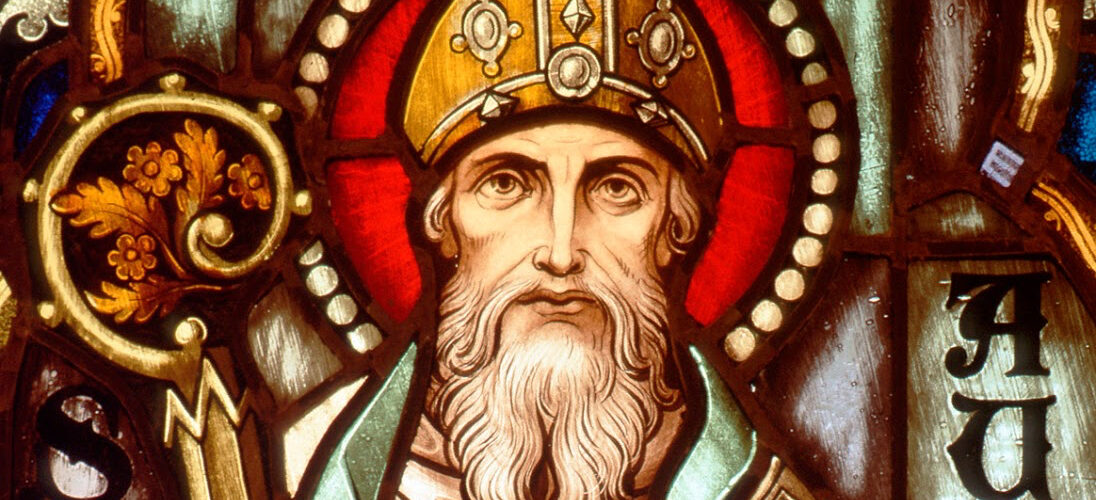
One aspect of this effort is fraternal correction which, as we find out today, can be achieved only with most loving interactions. “Love is the fulfillment of the law.” (Rm 13:10) And, St. Augustine, one of the most outstanding doctors of the Church puts it roughly in these terms.
In essential matters: unity. In nonessential matters: diversity, variety. In all matters: love.
Before we proceed to motivate ourselves to correct each other and to implement unity, diversity and charity, we must be convinced that love’s worst enemy is not necessarily hatred but hubris and/or indifference. Original sin, whose consequences are ruling vast areas of our life, was and is and will be basically hubris. In our heart it still whispers: “I am the center of my world; I am more important than most people.”
Now, for the practical application of fraternal correction, as suggested by Jesus, first one on one, then in the presence of witnesses and next the officials of the local Church, if necessary:
Calmly, we should first wonder: “Am I sure that the matter bothering me is one of the essentials in Christian living? Why does it irritate and bother me so much?
Am I understanding correctly Jesus’ words as interpreted by the teaching authority of the Church on this matter, or do I tend to pick and choose only what fits my mindset and my preferences?
Do I ever doubt that I might be wrong, that God might be trying, for ages, to get through to me and that I might have stopped my ears and closed my eyes?
Can I hardly wait for the triumph of my ideas and ways of doing things? Do I seek vindication of what I hold very dear, vis-à-vis what is true and profitable and uplifting for the Christian community?
Do I pray for those who err that God’s will may be done by them and in them, or do I pray that God makes them agree with me?
Can I say before Jesus, who is Truth, that I truly love those who annoy me and disagree with me the most?
Do I appreciate the virtues and the good qualities of errant brothers and sisters?”
Let us be very, very careful: hubris poisons even the best intentions. Even in prayer we might want our ways and our ideas to prevail. If it is hard to find two or three to agree on intentions for which to pray, can you imagine how hard it is to find the right attitude to discern if a serious problem exists or if it is mostly in our mind; if it warrants to be brought up in charity or overlooked and simply placed in God’s almighty hands.
Now, for the times when we are at the receiving end of fraternal correction. Some are better than others in hiding their true feelings inside. However, we all speak some body language, hence, people can see how we feel through our body postures and the inflections of our voice. We must resist the temptation to dig up the defects of those who uncover our flaws and, instead, ask the Lord himself to defend us if he sees fit to do so.
The right attitude we should all strive to attain is the one of humility, of openness, of receptivity of the truth however painful that might be. The serene acceptance of our inadequacy and deficiencies opens us to building the strong community of faith the Lord wants. Agreeing to pray for mutual acceptance opens our spiritual eyes to the realization that our talents and assets are meant to fill the deficiencies and the weaknesses of those around us; and their talents and assets are to be welcomed by us to compensate for our limits and weaknesses.
The most beautiful picture of the Church which the Lord envisions should motivate us to gently engage in fraternal correction and to humbly accept it ourselves.


 Deacon Kurt Godfryd
 Vincent Ryan Ruggiero


 Deacon Steve Greco