
 Paul Suski
Polling shows a disturbing trend: each successive generation is less likely than the previous one to express strong national pride. Fewer than half of Gen Z Americans say they are extremely or very proud of their country. There is little doubt that the growing influence of neo-Marxist ideologies in schools and the mainstream media contributes to this lukewarm patriotism. A similar question arises in the Land Down Under, yet the picture is more complex: young Australians still express strong pride in their country, even as their willingness to make personal sacrifices for it appears more uncertain. At the same time, traditional social bonds are weakening: marriage rates have declined, while the proportion of children born to unmarried mothers has increased.
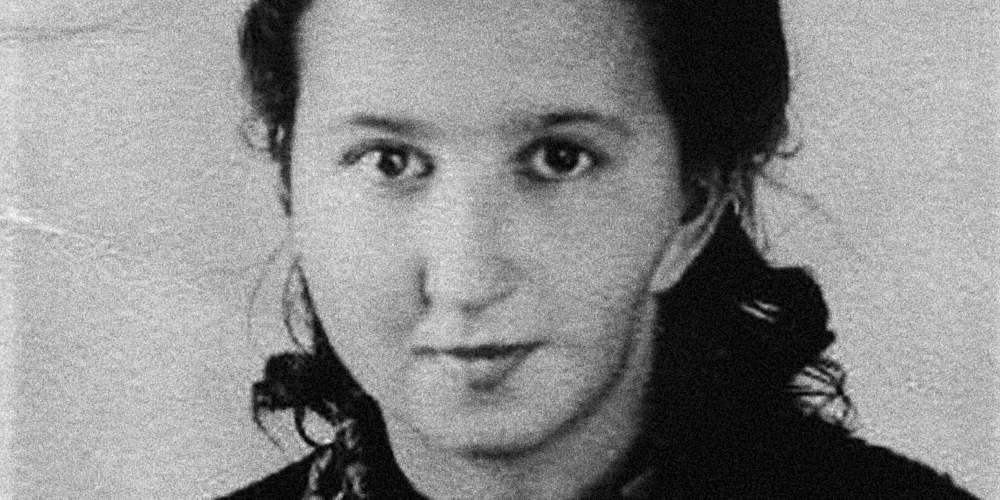
The story of this young woman from a distant past, raised in a spirit of love for her homeland and military honour, may offer a source of inspiration in our turbulent times. We might never have heard of her had it not been for the war, and the same is true of one of her contemporaries, Cavalry Captain Witold Pilecki, who was executed by communist persecutors in 1948. As Aristotle says, virtue is tested and manifested, in adversity.
TRAGIC YOUTH
Two days before Danuta turned 11, on 1 September 1939, Germany invaded Poland, triggering the outbreak of the Second World War. The global conflict tore Danuta’s family apart. On 10 February 1940, her father, Wacław Siedzik, was deported by the Soviet authorities to the Gulag. After his release, he joined the Second Polish Corps under General Władysław Anders, alongside other Poles who had been deported under Stalin’s rule. He died in Tehran on 6 June 1943. Danuta’s mother became involved with the Armia Krajowa (Home Army), the principal Polish resistance organisation during the German occupation. She was arrested by the Gestapo in November 1942 and, in September 1943, was shot in a forest near Białystok. After her mother’s death, Danuta and her sister Wiesława joined the Armia Krajowa in December 1943, training as nurses.
In June 1945, when those who had come as liberators became occupiers, Danuta was arrested by the NKVD and held with other employees of the local forestry service on suspicion of links to the Polish underground. She was freed when a unit commanded by Stanisław Wołonciej, known as “Konus”, attacked the convoy transporting the prisoners. Wołonciej’s men were part of the 5th Vilnius Brigade of the Armia Krajowa, commanded by Major Zygmunt Szendzielarz, “Łupaszka”. After her release, Danuta joined the brigade and served as a medical orderly and, at times, as a liaison officer. It was during this period that she began using the nom de guerre “Inka”. Danuta was remarkable for her selflessness and devotion.
ARREST AND SENTENCING
In late June 1946, when the Home Army sent Danuta to Gdańsk in northern Poland to obtain medicines and medical supplies and exchange worn-out staff maps, she was arrested by communist agents. Despite the brutal interrogation, Danuta did not betray her comrades in the AK. The communist authorities brought Danuta before an ad hoc court in proceedings that bore little resemblance to a fair trial. The evidence presented against her by members of the Citizens’ Militia, the police force established under the communist regime, was marred by conflicting testimony. One witness nevertheless acknowledged that Danuta had treated his injuries, even though he was regarded as an enemy.
Feliks Selmanowicz, whose nom de guerre was “Zagończyk”, was tried and executed alongside Danuta Siedzik. He had been charged with possessing weapons, belonging to an illegal organisation, seeking to overthrow the political system, issuing orders for armed raids, and producing and distributing leaflets.
Danuta refused to sign a petition for clemency addressed to President Bolesław Bierut, who had been brought to power “on Soviet bayonets”. Instead, without her consent, her lawyer signed it. Although the sentence was contrary to the law then in force, Bierut refused to grant clemency.
In a message sent from prison, she wrote: “I’m sad that I have to die. Tell my grandmother that I behaved as I should have.”
CONFESSION
Many years after these horrific events, Father Marian Prusak gave an account of what he had witnessed:
“This was the only time I ministered at an execution. When I arrived at the prison [on Kurkowa Street], I was kept in solitary confinement for perhaps an hour. Then they came for me. All the while, I was thinking about what was about to happen.
The prison warder took me first to that man [Feliks Selmanowicz]. When I entered the cell, I could see deep sorrow on his face. The first words he spoke to me were:
— So, clemency was not granted after all…
I heard his confession. He was calm. Perhaps he was concealing his nervousness, but there was no outward sign of it. Throughout, I was troubled by the thought that we might be watched through the peephole.
Then I was taken—I do not know how, as I was too dazed—to the cell where a young, slender girl [Danuta Siedzik] in a summer dress was awaiting death. She received me with remarkable calm, made her confession, and then expressed the wish that her sister be informed of the sentence and of her death.”
(IPN Bulletin No. 6 – July 2001)
In 1949, Fr Prusak himself was accused of espionage and sentenced to six years in prison. He was released after three and a half years. He said that the reason he had lived to such an advanced age was so that he could tell us about “Inka’s” death.
EXECUTION
The death sentence was carried out on 28 August 1946 in the basement of the remand prison in Gdańsk. “I had a cross, which I gave them to kiss. The guards wanted to blindfold them, but neither prisoner would allow it,” the priest recalled.
Feliks and Danuta called out simultaneously “Long live Poland!” (Niech Żyje Polska) just before the firing squad opened fire at close range. The order was given: “For the traitors of the Polish nation, fire!” The ten soldiers of the Internal Security Corps (KBW) did not kill her with the first volley. Perhaps because she was underage and not much younger than they were, they reportedly did not aim at her. She was finally killed by a shot to the head fired at close range by Second Lieutenant Franciszek Sawicki, the commander of the firing squad. The time was 6.15 am.
For decades, Danuta Siedzik was vilified by the communist authorities, who portrayed her as a sadistic bandit.
REHABILITATION AND STATE FUNERAL
On 11 November 2006, Polish Independence Day, Danuta Siedzik was posthumously awarded the Knight’s Cross of the Order of Polonia Restituta.
On 28 August 2016, a state funeral was held to honour her, 70 years after her execution. The funeral Mass was celebrated by the Metropolitan Archbishop of Gdańsk, Sławoj Leszek Głódź, and was attended by President Andrzej Duda and representatives of the Polish government. The ceremony drew a crowd of more than 20,000 people who had gathered to pay their respects. The funeral was organised by the Institute of National Remembrance (IPN) and the NSZZ “Solidarity”. At the time, Karol Nawrocki, then head of the IPN’s Gdańsk branch, was closely involved in the preparations for the ceremony.
THE AFTERMATH OF HER DEATH
The “Heart for Inka” campaign was launched after Danuta’s remains were discovered in 2014 at the Gdańsk Garrison Cemetery. Its initiator was the Salesian priest Fr Dr Jarosław Wąsowicz SDB. As Danuta had attended a school run by the Salesians in Różanystok and had therefore been influenced to some extent by the spirituality of St John Bosco, Fr Wąsowicz felt that she should be commemorated by the Salesian order.
The idea involves collecting silver jewellery, which is melted down to create symbolic heart-shaped reliquaries. Old chains, earrings and other items donated by supporters are among the materials used to make them. Each heart contains a small amount of earth taken from Danuta’s grave. The first “Heart for Inka” was created in Piła, where a commemorative plaque was unveiled in the Church of the Holy Family on 1 March 2016. Over time, the initiative spread to other towns and cities across Poland, as well as beyond the country’s borders.
In 2018, one was unveiled in Butrymańce, Lithuania. In December 2025, Poles in Britain ran a fundraising campaign to create a “Heart for Inka” and place it in the Church of Christ the King in Balham, London. According to the initiative’s founder, almost 50 silver hearts have now been created.
“The campaign, which has been running for 10 years, has shown that wherever these hearts are, people remember the anniversary of Danuta’s execution and her birthday, and light candles on the National Day of Remembrance of the Cursed Soldiers. Patriotic events are organised around these places.” (Nasz Dziennik, a Catholic weekly, 20 August 2026)
Since the year 2001, when the first about her was published by Nasz Dziennik, Danuta Siedzik has received more commemorations than any other member of the generation of the Unbroken Soldiers. Streets, squares, schools and scouting groups have been named after her.
“The key to understanding the phenomenon of ‘Inka’ is fidelity—a fidelity that has been devalued by the world today. […] We see how many divorces there are and how many people are unable to remain faithful to their marriage vows,” Fr Dr Jarosław Wąsowicz, chaplain to Karol Nawrocki, President of the Republic of Poland, said in an interview with Nasz Dziennik.
CONCLUSION
As the winds of change blow, I predict growing scepticism towards globalism around the world. Globalism aims to weaken national loyalties and create a New Man, the proverbial “global citizen”, who supposedly loves everyone but, in reality, loves no one but himself. But the “global community” is an abstraction that demands no concrete loyalty—a utopian community without borders, languages, history or traditions.
As Blessed Cardinal Stefan Wyszyński said: “A nation without history, without past, soon becomes a nation without land, a homeless nation, without future.”
We are on the threshold of great changes. The Holy Spirit transcends nations, to be sure. One must intuitively recognise that true faith flourishes in a culture of Christian love and loyalty, not in a universal utilitarian paradise ruled by international agendas.
Once, even, while thinking about this young woman, I was reminded of St. Agatha. I believe readers will forgive me for making the comparison. Of course, it is a distant one.
As this reflection draws to a close, would we be able to behave as we should if remaining faithful to Christian values really came at a cost?
Danuta passed that ultimate test of courage and fidelity.


 Alexandra Bochte
 Thomas Addis
 William Borst
 John Lockwood
 Fr Dino Vanin