
 Carolyn Humphreys, O.C.D.S.
A story is told about a professor who gathered his students together before the dawn. It was still very dark outside. He told them to pay attention because he had an important question to ask: How could they tell when night had ended and day had begun? One student replied: “When you see an animal and can tell whether it is a sheep or a dog?” “No,” said the professor. Another student replied: “When you look at a tree in the distance and can tell whether it is a fig tree or a peach tree?” “No,” answered the professor. After a few more guesses the students said, “Tell us, what is it?” The professor responded: “It is when you look into the face of any man or woman and see that he is your brother or she is your sister. If you cannot do this, no matter what time it is, it will always be night.”
Thomas Merton helps us to see when the day begins: “His one image is in us all, and we discover him by discovering the likeness of his image in one another.” His image brings us together as brothers and sisters. How often have we thought of the likeness of his image within a person, race, creed, culture, or ourselves? If we could hold on to Merton’s quote, our days would have a spiritual orientation and we would move forward by actively living the teachings of Christianity.
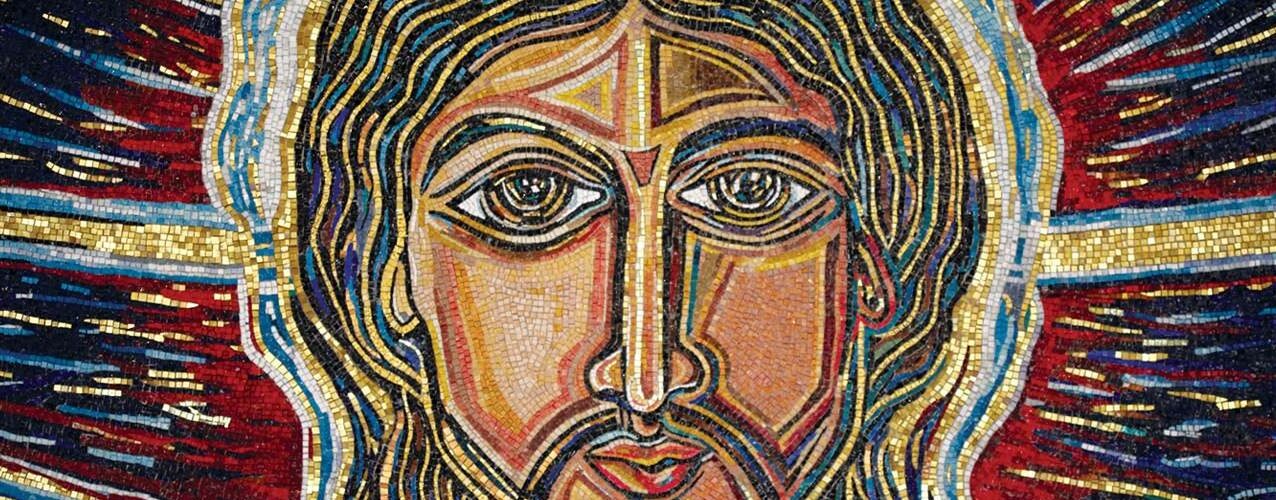
Jesus is the light of the world. As Christians we are to be reflections of his light. It is our sacred task to direct that light to our brothers and sisters in need. We do this through our prayers and our actions. The way we talk to God has a clear connection with the way we talk to others. We serve God in the measure that we actively serve others. With prudence and discernment, we direct our beams of love wisely according to our gifts and talents. It is better to do a few things well than to do many things haphazardly. Burnout does not occur if we beam the light of Christ’s love with prudence. Beams are rarely multicolored, ever moving, superfluous, here and gone delightful sensations of the mind. Rather they are steadfast, pure white, profound, compassionate imprints of Jesus on the soul. James Keller, M.M. founder of the Christophers, gives us some sound advice. “Each of us has, by the grace of God, the power to change the world for the better. Every act of care and concern for others has a ripple effect, touching many lives. The love to which we are called by the Gospel extends not only to our neighbors, but also to all who live on God’s good earth, today and in time to come. So, go into the marketplace, into a job of your own choosing, without fanfare or flag waving. Where there is hate, bring in love; where there is darkness, carry light. In other words, be a Christ bearer, or Christopher.”
Maryknoll, Father Keller’s order, and the Christophers, began in the United States. E pluribus unum was the motto of the United States from 1782 to 1956. It is Latin for “Out of many, one,” and refers to our union as a nation formed by thirteen separate states. Today it could mean one union as a nation formed by immigrants from many different countries, as well as indigenous people who were native to the United States and enslaved people who were forcibly brought here. If our ancestors were born in a different country and came to the United States without knowing a word of English and before ESL classes, should the name of their native country be the most important identity of their lives? A wise elder said, “When I was growing up people would refer to their heritage in conversation but nothing more than that.” A physician in California was asked, “What country did your last name come from?” He responded, “I am an American-American.” That statement puts us on the right track for unity with our brothers and sisters as a nation and as Christians. As Martin Luther King said, “We must forever conduct our struggle on the high plane of dignity and discipline.” And, “I have a dream that one day this nation will rise up and live out the true meaning of its creed: ‘We hold these truths to be self-evident; that all men are created equal.’”
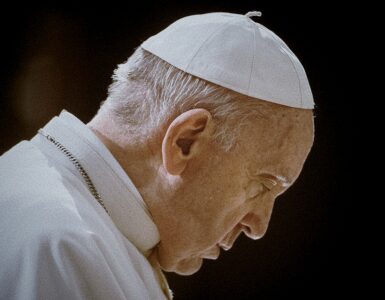
A hyphenated two country identity breaks us up into too many pieces. It is said we live in a post Christian era so we need to stick together as Christians. Pope Leo’s motto “In Illo uno unum,” is Latin for “in the One [Christ] we are one.” Although we Christians are many, in the one Christ we are one and that unifies us more securely. His first words as pope were, “Peace be with you all.” Our peace flows from our unity found in Jesus. The pope’s motto is well suited for our time in history and an important reminder when we feel plagued by divisiveness in our nation or in our Church. What builds unity is less emphasis on the land of our birth and more emphasis on the strength of our character.
A sound and spiritually oriented character has the ability to give and receive love. Love resembles a bridge that connects us with God as well as with all humanity. It is a desire as well as a reality of our human existence. We are assured of being loved by God and strive to love others regardless of their circumstances. The key to loving God is to look beyond the reality of the evil in others, and in us, to the greater reality of God’s merciful love and to be reflections of his merciful love to others. This extends beyond love defined as a feeling. Even though they are important, feelings do not teach all we need to know about love. If love were just a feeling, we could easily be led astray by superficial sentiment or short term infatuation. Feelings can change quickly. Mature love cares for someone more for their sake and less for the feelings they arouse in us or for our own sake. Francis de Sales wrote: “Love is the movement, effusion and advancement of the heart toward the good.” Given that love is willing the good of others, we desire what is best for them. This definition does not depend on reciprocity or emotions.
How can we love others in a Christian context? The thought of our death gives us an out of the ordinary perspective on our life that reminds us to live nobly. If we imagine ourselves to be on our deathbed years from now, and reflect back on how we have lived, what was most important to us? How did we respond to the love we received? How did we pass on, or neglect to pass on, our love? After some reflection, we return to the present and strive to imbed love around us where it is needed. To genuinely carry out loving actions toward others, no matter how different they are from us, is a clarion call and a lofty challenge. Our time on earth is short.
To Look in the Mirror
Love for others is rarely authentic without an appropriate love for ourselves. As Christians, how do we love ourselves? We apply self love in a way that is consistent with Christian values and beliefs, such as having a basic knowledge of our Catechism, knowing what is moral and immoral, keeping the promises we make, and growing in the virtues, especially humility and self knowledge. It is also about valuing ourselves by appropriate physical, mental, and spiritual self care, and by maintaining a realistic grasp on the skills we have that aid others.
We treat ourselves, and others, with dignity and respect. Every person has his or her weaknesses, faults, and irritating ways that rub us the wrong way. They can be like sandpaper against our skin. How do we deal with them? Romans 12:12 helps us along. “Rejoice in hope, be patient in tribulation, be consistent in prayer.” Max Ehrmann offers suggestions regarding how to do this:
Go placidly amid the noise and the haste, and remember what peace there may be in silence. As far as possible, without surrender, be on good terms with all persons. Speak your truth quietly and clearly; and listen to others, even to the dull and the ignorant; they too have their story. Avoid loud and aggressive persons; they are vexatious to the spirit. If you compare yourself with others, you may become vain or bitter, for always there will be greater and lesser persons than yourself. Enjoy your achievements as well as your plans. Keep interested in your own career, however humble; it is a real possession in the changing fortunes of time. Exercise caution in your business affairs, for the world is full of trickery. But let this not blind you to what virtue there is; many persons strive for high ideals, and everywhere life is full of heroism. Be yourself. Especially do not feign affection. Neither be cynical about love; for in the face of all aridity and disenchantment, it is as perennial as the grass. Take kindly the counsel of the years, gracefully surrendering the things of youth. Nurture strength of spirit to shield you in sudden misfortune. But do not distress yourself with dark imaginings. Many fears are born of fatigue and loneliness. Beyond a wholesome discipline, be gentle with yourself. You are a child of the universe no less than the trees and the stars; you have a right to be here. And whether or not it is clear to you, no doubt the universe is unfolding as it should. Therefore be at peace with God, whatever you conceive him to be. And whatever your labors and aspirations, in the noisy confusion of life, keep peace in your soul. With all its sham, drudgery and broken dreams, it is still a beautiful world. Be cheerful. Strive to be happy.
Daily prayer is our fortification for seeing beauty in this world and doing good for those in need. Beauty and good works lead us back to prayer. Good works do not mean doing great or extraordinary things. It means doing ordinary things with sensitivity and gentleness by interacting with our brothers and sisters as equals. We are not greater, better, or holier than they are. We are not “up here” ministering to people “down there.” We accept people as they are, with their wounds and their gifts, rather than as we want them to be. This creates a bond. Every person, whatever their weakness, has something positive to contribute. Accepting, and working with, our weaknesses are signs of growth. Sharing our weaknesses and difficulties, without self absorption, can unite people. When our weaknesses and faults are integrated as part of our humanity, as we center on Christ our negative, broken parts are transformed, and our true selves emerge. Our true self is unique and develops beyond the influence of family, culture or society. Finding our true selves in Christ is a lifelong endeavor. Bursts of growth can occur at unlikely times and in strange places. We learn about our true self in almost any situation. An accident during a vacation or a sudden sickness during a happy celebration can cause us to slow down, or stop, our hurried pace and open our hearts to the periodic need to pause and reflect on where we are going.
When we think of our brothers and sisters as equals, we learn from them. They teach us that every human person is a mystery that must be learned slowly, reverently, with care, tenderness, prayer, and pain, and is never learned completely. A well integrated person lives simply and leaves this world better than he or she found it.
At a poor neighborhood health clinic a nurse practitioner was taking care of a young adult male with multiple wounds who had just been brought in from the street. He was dirty, verbally abusive, and in much pain. The driver who brought the man in watched the nurse. He said, “I wouldn’t do that for a million dollars.” “Neither would I,” said the nurse. She tended to the patient’s immediate needs but saw the person of many parts, including a soul. She believed all people have a hidden goodness. This was evident in the compassion in her voice, the expression on her face, and her actions toward the young man. Her demeanor and kindness reflected God’s love to those around her.
There are innumerable expressions of kindnesses that bring light to darkness. Just as the flicker of a sanctuary lamp in a dark church symbolizes the presence of Christ in the tabernacle, so do kind words and deeds, as small as they may be, serve as signs of the light of Christ in the dark elements of society and in the diversity of people. Kindness can bring out the best in others. The best signs of kindness are sincere and often spontaneous. Our small acts of kindness may be quickly forgotten by us, but may prompt the receiver to pass a similar kindness on to someone else, thus strengthening the ties that unite us as a human family. William Blake wrote, “And we are put on this earth a little space that we might learn to bear the beams of love.” May we strive to live this time honored, well loved prayer that supports the beams of love between us and our brothers and sisters.
Lord, make me an instrument of your peace;
where there is hatred, let me sow love;
where there is injury, pardon; where there is doubt, faith;
where there is despair, hope; where there is darkness, light;
and where there is sadness, joy.
O Divine Master, grant that I may not so much seek
to be consoled as to console; to be understood, as to understand;
to be loved, as to love; for it is in giving that we receive,
it is in pardoning that we are pardoned,
and it is in dying that we are born to eternal life.
Amen.


 Fr Mario Attard OFM Cap
 Deacon Steve Greco
 Deacon Gregory Webster
 Fr Dino Vanin