 James S. Anderson
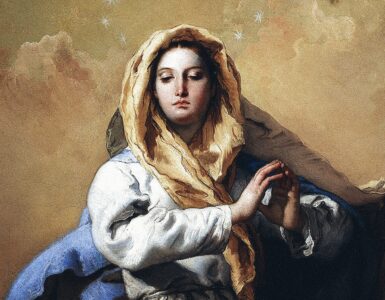
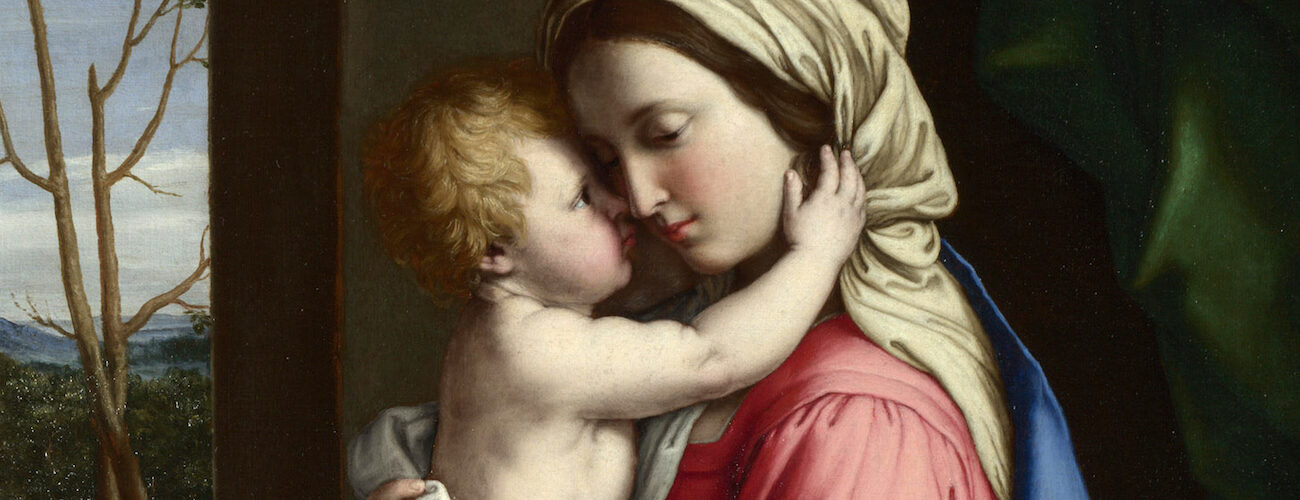
In light of the recent document from the Dicastery for the Doctrine of the Faith entitled Mater Populi Fidelis, a review of Mary and what the Church says about her is in order. The Blessed Virgin Mary plays a pivotal role in salvation history, arguably the most important after Christ. Simply put: Without Mary there is no Jesus. To be sure, she is the most honored human being, besides Christ, in history, extolled by an archangel as being “full of grace”and bestowed with the most important task of bearing the Son of God. Mary is the mother of and model for the Church; therefore, she is to be honored and implored for intersession before her Son. What follows are a few salient and often neglected aspects of her: she is the new Ark of the Covenant and she reverses what Eve did in a sacred parallelism with her Son. Additionally, in remembering her fiat and the dogmatic pronouncements of the Church regarding her, as well as a review of how she intercedes for us and glance at her apparitions, we recall why Mary is so vitally important for salvation history.
The Annunciation
In the Annunciation at the beginning of Luke’s gospel, the archangel Gabriel appears to Mary and announces,“Hail Mary, full of grace the Lord is with thee” (Luke 1:28). It needs to be noted that in all of Scripture, no human being is praised in such an extraordinary manner by an angel, and an archangel at that, and told that they are “full of hesed.” In Hebrew, “hesed” means “favor, mercy or grace.” This remarkable salutation foreshadows her divine mission to bear the Holy One, the Christ child, for only one with hesed could carry Jesus. Is there a bigger honor that can be bestowed upon a human being? It is no wonder the Church would later declare her Immaculate Conception, for no one born with original sin could bear God in her womb. If the archangel Gabriel pays her such homage, so should we too adore her and ask for her intercession.
In accepting her divine commission from God, we read: “Then Mary said, ‘Here am I, the servant of the Lord; let it be with me according to your word’” (Luke 1:38). Mary’s unreserved response of “yes” to God, in this her fiat, represents the paradigmatic model for the Church and each one of us today, a model for all Christians to strive toward and emulate. The Catechism of the Catholic Church reads: “By pronouncing her “fiat” at the Annunciation and giving her consent to the Incarnation, Mary was already collaborating with the whole work her Son was to accomplish. She is mother wherever he is Savior and head of the Mystical Body” (CCC 973). She is therefore mother of Christ, and as we in Christ all share in his mystical body, Mary is thus mother of that body, the Church, hence us. May we all have such faith and utter surrender and devotion to God and God’s plan as she did in her fiat and turn to her as our heavenly mother.
The Ark of the Covenant
After Mary’s visitation by the angel Gabriel, she proceeds to visit her cousin Elizabeth in the Judean hill country, in the city of Ein Kerem according to later tradition. We read that upon hearing the voice of Mary, Elizabeth’s child “leaped in her womb” (Luke 1:41). Filled with the Holy Spirit, we read that Elizabeth shouts, “Blessed are you among women, and blessed is the fruit of your womb. And why has this happened to me, that the mother of my Lord comes to me?” (Lk 1:42-43). The beginning of her inspired pronouncement later becomes part of the Rosary, portraying just how biblical it is. We are then told again from the mouth of Elizabeth that: “For as soon as I heard the sound of your greeting, the child in my womb leaped for joy” (v.44). There is a redundancy here in the chapter occurring in close proximity, suggesting Luke is stressing something; this is a clue regarding Mary presenting herself in the “dancing” of Elizabeth’s child, a child who later makes straight a path in the wilderness for the one who is to come. Recall the prophecy of Isaiah: “A voice cries out: ‘In the wilderness prepare the way of the Lord, make straight in the desert a highway for our God’” (Isaiah 40:3). This was something that had come to be associated with one that would proceed the Messiah and specifically the prophet Elijah because of the ending of the prophetic book of Malachi (Vv. 4:5-6). Thus, it was believed that Elijah would proceed the coming of the Messiah in the time of Jesus. This was firmly entrenched in messianic expectations in the first century origination with the biblical text itself (cf. Matthew 16:14).
It is important to note that in Scripture, John the Baptist is painted as Elijah, even down to his dress (Matt 3:4; cf. 2 Kings 1:8). The angel Gabriel told Zechariah (Elizabeth’s husband and John’s father) regarding his son: “With the spirit and power of Elijah he will go before him, to turn the hearts of parents to their children, and the disobedient to the wisdom of the righteous, to make ready a people prepared for the Lord” (Luke 1:17). Even later Jesus makes it explicit that John is the anticipated Elijah that comes before him (see Matthew 17:12-13). John thus came in the spirit of Elijah and was therefore the herald of the Messiah.
John the Baptist’s dancing in the womb is reminiscent of and patterned from David’s dancing before the ark of the covenant in the book of Samuel. Thus, this detail or clue Luke stresses more than once occurs to make apparent that just as David danced before the ark of the covenant of God, so John the Baptist dances before the new ark of the covenant, Mary. Just as the ark carried God’s Word (debar in Hebrew), so too Mary carried in her womb the word (logos in Greek) of God. The ark prefigured Mary, the one who would carry the Word that was with God in the beginning and was God (John 1:1) through which all things came into being (John 1:3). The ark thus is a typological prefiguration for Mary, and the Church has traditionally understood Mary as the new ark in that she carried our holy, sinless Savior. This again coheres with the later Church explaining her immaculate conception, for only a sinless vessel could carry our sinless Savior.
The story then goes on with a song of praise on the part of Mary. Notice when she begins her song how it points to God; she is reflective of God’s Grace. And Mary said,
My soul magnifies the Lord, and my spirit rejoices in God my Savior, for he has looked with favor on the lowliness of his servant. Surely, from now on all generations will call me blessed; for the Mighty One has done great things for me, and holy is his name.
Luke 1:46-49
The text correctly and prophetically reads, “from now on all generations will call me blessed (Luke 1:48b). The text makes clear praise is due Mary, which makes sense seeing God chose her to bear the Son of God, for just as the ark carried the word of God, so too does Mary in her womb carry the Word of God.
Reversing Eve & Sacred Parallelism
Yet another reason to hold Mary in the utmost esteem is because she helps undo the sin of Eve. Bishop Barron’s work has highlighted this insight, suggesting a sacred parallelism if you will. The logic is as follows: the first sin entered the world through one man, Adam, and one man, Christ, reversed its effects (cf. Romans 5:17). True enough. However, in the Hebrew text of Genesis after sin entered the world God asks, “what is this you have done” (Genesis 3:13) and tellingly the suffix denoting “you” instead of being singular as presumed in English, is plural.
God addresses the first couple with the plural pronoun “you” in verses 13 and again in verse 14 betraying both are culpably, not just one of them. This reveals it is both Adam and Eve that are culpable of the sin, not merely Eve. This should finally help stop the demonizing of women, which regrettable has been done too much in the past with recourse to calling Eve the temptress to be blamed for sin entering the world. The Hebrew, not English translations, make it apparent both Adam and Eve sinned and are thus both culpable. Simply reading English translations of the Hebrew miss this vital observation.
Technically, Eve does take of the forbidden fruit first and then gives it to Adam, but both choose to eat of it and God holds both accountable. Thus, Bishop Barron noted sin comes in through Eve and is later reversed through Mary. Mary’s yes and fiat allowed for the incarnation and thus redemption of humanity. She is therefore pivotal for salvation history, hence why a theology of co-redemptrix has developed for her in the Church. Without Mary there is no Jesus.
Therefore, there is a scared parallelism in that just as the first pair brought sin, the latter pair, Mary and Jesus, brought redemption. As Genesis displays, sin entered through Eve and Adam and we can then see in the gospels that humanity is set in right relationship again with God, countering the effects of sin, through Mary and Jesus. These two can be seen as a sort of sacred parallelism.
Marian Dogmas
The Church has rightfully made official pronouncements regarding the Blessed Virgin. These are necessary, especially considering Protestant polemics. These declarations have always been true; they just get fleshed out later in the history of the Church. They can be seen early on in the writings of the Church Fathers, and their full explanatory power becomes crystalized later in time by the Church.
The Virgin Birth is a dogma of the Church that Scripture makes clear, which is prophesized already in Isaiah 7:14 contrary to polemical claims that she was not a virgin. The Council of Ephesus 431 C.E. affirmed Mary is the mother of God (Theotokos). It is worth pondering a question: if Jesus were to have undergone a DNA test, what would it look like? Human being’s DNA are half from a person’s mother and the other from the father. Jesus technically did not have a biological father. Thus, in his human nature, Jesus’ DNA was all from Mary. Jesus was all Mary. This yet again points to how special she was. And as a child, Jesus was completely reliant on her, as any baby is upon their mother for survival. What an honor to be chosen to carry, birth and care for the Son of God.
Her Perpetual Virginity was affirmed at the Lantern Council in 649 C.E. This is undoubtedly correct as the Church has always affirmed it to be so, aside from schismatic groups. One clue of this presents itself in John’s gospel. Recall on the cross what Jesus does:
When Jesus saw his mother and the disciple whom he loved standing beside her, he said to his mother, ‘Woman, here is your son.’ Then he said to the disciple, ‘Here is your mother.’ And from that hour the disciple took her into his own home.
John 19:26-27
Jesus essentially gave John care of his mother, suggesting Jesus had no siblings. Had he had siblings, he would not have done this, for the culture of that time would have entrusted the next sibling in the family to care for Mary. Furthermore, when one reads English translations, we sometimes read of siblings regarding Jesus; however, the translation of “cousin” instead of “sibling” is not only possible but more likely. One need recall all translations are interpretations and a committee’s theological presuppositions often driving translations decisions, which is a problem for all groups. One need also recall the Church in both the early Apostles Creed and Nicene Creed affirms her virginity. Her virginity is also seen ubiquitously throughout the writers of the early and later Church. It is only in the modern era that this has been challenged. The early fathers, including Justin Martyr again already in the early second century, affirmed her virginity. It is important to remember the Church is guided by the Holy Spirit and has the power given by Christ to make such definite statements (see Matt 16:19; 18:15-20).
Two further dogmas are thus noteworthy…
On December 8, 1854, in the papal encyclical Ineffabilis Deus, Pope Pius IX affirmed the Immaculate Conception, after a process of consulting bishops around the world. It infallibly stated, “We declare, pronounce and define: the doctrine that maintains that the most Blessed Virgin Mary in the first instance of her conception, by a unique grace and privilege of the omnipotent God and in consideration of the merits of Christ Jesus the Savior of the human race, was preserved free from all stain of original sin.” This is a most logical dogma, for how could one carry the savior of the world who is sinless unless she too is preserved from sin. It took a holy vessel, and ark, to carry a holy savior. Scripture explains in Luke that Mary is “full of grace” as seen above, which is applied to her by the merits of her son. That it is applied back in time was already argued in the thirteen century by John Duns Scotus, specifically via anticipation in his words. This is how Mary’s grace is explained, whereas forward in time for us, as God is outside time and space. Mary still needs a savior, though she is without sin, and saving grace was applied to her at the moment of her conception. Scotus’ logic has enormous explanatory power and has made the Immaculate Conception doctrine more palatable and logical for some, and beautifully for most.
Recall the archangel explains Mary is full of hesed already anticipating the later defining of the Immaculate Conception. St. Ephrem of Edessa in 373 AD, the latter part of the fourth century, wrote, “Blessed Virgin, immaculate and pure you are the sinless Mother of your Son, the mighty Lord of the universe. You are holy and inviolate, the hope of the hopeless and sinful; we sing your praises. We praise you as full of every grace, for you bore the God-Man. We all venerate you; we invoke you and implore your aid…Holy and immaculate Virgin…be our intercessor and advocate at the hour of death and judgment…you are holy in the sight of God, to Whom be honor and glory, majesty, and power forever.”
The Assumption of Mary is another important dogma of the Church. It is similar to how Enoch and Elijah in the Hebrew Scriptures were taken up to heaven. In 1946 in consultation with bishops then Pope Pius XII issued the encyclical, Deiparae Virginis Mariae. It stated Mary was assumed into heaven and thus was made a dogma of the faith. Already as early as the beginning of the sixth century this assumption on the part of Mary was celebrated liturgically in the church and it is rightly argued this dogma is “fitting” for it is only appropriate the body that conceived and bore Jesus would be “preserved from corruption of the tomb.” This logically follows, we maintain, from the fact that already in Scripture God’s holy messenger, St. Gabriel, explains, she is full of Grace (hesed). The dogma confirms Mary was assumed into heaven bodily, though it remains open whether she died prior, either can acceptably be affirmed. Ultimately, it does not matter either way, for she is alive today, with her Son and interceding on behalf of her Church. It should be noted that unsurprisingly no tradition exists remembering her tomb in antiquity, which one might expect had she died, notably in Asia Minor where tradition later confirms she was with John, cohering her being bequeathed to him in Scripture.
Mary’s Continued Intercession
Mary also continues today to intercede for her Church and the people of God. As such, her veneration is completely warranted, appropriate and biblical. Contrary to what many Protestants argue, Mary is not worshipped but rather honored. This distinction needs to be understood. It is not worshipping her in the Protestant sense or understating; she is rather what should be conceptualized as honored or venerated. Terminology is important here. She is venerated, but one need know what that means and entails, as she is not worshipped as a god, but implored for her prayers and intercession before Jesus and the Triune God. She is not a deity. When Catholics pray to her, especially in the Rosary, she is but asked to intercede for us as we do any member of the body of Christ, those alive today as well as those who’ve passed on, the latter being more common amongst Catholics. And who better to intercede for us than those who have passed on and are closer to God, and his mother at that. Recall the Rosary reads, “Pray for us sinners now and at the hour of our death, Amen.”
The body of Christ includes those both alive now and those who have passed on but are still alive. We are simply asking for her prayers and intercession before God. She is portrayed in the Bible as being the most holy after Jesus. After all, she is special because she is the mother of God who always points to Jesus, so who better to ask for intercession. Often one hears the Protestant objection that you do not need Mary, as you can go straight to Jesus in prayer. The latter clause is no doubt true, but it is said that one can be close to Jesus, but you are even closer to him if you are close to his mother, for he is close to his mother. Being close to Mary thus makes us even closer to her son.
At this juncture it is most appropriate to remind the reader of the biblical concept mentioned above of the body of Christ, namely, that we are all members of one body in Christ Jesus (Rom 12:4-5). This is a metaphor, but it is more than that, for it is spiritually, truly accurate. We all serve a different purpose as part of the body of Christ. We can become Christified in the world and for others, partaking in his work, as members of the Christ. This occurs at baptism. The body also consists not just of those alive, but of those who have died in Christ. Though they have passed, the Church and Christ taught they still live. Thus, just as we ask for intercession and prayers from members of Christ’s body alive today, it is not only acceptable but advisable we do so with those who have passed, such as our loved ones, and especially from the saints who provide exemplary models for us today and continue to intercede for us before God helping us here on earth today. Undoubtedly the most Blessed Virgin Mary is preeminent amongst those who can help us now in this life by her intercession, trusting how she remains close to her Son seeing how close she is with her Son. But one can also implore help from other saints of the Church. On this the successor or Peter, Pope Francis, while citing the Catechism of the Catholic Church, 958, wrote the following (see Amoris Laetitia, 257 for text and sources):
One way of maintaining fellowship with our loved ones is to pray for them. The Bible tells us that “to pray for the dead” is “holy and pious” (2 Macc 12:44-45). “Our prayer for them is capable of not only helping them, but also of making their intercession for us effective.” The Book of Revelation portrays the martyrs interceding for those who suffer injustice on earth (cf. Rev 6:9-11), in solidarity with this world and its history. Some saints, before dying, consoled their loved ones by promising them that they would be near to help them. Saint Thérèse of Lisieux wished to continue doing good from heaven. Saint Dominic stated that “he would he more helpful after death…more powerful in obtaining graces.” These are truly “bonds of love,” because “the union of the wayfarers with the brethren who sleep in the Lord is in no way interrupted…[but] reinforced by an exchange of spiritual goods.”
What hope this text brings in understanding though our loved one’s die, they still live and the love share between the dead and us still exists. Even the sting of death cannot extinguish love! Love transcends death and death is not the end for all of us. We will one day be reunited in love with our loved ones. Hence, a mutually beneficial reciprocity still exists between loved ones, those alive on earth today and those who have already passed on. This again affirms– death is not the end and one day we will be reunited with our loved ones.
Since Protestants are lacking the complete canon of Scripture, they miss out on the 2 Maccabees text in the Hebrew Scriptures. Also, the dead needing our prayers suggests the doctrine of Purgatory in this case. Thus, praying to the saints, other Christians who have passed on, members of the body of Christ and notably the Blessed Virgin cohere with biblical notions and produces enormous benefit.
Devotions surrounding Mary bring much peace and healing, the most well-known and practiced one being the Holy Rosary. It was given to St. Dominic in 1214 C.E. in a vision of her. It must be noted how thoroughly biblical it is, though it has evolved and even in recent times; John Paul II added the Luminous Mysteries in 2002 in his apostolic letter Rosarium Virginis Mariae. The Rosary asks for Mary’s intercession and has us meditate on the mysteries of God and the life of Christ. It involves the body as well as includes vocal, mental and contemplative prayer, (intercessory, meditative and contemplative as well) as we are to contemplate different pivotal junctures of the life of Christ while reciting it. It has been known to transform many a life.
Again, notice in the prayer of the Rosary that Mary is petitioned to pray for us; she is not worshipped in her own right. She is implored for our intercession before God. Notice how biblical it is:
Hail Mary, full of grace, the Lord is with you; (Lk 1:28)
blessed are you among women, (Lk 1:42a)
and blessed is the fruit of your womb, Jesus (Lk 1:42b)
Holy Mary, Mother of God,
pray for us sinners
now and at the hour of our death.
Amen.
As noted already, it begins with, “Hail Mary full of grace,” which is a direct quote form Luke 1:28. This verse reads regarding the angel coming to Mary: “And he came to her and said, ‘Greetings, favored one! The Lord is with you.’” This can be translated “Hail Mary full of Grace the Lord is with you!” The Rosary has given countless people throughout the ages comfort, help and a deeper connection to God. No wonder true ahavah (love) and shalom (peace) flow from its practice. Though this prayer is a later development of the Church, its helpful continuous tradition has endorsed it repeatedly to the benefit of millions. To reiterate: one need remember that in the prayer of the Rosary, Mary is petitioned to pray for us, not worshipped in her own right. She is implored for our intercession before God and she always points to God, bringing people to her son Jesus.
Marian Apparitions
That Mary is our intercessor is affirmed in her many attested miracles and apparitions. At the outset it should be stated belief in Marian apparitions, as with Eucharistic miracles and other miracles in the tradition, are not a requirement of the faith. However, remember Mary always points to Christ, as she does in Scripture when she implores him to do his first miracle at Cana recoded in John’s gospel (John 2). This also hints at her work in salvation history. Her apparitions do the same – they point to her Son. In addition to pointing to Christ, they often have a comforting message in which she expresses the need for people not to be afraid, which indeed is incredibly comforting, especially in our chaotic world that seems so divided, a division that is contrary to God’s desire for us according to Scripture (see Mark 3:25).
There are far too many apparitions that can be discussed here, but a few are more noteworthy. One can find catalogues elsewhere of her apparitions in the world and those of her today. To briefly note a few, her apparitions in a suburb of Cairo, in Zeitoun, above a Coptic Church, where thousands saw her, and scores of non-Christians at that, on many occasions spanning several years which is perhaps the most amazing in my view. Astonishingly, even the Egyptian government affirmed the apparition’s credibility. Photographs of the apparition are ubiquitous online, as well as video interviews of those who witnessed her. The Catholic Church has technically been more cautious and not ruled on this miracle. One would be hard-pressed to try and discredit this miracle. It truly defies any other answer than that the Blessed Virgin appeared. The lasting impact of her apparitions always needs to be considered. Here she seems to have brought peace during difficult political times, for both Christians and Muslims, both groups revering her. She seemed to calm tension in this region between both groups at a much-needed time in this little-know but exceedingly important apparition of her.
Our Lady of Fatima with her healing stories as well as the Virgin of Guadalupe who appeared to a peasant boy in modern-day Mexico City in 1531 are also nothing less than miraculous. That the latter apparition converted a country, the entire population of Mexico (9 million strong), to the faith in a matter of 10 years after her appearance is a testament to her. Catholic missionaries, the Franciscans, had ardently tried to convert the population without much success for 20 years prior. Rigorous scientific analysis of the image of our Lady of Guadalupe that appeared on the tilma of Juan Diego after one of her apparitions there has occurred. Juan Diego was instructed by the apparition to take flowers in his tilma to the archbishop at the time and upon doing so and opening the tilma, the flowers fell to the floor. Miraculously the image of Our Lady of Guadalupe was then discovered on the tilma and remains so to this day, though it should have decayed many years ago. The image is housed in the Basilica of Our Lady of Guadalupe in Mexico City today. The image on the tilma resonates with a biblical text (Revelation 12:1-17), which portrays the Blessed Virgin Mary, even revealing her birthing the Messiah in its referencing of a Davidic psalm. Tests confirm the image was not painted and, fascinatingly, when looked at through a microscope, Our Lady’s eyes show an image of Juan Diego. The image miraculously remains at the normal temperature of a human, 98.6 degrees. Additionally, texts confirm the paint, if that is what is it, on the tilma is raised and sits above the actual tilma, seemingly suspended in thin air. It is remarkable how the image has not decayed by now considering how old it is. This calls to mind how many of the bodies of the saints also do not seem to decay. These are known as the incorruptible saints. God seems to preserve them in a very special way, perhaps so that the faithful can come to see them and may be strengthened in their faith.
Yet, we have not even touched on here the thousands of private revelations people have had of Mary which mostly transformed their lives for the better. I personally have been told of several by close friends.
There are indeed countless stories of Mary’s intercession bringing healings, peace or faith, such as the story of her helping a German couple whose marriage was healed in the 17th century. Father Jakob Rem is said to have held up their marriage ribbon, a custom of the time symbolizing marriage unions, to an image of “Our Lady of the Snows” and the ribbon miraculously turned bright white. Following this miracle, the marriage was mended. This became the basis for the now popular and growing devotion Pope Francis brought back to South America after studying for his doctorate in Germany, the devotion of Our Lady Undoer of Knots. There are countless other miracle stories associated with Mary and her apparitions in which she often performed a miracle. It is to be rightly noted she always points to her son, Jesus the Christ. This can be seen when analyzing what she says at Fatima. Our Lady’s appearance at Medjugorje in modern-day Bosnia is also a noteworthy apparition.
Our Mother’s Work
In conclusion, we uplift Mary for she plays a pivotal role in salvation history, presents a model for us today and continues to intercede for us before her Son.
“This motherhood of Mary in the order of grace continues uninterruptedly from the consent which she loyally gave at the Annunciation and which she sustained without wavering beneath the cross, until the eternal fulfillment of all the elect. Taken up to heaven she did not lay aside this saving office but by her manifold intercession continues to bring us the gifts of eternal salvation . . . . Therefore, the Blessed Virgin is invoked in the Church under the titles of Advocate, Helper, Benefactress, and Mediatrix.” (CCC 969)
No doubt the work of salvation comes through Christ. The Catechism further explains:
“Mary’s function as mother of men in no way obscures or diminishes this unique mediation of Christ but rather shows its power. But the Blessed Virgin’s salutary influence on men . . . flows forth from the superabundance of the merits of Christ, rests on his mediation, depends entirely on it, and draws all its power from it. No creature could ever be counted along with the Incarnate Word and Redeemer; but just as the priesthood of Christ is shared in various ways both by his ministers and the faithful, and as the one goodness of God is radiated in different ways among his creatures, so also the unique mediation of the Redeemer does not exclude but rather gives rise to a manifold cooperation which is but a sharing in this one source.” (CCC 970)
Thus, Mary’s graces flow forth because of the grace and power of Christ, not her own. We are ever mindful of this. Her openness to God and her work for us as our mother is not only a model but a comfort, and source of real power for us.
We must not forget that without Mary there is no Jesus, and that she always points others to her son, especially in her apparitions. She does this not for her own glory but her son’s. In Pope John Paul II’s Mariological Encyclical he writes, “Through her mediation, subordinate to that of the Redeemer, Mary contributes in a special way to the union of the pilgrim Church on earth with the eschatological and heavenly reality of the Communion of Saints, since she has already been ‘assumed into heaven’ (Redemptoris Mater 41). Saint Louis Marie de Montfort wrote, “We never give more honor to Jesus than when we honor his Mother, and we honor her simply and solely to honor him all the more perfectly. We go to her only as a way leading to the goal we seek – Jesus, her Son.”
Mary is thus vitally important to salvation history for she is the mother and model of the Church and because she carried as a sinless vessel the Word of God in her. She is the only human in scripture an archangel paid homage. She undid the sin of Eve, and the Church has rightly proclaimed several important and true dogmas surrounding her. The Church teaches:
We believe that the Holy Mother of God, the new Eve, Mother of the Church, continues in heaven to exercise her maternal role on behalf of the members of Christ, (Paul VI, CPG § 15) (CCC 975)
Her devotions, particularly the biblical Rosary, and her intercession for her people is invaluable. As she is close to Christ, what is better than to ask for her intercession? Not only does Scripture affirm and show her role in salvation history, but her apparitions are important to take note of and study because they seem to continue her work of leading people to her son. Her “yes” to God’s plan played a pivotal role in redeeming the world—It paved the way for Jesus. She completely surrendered and abandoned herself to God’s will and so should we. She is the model for the Church; she takes people to Jesus, and we should do the same. She is the new ark of the covenant who participates in a sacred parallelism with her Son for the salvation of the world. For these reasons, the Blessed Virgin Mary is of utmost importance for salvation history and not only deserves our veneration but also, our love.


 Carolyn Humphreys, O.C.D.S.
 Fr Mario Attard OFM Cap