

 Vincent Ryan Ruggiero
My recent essay answered the question, “What Happened to Common Sense,” by explaining that our culture has abandoned the traditional belief that truth exists outside us and must be pursued rather than created. This view has resulted in history being ignored in education and closing our minds to learning from others. In effect, it has left many of us trapped in mental shallowness if not downright ignorance. The worst part of this condition is that we do not feel the sense of loss necessary to seek genuine truth.
This sequel to the earlier essay offers examples of the pursuit of truth that have brought insights.
“They must often change who would be constant in happiness and wisdom.” Confucius, Chinese Philosopher, 551 – 479 BC. This interesting idea, expressed more than two thousand years ago, suggests that happiness and wisdom are connected, and that both depend on continuing to grow intellectually.” The secret of change is to focus all of your energy, not on fighting the old, but on building the new.” Socrates, Ancient Greek Philosopher, 470 – 399 BC. This idea, also over two thousand years old, is similar to what Confucius said, but adds the importance of positive rather than negative (and often wasteful) activity.
“Every new beginning comes from some other beginning’s end.” Seneca, Ancient Roman Philosopher, dramatist, and statesman. 4 BC – 65 AD. The unstated but clearly implied lesson in this ancient idea is that we cannot move forward intellectually unless we are willing to examine what we have previously thought and, where appropriate, replace it with something new and different.
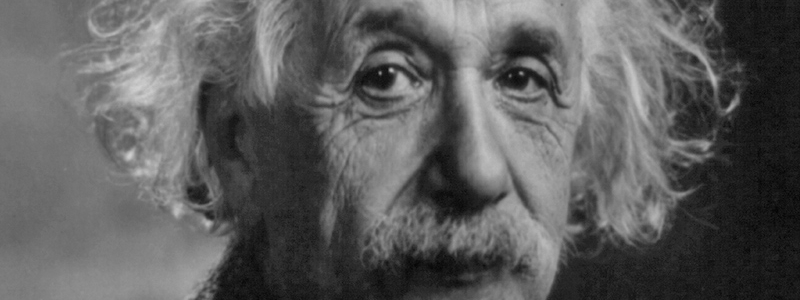
“Imagination is more important than knowledge.” Albert Einstein, German born physicist best known for developing the theory of relativity, 1879 -1955. This statement, closer to our own time, will surprise many people. Einstein is recognized as one of the greatest geniuses of recent ages, but imagination is no longer associated with genius. That is tragic because, as Einstein knew, the correct understanding of imagination is the “ability to form mental images or concepts of what is not actually present to the senses,” and that is a very different skill than possessing knowledge.
“Intelligence is the ability to adapt to change.” Stephen Hawking, British astrophysicist and cosmologist, 1942-2018. Like Einstein, Hawking was a brilliant man, and this quote, like Einstein’s above, will surprise many readers. To them “intelligence” is something much greater than mere “adaptability to change.” But he understood that intelligence depends on flexibility; without it, change is difficult if not impossible.
“The world is changed by your example, not by your opinion.” Tim Ferriss, Entrepreneur and author, Born 1977. This idea is timely because in our time opinion is much more highly regarded than in the past, perhaps too much so. His statement recalls the saying that actions speak louder than words and the biblical statement that a person is best known by “fruits” rather than by words.
Whoever has not encountered these thoughtful statements, or others like them, has missed valuable exercises in intellectual expansion. Whoever has habitually avoided ideas other than those they generated themselves because they believe they can create truth is intellectually impoverished. Sadly, the rejection of common sense that is widespread today is proof that such impoverishment is widespread.
Copyright © 2026 by Vincent Ryan Ruggiero. All rights reserved.


 Jennifer Borek
 Fr Dino Vanin

 Fr Joseph Esper
 Msgr Joseph Pellegrino