

 Deacon Gregory Webster
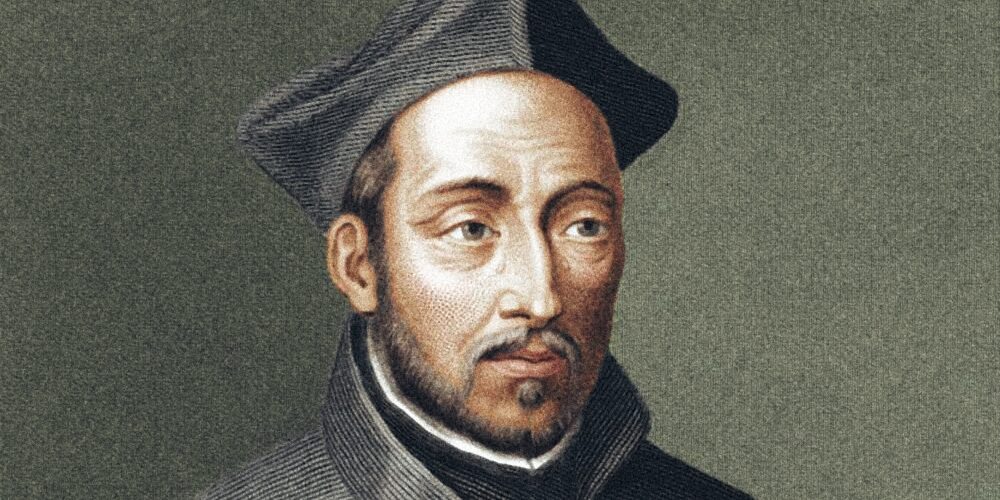
In his “Spiritual Exercises,” St. Ignatius of Loyola repeatedly addresses “the Evil One,” warning the pilgrim on the path of salvation to discern his manifold deceits. Our faith acknowledges that our world is beset by the prince of darkness, Satan, who since the rebellion in the beginning, seeks to confound us. Ignatius, ever mindful of the tradition handed down by the Fathers, does not speak in vague terms; indeed, he names “the Evil One” as the ancient enemy, the fallen angel, whose pride cast him from Heaven and whose envy stirs him to seduce the soul away from God’s love. Thus, at the heart of Ignatian spirituality lies a keen and sober appreciation for the activity of “the Evil One,” Satan. The Church teaches that Satan is not merely a symbol or a metaphor, but a real, personal adversary whose constant aim is the ruin of souls.
For Ignatius, the reality of Satan is not merely an archaic vestige; it is a present and dynamic challenge for all Christians. He describes the Evil One as the tempter, the accuser, and the father of lies which echoes the language of Scripture and Tradition. Satan’s strategies are cunning, subtle, and ever-adapting to the weaknesses and circumstances of each soul.
Fundamental to the Ignatian approach is the “discernment of spirits,” which requires vigilant attention to one’s interior movements: thoughts, feelings, desires, and persistent distractions. Ignatius insists that not all such movements have a neutral or benign origin; some are prompted by the Holy Spirit, others emerge from one’s own psychology or tendencies, and some spring from the Evil One, whose aim is to confuse, discourage, or lead astray. This process of discernment is not theoretical but practiced in daily examinations, meditations, and prayerful reflection. We learn from experience to detect the distinguishing signs of the Spirit of God and the tactics of the Enemy.
Ignatius’s instructions are direct and explicit. He warns that the Devil often appears as “an angel of light,” presenting temptations under the guise of good, exploiting our weaknesses and even our strengths. The tempter sows division, nurtures spiritual pride and self-reliance, and manipulates the natural anxieties and stresses of life. Ignatian prayer becomes an engagement with the deepest battles of the soul, not a retreat from reality. The Exercises make clear that Satan, ever-adaptable, uses both obvious temptations of greed, anger, lust along with more insidious ones, such as discouragement, false humility, or even spiritual pride.
Over the centuries, as the Spiritual Exercises spread and took root among laypeople across cultures and epochs, interpretations of what constitutes “evil spirits” have widened. Modern spiritual directors, recognizing the multifaceted nature of human experience, have expanded the definition to include not only direct demonic influence but also negative psychological states, unhealthy societal pressures, and cultural forces that promote values contrary to the Gospel. Impatience, discouragement, depression, and confusion, while not evil in themselves, can be seen as pathways the Evil One might exploit on the pilgrimage toward God.
This broader interpretation has provided an important pastoral bridge in allowing spiritual direction to take account of the realities people face: trauma, mental illness, social injustice, or simply the incessant noise of modern life. Acknowledging these realities shows sensitivity to the concrete challenges of faith. Yet, in doing so, an unforeseen risk has emerged: a reduction or “psychologizing” of evil that effectively pushes Satan to the periphery, if not omitting him outright from spiritual discourse. The language of discernment has often drifted from the cosmic battle of salvation and reframed evil as a mere internal or social struggle.
Such a drift is not without consequences. The Catechism of the Catholic Church (see CCC 2850-2854 especially) reaffirms that Satan is real, personal, and the root source of all that opposes God. Ignatius’s approach was never to scare or to dramatize, but to equip: the very purpose of the Exercises is to enable Christians to recognize, resist, and defeat the deceits of the Enemy.
It is crucial to hold these spiritual tools in balanced perspective. While Satan is a tempter and accuser, Catholic theology is equally insistent that human freedom and moral responsibility remain central. The Enemy may tempt, whisper, accuse, or confuse, but he does not override free will. Ignatius’s discernment is not about abdicating responsibility to an external force, but about learning to recognize when a movement in one’s soul is aligned with the Enemy’s strategy and then, through God’s grace, resisting it. The “rules for discernment of spirits” laid out in the Exercises train the us to recognize both comfort and desolation, and to seek God’s will even in times of spiritual turmoil.
Modern developments in psychology remind us that anxiety, depression, and stress often have physiological or neurological causes; these are not always spiritual in origin. Catholic teaching acknowledges that medical treatments for psychological or neurological illnesses are both legitimate and necessary. What Ignatian spirituality adds is the conviction that, whatever the natural explanations, the Evil One still seeks to exploit conditions of weakness, confusion, or vulnerability to sow further discord and despair. Thus, integrating prudent medical care and spiritual practices is both wise and in keeping with the Catholic tradition.
To neglect the presence of Satan and focus only on subjective or societal causes of evil is, ultimately, to risk an incomplete understanding of spiritual warfare. Satan does not care if his temptations come couched in secular, social, or even religious language; what matters to him is that the soul is separated from God. While modern approaches may stress the importance of being psychologically or socially literate, Ignatius warns that discernment must also remain explicitly spiritual and never settling for explanations that omit the possibility of a personal demonic intelligence beyond merely impersonal forces.
This is not to suggest an obsessive or fearful focus on Satan, nor to deny the complexity of evil in the world. The Church’s wisdom is always both-and, not either-or: evil manifests in personal choices, social structures, cultural values, interior thoughts, and spiritual temptations. The uniqueness of Ignatian spirituality is its capacity to take all these into account, without losing sight of the greater battle that underlies and infuses them all. The ultimate victory is assured Christ’s triumph and not human willpower. We participate in the triumph of Christ in prayer, discernment, and fidelity.
For the spiritual director, the challenge is to guide directees into a mature faith that is able to engage psychological, social, and cultural realities while remaining alert to the traps set by the one whom Ignatius names as the “enemy of our nature.” For the directee, the goal is to become ever more attuned to God’s voice, to resist discouragement, and to walk humbly in the truth of God’s love, armed with the knowledge that every trial is both a call to grace and an opportunity for victory.
In an age quick to psychoanalyze or relativize evil, Satan still prowls in seeking the ruin of souls. Hesitancy to name Satan directly in some modern conversations has embodied the quote from 19th-century French poet and essayist Charles Baudelaire: “The greatest trick the Devil ever pulled was convincing the world he didn’t exist.”


 Thomas Addis
 Vincent Ryan Ruggiero
 William Borst
 Fr Dino Vanin