
 Fr Joseph Esper
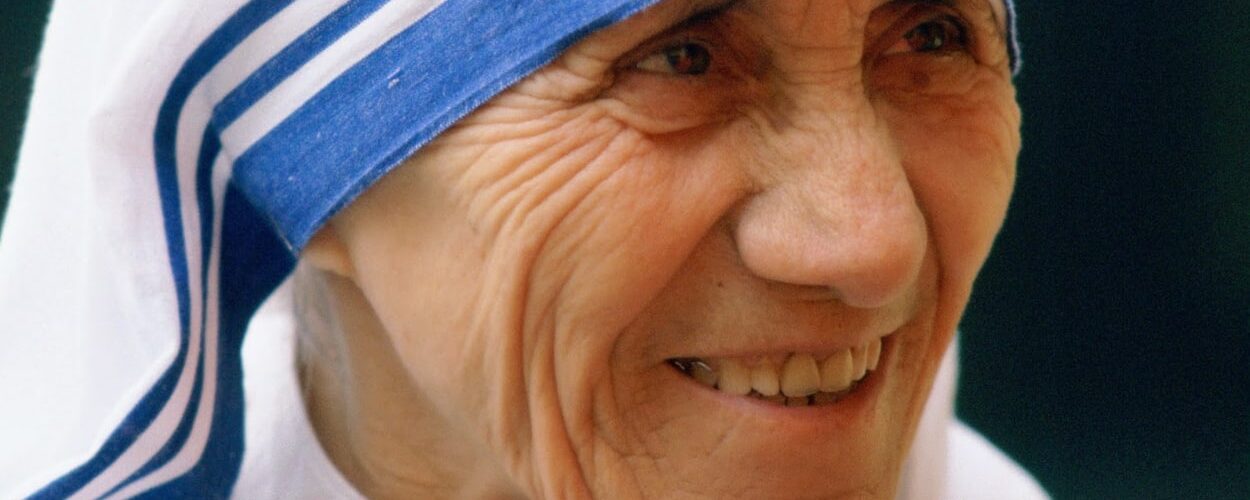
Malcolm Muggeridge, who died in 1990, was the star reporter for the British Broadcasting Corporation, or BBC. He had grown up in a non-religious home, and as a young man he rejected religion and instead believed in the Communist goal of creating an earthly workers’ paradise. However, that changed as a result of spending time in Moscow as a reporter during the 1930s. Becoming disillusioned with Communism, Muggeridge was increasingly attracted to Christianity, except for his cynical distrust of organized religion—but that began changing, largely because of the example of Mother Teresa of Calcutta.
In 1971, long before most people had heard of Mother Teresa, the BBC decided to create a documentary film about her and her sisters. The plan was to film them caring for the poor and dying in the slums of the city—but there was an unexpected problem. The shelter the sisters were using had only a few small windows high up in the wall, so very little sunlight entered the room—and the camera crew hadn’t brought any portable lights with them. It seemed it would be useless to film inside the darkened building—but someone suggested they try, anyhow; perhaps some of the film would be usable. To everyone’s great surprise, the film was absolutely spectacular; as Mother Teresa and her sisters moved about comforting and aiding the dying, it seemed that the building was illuminated by a warm, mysterious light. It wasn’t visible to the naked eye, but it was captured on film, which was titled Something Beautiful for God. The camera crew stated that, from a technical point of view, this strange light was impossible to explain. Muggeridge himself was convinced there had to be a spiritual explanation: Mother Teresa’s Home for the Dying was overflowing with love and goodness; that, he said, was the source of the heavenly light.
Just as the saints are portrayed as having haloes around their heads, and just as the face of Moses was radiant when he came down Mt. Sinai after talking with God (Ex. 34:30), so those who completely give themselves to the Lord are caught up in an unearthly light (Mark J. Link, S.J., Illustrated Sunday Homilies, Year A, Series II, p. 21). God gives His light to those who serve Him—and we, in turn, are called to be a source of that light for others.
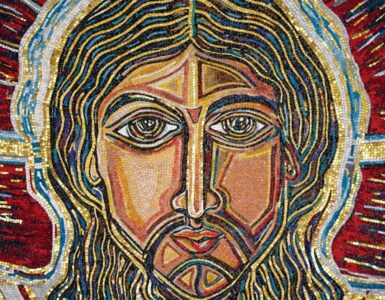
The Gospel of Matthew (17:1-9) describes Our Lord’s Transfiguration, when Jesus took three of His closest followers to the top of Mount Tabor in Galilee, where He was transfigured: that is, for a brief time His divine glory shone through His humanity. Moses and Elijah—the two greatest figures of the Old Testament—appeared and spoke with Jesus about His upcoming passion. Peter and his companions were overwhelmed by what was happening; in his excitement, the apostle wanted to build a shrine to commemorate the event, but God the Father told him instead to listen to His Son. Accepting and practicing the Lord’s teaching would mean far more than any earthly shrine or monument—for in this way Peter himself would be a source of Christ’s light. As St. Paul (2 Timothy 1:8-10) says, Jesus has “destroyed death and brought life and immortality to light through the Gospel.” If we in turn put the Gospel into practice, we do indeed live in God’s light, and become capable of sharing that light with the world.
Mother Teresa—now known as St. Teresa of Calcutta—provides a further example of this. Malcolm Muggeridge witnessed her giving a talk in a school hall during a tour of the Western world. He said, “I was watching the faces of the people as they listened. . . . Every face was rapt, hanging on her words; not because of the words themselves—they were ordinary enough—but because of her. Some quality came across over and above the words that held their attention. A luminosity seemed to fill the school hall, penetrating every mind and heart” (Link, op. cit., p. 22). Speaking of the effect Mother Teresa had on his own life, Muggeridge called her a “living conversion,” one who showed him Christianity in action. As a result, he and his wife became Catholic in 1982, and in the book he later wrote about Mother Teresa, Muggeridge said he had always felt like a stranger here on earth, until he found a true resting place in the Church.
St. Teresa of Calcutta served as a light in the darkness for many people. We don’t have to be exactly like her, but instead, we should use our own opportunities to share God’s light. For instance, we can go out of our way to make someone feel welcome, such as a new neighbor or fellow employee or student. We might learn more about our Catholic faith, so that we can answer questions people might ask about it. We can make a point of not gossiping or criticizing, but only saying good things about others. When necessary, we can correct our children or those over whom we have authority in a firm and loving way. When we’ve done something wrong, we can readily admit it and apologize. We can pray for the conversion of sinners, while trying to influence others by our good example. During this season of Lent, we might pray for God’s guidance, and then choose one particular personal fault or weakness, and make a sincere effort to correct it with the Lord’s help. In general, we should try to live out our faith in such a way that our example attracts others.
There’s a saying that it’s better to light one candle than to curse the darkness. This is indeed the case; the little bit of light we can give might be a shining example for someone else who would otherwise be blinded by sin, trapped in guilt, or paralyzed by fear of God or the Church. We don’t need haloes or radiant faces, and we certainly won’t be transfigured as Jesus was, but we can nevertheless reflect God’s glory. Jesus came to bring light into the world, and He relies on us for it to be spread and shared.


 Guest Columnist
 Fr Dino Vanin
 William Borst