
 Br Matthew Marie, OSB
When I started to discern my vocation in the Church, it was an amazing experience. All that I had done before in my life did not prepare me for the joy and peace, thrill and challenge of vocational discernment. I remember the Bible verse that stayed in my mind, “What profit is there to gain the whole World and lose yourself?” To be called by our Lord is to find yourself in Christ and in the Church.
The paper I am presenting here is a vocational research project in Catholic life. It is the fruit of a vocational study program that I ran in 2024 in a theology school. Its scope was to follow the vocation stories of five people from different backgrounds and see how their vocations had come to fruition in the Church. The goal was to identify commonalities in their stories and explore how their vocations were fostered by the Church. I also focused on vocational challenges to determine ways to overcome them. I have researched different documents on Catholic vocations, such as Pastores Dabo Vobis, and vocational studies from other career fields to offer sound advice for growing vocations. I hope that this series can be a service to building up a culture of vocations within our Church that will allow every vocation to flourish and to grow. This study looks at: a theology of vocations and the one calling of the Church, the vocation narrative that a person develops as they discern, the obstacles that hinder vocations, how Catholics navigate transitions from one vocation to another, and the mechanisms or supporting practices that aid in vocational discernment. When this study is approached fearlessly and objectively, it will help the Church grow in its vocations’ outreach.
Again, I want to reiterate that this is a study in support of Catholic vocations. In no way does this diminish or take away from the fine work that Seminaries, Vocation Directors, and Discernment Retreats accomplish. The vocation ministries and the formation directors have an important and vital role to play in the growth of our Church. The desired outcome of any vocation promotion is to form faithful Disciples of Christ. Unfortunately, so many vocations are left dormant and never allowed to flourish in our dispirited culture. Both Matthew Kelly and Sherry Weddell, two of the best lay Catholic evangelists, found that only 5% to 7% of Catholics in the US are fully engaged in their faith. This means that the vast majority are not living out their faith and finding their unique vocation in the Church. There is a pressing need to nurture vocations from every stage of life and at every point of transition. From this study, the hope is that a true culture of vocations will be mapped out and presented so that we can be true to Jesus’ mandate to remain in him. “It was not you who chose me, but I who chose you, to go and bear fruit that will remain.” “Remain in my love.”
Answering the Call
Nurturing a culture of vocations among all people in the Church is beneficial for the substantial good of the Church’s life and the spiritual needs of the faithful. A culture is something shared between different members of a society or group that maintains shared values and common interests. A culture is built by promoting positive ideals and attitudes in a set of individuals united in a group. The Apostolic Exhortation Pastores Dabo Vobis gave a framework for the promotion of vocations to the ordained priesthood and the formation of priests. The scope of this document can be adapted to nurturing vocations in all manners of life in the Church, and aid in promoting vocations as an organic process that nurtures the Church’s life on a grassroots level.
The importance of vocations in the Catholic Church and in Christianity in its totality is self-evident. The calling that all people have is the inspiration that gives the lived Christian experience its solvency. One cannot live out the Christian life without finding one’s calling. The real question then becomes how to measure vocations. What the vocation is and how it is measured in the Church is hard to define. For the sake of our inquiry here, let us make several observations going forward. Vocations go beyond the number of people professing one vocation over the others. For example, the call to the ordained priesthood is important. It is not the only vocation in the Church, however. One note on this for context: a high number of priestly vocations in a diocese or a religious order does not guarantee vocational health in the Church. It does have merit to study dioceses that produce multiple vocations to ordination and religious life. Statistics in this area do not cover the whole field of vocations. There is a need to go beyond the numbers and statistics on vocations. Where can one find the necessary truths that will illuminate the Church’s vocational health and help to form the basis for renewing a culture of vocations in the Church? The real advantage is engaging those who have themselves participated in the discernment process in the Church. The values, ideas, training, and experiences of vocational discerners are of the utmost importance when understanding where the culture is and how it can be strengthened with renewed energy, vitality, and enthusiasm. What follows is a narrative study in the apostolate of the Church with vocations. Subjects were chosen from different vocational vocations to give a wide group for a narrative case study. The emphasis was to study how different people discerned their vocations in recent years and how they dealt with the grief of transition from one vocation to another. The ideal was to create a narrative form that opens discussion for how vocations can be nourished in an open, non-judgmental, and freely chosen environment.
Meaning of Vocation
A vocation is defined as a special calling or profession. In the Church, a vocation is considered the calling one has from God. The root word of a vocation is “vocare,” to call or to be named. Vocation can be the special mission or purpose that a person discovers in life as their unique calling to give in service to humanity. In the Christian sense, the idea of vocation is tied to Jesus’ Gospel and the calling of the Disciples. The Gospel is a “Gospel of Vocations,” which calls all people to holiness and communion with God.[i] Nurturing vocations in the Church is a healthy work for the Church today. Respecting the call to life as an ordained priest and to a profession in the religious order, it does not lessen the need for the promotion and formation of all vocations. In the Catholic Church, the ordained priest holds the role of the one who acts in persona Christi, in the person of Christ. The ordained priest is the one who consecrates the Eucharist at Mass, hears confessions, officiates at weddings and funerals and, in most cases, administers last rites. Deacons can baptize and officiate at both weddings and funerals. In extraordinary cases, lay people can baptize those on the verge of dying. The majority of Christian denominations themselves have some form of official leadership in the form of a minister who leads worship, ministers to the faithful pastorally, and teaches the people on faith. While these vocations of “sacred leadership” ought to be regarded with respect, it is essential to the identity of the Church to form the vocations of all the faithful. If there are no priests, there are no Sacraments. Without the people of God, there is no Church, no worship, and therefore, no priesthood. The obstacles to vocation development go through the unnecessary dichotomy that is often placed between the priesthood and all vocations. It is for the full benefit of the Church for priesthood and lay vocations to be treated as equal parts of the body of Christ, and this mystical body, united in faith, serves to worship God by the best use of these terms.
To recognize vocational discernment and development is to nurture it as an essential element to the Church’s calling as the Bride of Christ, the mystical bride that follows the Lord and is wedded to His divine heart. The Church, therefore, needs to see itself as committed to doing all within its power to promote and nurture a healthy and flourishing culture of vocations. This culture of vocations has the vibrant quality of welcoming all disciples in their discernment and in living out their God-given gift of vocation. This goes beyond a mere recruitment process of promoting vocations. It is indeed a total enculturation with which every Christian in the Church is taught to know they have a vocation and ought to live it well.
A Complete Theology of Vocations
A Christian vocation is understood as part of a developed theology of vocations. When we approach the concept of a vocation as a professional calling or career choice, we forget the principle that a vocation is part of identity for the person called and not in itself a career. Working as a professional can overlap with any vocation one will have in life; it is far greater than a career in its scope.
The vocation each person receives is positive and calls the person to live in it and live abundantly. In Genesis, the account of creation calls humanity to abundant life. “Be fertile, and multiply.” Isaiah 6 holds a calling for the soul, regardless of one’s worthiness. Isaiah admits that he is a person of unclean lips from an unclean people. The Seraphim takes an ember from the fire and touches the lips of Isaiah, thus granting him a share in God’s potent spirit and the right to speak on the Lord’s behalf. Here is a good corollary example for discerning a vocation regardless of qualifications or sense of individual worthiness. The Gospel of Luke depicts the calling of the Apostles without any pretense of their rank or class. Jesus called Simon to follow him, and he took the name Peter. They were to be “fishers of men,” Luke 5 1 11.
Three vocations in the Church
In Catholicism, vocations are manifested on the communal and individual levels. All vocations in the Church follow these three forms:
1. The universal call to holiness. This is the source and summit of all Christian life and is the first form of discipleship. All people are called to holiness and redemption in Jesus Christ. This calling is the source and summit of all discipleship. It is the first and last vocation of every Christian.
2. The particular vocation. The Catholic Church recognizes the four specific vocations of priesthood, religious life, marriage, and single life. Each person has a vocation that is personal to him or her alone. Each soul will be a participant in God’s will and plan of salvation through living out their state in life. The soul of each person is uniquely called onto its path. She is called to fulfill her life in her vocation.
3. The ultimate vocation. The Church is not simply a corporation or institution. The Church is called upon to glorify God in the end. This happens when it works for the service of its people. You cannot worship God as the Church when people are not served. The Church opens doors for people to find their authentic calling in the Holy Spirit by glorifying God in their lives. The mission of the Church is to ultimately glorify God as the end of all existence.
These three forms of vocation demonstrate the authentic quality of vocations in the concrete reality of Christian life. This framework allows for vocations to be known outside of any abstract concept, which divides the vocation imagined from the vocation as it is lived day by day. Any proper or true theology for discovering a vocation is meant to be seen for the humanity of the person living it out. In short, no vocation can grow and be nurtured in the faith community of the Church without understanding the lived-out experience of all people involved. This development of a vocational theology gives a deeper meaning to the discernment process. The culture of vocations that the Church has always had is made deeper and more fulfilling by this dynamic understanding, which this theology discovers.
The Vocation Narrative
An inquiry into vocational discernment was conducted in early 2024 among several Catholic people at different stages in their vocational journey. This inquiry was meant to provide a case study for vocations and how various people dealt with the challenge of discerning their vocations and the grief that came from transitioning from one vocation to another and changing roles in life. This case study aimed to illuminate the often gray area of how different people handle vocational distress in discernment, and what things in the Church aided them in their discernment process, and what did not.[ii] The health of vocations in the Church cannot be measured only by statistics. The realm of individual experience in vocations is important to understanding the state of vocations in the Church. Narrative analysis of individual vocation stories guides a deeper understanding of how vocations are being formed now and the ways that the Church can strengthen its vocational life. It must be noted that subjective experience cannot replace objective data that relies on quantitative research to reach conclusions on the overall status of ecclesial life and observance. Researching the experiences of discerners in a narrative form grants a new perspective on vocations from a personal level. The narrative of each vocational discernment is unique and comes with its own high and low points, positive moments, and setbacks. The unique perspective of each participant in the following narrative study forms a portrait of the vocational landscape in the American Church today.
Vocation Journeys
Vocation is often seen as a calling “to something.” To teach, to get married, etc. This is usually tied to a major life decision, such as what college to attend and where to live. As Jesus called different people by saying, “Then come, follow me…” Mark 10.31.[iii]
The participants in the case study are listed by surname for the sake of privacy. They are Fr. Benito, Deacon Davis, and Br. Alphonse, Tristian, Sr. Mary, and Ann Bernadette. All the participants gave accounts of how they were called by the Lord in their vocation stories. They all came to their vocational experiences from different backgrounds. All six mentioned how others influenced their vocational journey. Fr. Benito credited a close friend who wanted to be a priest. His friend’s vocation became his own. Dcn. Davis describes how he found his vocation came to fruition when he was ordained by a Cardinal of the Church. Two participants, Fr. Benito and Dcn. Davis described how obstacles in their vocations helped them to grow in the long run. “Doors closing led to new doors opening,” by the Lord’s hand. Community life was a major common denominator for all the participants in their vocation. All the participants mentioned other people who helped them discern the vocation that they chose. Sr. Mary lived in a community of three sisters when she started her ministry. She came to a Minor Seminary to start an English as a Second Language Program for foreign-born students in the seminary who needed to learn English. She focused on giving her students the full experience needed for ministry. She is now working as a health coordinator in a Catholic nursing home. Br. Alphonse was inspired by the community life of the parish priests in his diocese. Anne Bernadette lived with a community of sisters when she began her vocation. Fr. Benito received the help of many close friends who supported his vocation, including a Scout Master who drove him to the Seminary and back when he started clerical studies. Dcn. Davis spoke of his first vocation as a husband and his second as a chemist. Both vocations taught him the importance of communication.
Culture of Vocations
Along with the idea of finding one’s own Calcutta, the idea of building a culture of vocations received the most interest from the participants. All the responses given focused on a trajectory of forming a culture in the Church that allows prospective discerners to experience the joy and fulfillment of vocation naturally. Vocations need to be lived authentically and shared with others. People can only come to know a vocation when they encounter it in a context that shows that the vocation is lived in joy and peace. Br. Alphonse had an articulate reply: “The best way to promote vocations is to simply let them happen.” The responses to the vocational questions generally agreed with the notion that a vocation is formed through a lifelong process and is not discovered all at once. One respondent said that your vocation, your “Calcutta,” finds you instead of you finding it. Where God calls you to use your talents and passion is where you belong. It is not something you can will into existence on your own. A person will have to come upon it naturally in their own lives.
Insights
The first is that there is an apparent connection between someone’s vocation and the grief that he or she experiences along the way. Grief is not something isolated from discerning a vocation, and it will carry a sense of loss when a vocation does not turn out as expected. Secondly, there needs to be openings or “safe spaces” given to people to discuss these losses in vocational ministry. There was a time in clerical studies for the ordained priesthood that a man would be expected to leave in secret if he decided to depart from the Seminary. This need not be the case now. Attention ought to be given to helping men and women address the losses they experience in a vocational journey and unpack their significance for them. The third and final takeaway is that discernment and grief lead to fulfillment and satisfaction when considered as a part of a positive self-narrative for the individual discerning.[iv] All the participants described a general sense of satisfaction and joy with where their discernment had led them. They could understand their grieving in loss more completely as part of their journey and not as a failure. Those discerning can say with Christ as He walked with the two wandering Disciples on the road to Emmaus, “Was it not necessary for the Son of Man to suffer so to enter his glory?” (Luke 24: 26).
[i] Pastores Dabo Vobis: Post Synodal Apostolic Exhortation of His Holiness John Paul II, Libreria Editrice Vaticana, 1992.
[ii] Vocations Questions, Given to Participants in the Study
1. What is your vocation journey so far? Where did you start and what brought you to your current place in life? Tell me about 3 significant moments in your vocation journey thus far.
2. In these 3 experiences, did you experience grief or sadness when changing/transitioning from one vocation to another? Tell me about your sense of loss. How has your vocation “from something” prepared you for your current vocation?
3. How has your journey with its ups and downs, its grief and losses, prepared you for service for the Church? “Is there some part of Jesus’ life and ministry that you identified with during these times of transition? Often times it is a cross we carry that can help us to carry and console others, as I have found in my own faith journey.
4. What peace and joy have you found in your vocation after your journey with its ups and downs?
5. Mother Theresa once told a person discerning to join the Missionaries of Charity to “find her own Calcutta.” How have you found your own Calcutta, the place where you master your work and shine at your best?
6. What will you do to grow in your vocation in the future and come to a place of fulfillment?
7. What is the best way to nurture vocations in the Church, to cultivate a “culture of vocations?”
[iii] The Stories We Live: Finding God’s Calling Around Us;, Kathleen Cahalan, Eerdmans Publishing Company, (2017), 12-13.
[iv] Narrative Identity, McAdams, 3.

 Donald Wittmer
 Fr Joseph Esper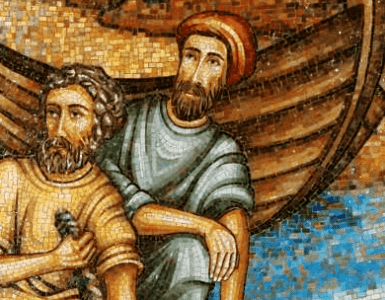
 Deacon Gregory Webster