

 Vincent Ryan Ruggiero
The American Spectator recently published an essay by S. A. McCarthy titled “The Church’s Misguided Mercy.” It began by quoting the U.S. Bishops Conference’s chairman of migration, Bishop Brendan Cahill: “We continue to urge an approach to immigration enforcement that is targeted, proportionate, and humane, always respecting each person’s inherent dignity, the sanctity of families, and religious liberty.”
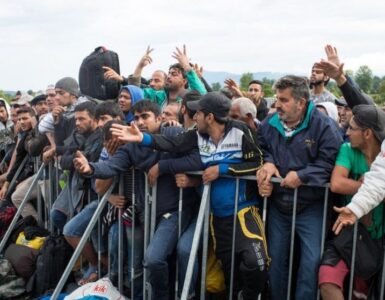
McCarthy noted the statement was smoothly worded, but he argued that the USCCB’s actual policy neither one of ‘justice” nor of “virtue” but instead “a policy of self-service, of robbery of waste, and of harm.” Moreover, he said it ignored the Catholic Catechism’s primary emphasis on government’s responsibility for “the good of its citizens” rather than for that of outsiders.
The author went on to describe mass migration as “a scourge upon the nation, robbing citizens of the inheritance that their ancestors struggled and strove to preserve for them, and robbing future generations of the nation that their own forefathers built for them.” This dereliction of duty, he concluded, should make the bishops “ashamed of themselves.”
McCarthy’s harsh assessment is not likely to evoke a meaningful reaction from the USCCB. But that will not be due to its harshness. I know from experience that they have ignored much gentler criticisms, even when not only published, but sent directly to them. So even if the bishops read his essay, they will likely ignore it. Moreover, Catholic laypeople are not likely to be united in their reaction to McCarthy’s criticism. Some will applaud McCarthy for expressing what they strongly feel, but others will be outraged over what they consider an offense to the hierarchy and perhaps an insult to the Deity.
The sad result of the bishops’ and laypeople’s reactions will be to leave one of the most important religious and social issues of our time unchanged. Because it is impossible to believe that God approves of this situation, I offer the following questions and ideas in the hope of making Catholic discussions of immigration more fruitful:
Why do the Bishops refuse to respond to questions and criticism no matter how respectfully stated? Perhaps the bishops fear that a response to criticism would cause misunderstanding. Or they may believe that their status as members of Catholic hierarchy puts them above criticism, even when offered by highly educated laypeople.
Neither of those reasons justifies their reaction. Silence is much more likely to cause misunderstanding than explanation would. And elevation to the hierarchy increases rather than decreases their responsibility to the laity. The “Feed my lambs, feed my sheep” biblical metaphor refers not only to bodily nourishment, but also to mental and spiritual sustenance. Every time a bishop puts on his garb of office, he is emphatically reminded of that responsibility. Avoiding explanation of their thoughts and dialogues with the laity is a serious violation of that responsibility.
What should the laity do about the bishops’ refusal to answer criticism of their views on immigration and other important issues? This question is difficult because many Catholics have grown up believing it is offensive, if not sinful, to question what priests and bishops say about moral issues. That belief was passed on for centuries, since the time when priests alone were educated. Today many of the laity are as educated as clerics, even in Catholic teaching and related subjects. They also have access to the same information sources as clerics and the hierarchy.
The challenge for lay people is to recognize their obligation to use their minds effectively by examining moral and social issues carefully, comparing points of view in light of evidence, avoiding manipulation by uninformed and biased sources, and remaining open to the guidance of the Holy Spirit in seeking truth. They should also have the courage to speak frankly to their priests and bishops about important issues.
The success of such communication will, of course, depend on bishops (and priests) understanding that the Holy Spirit speaks to the laity as well as to the ordained and reacting humbly and openly to that understanding.
Copyright © 2026 by Vincent Ryan Ruggiero. All rights reserved.


 Mindszenty Report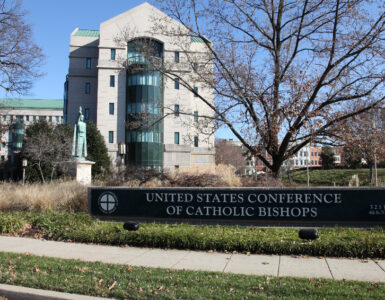
 Mary F. Werbaneth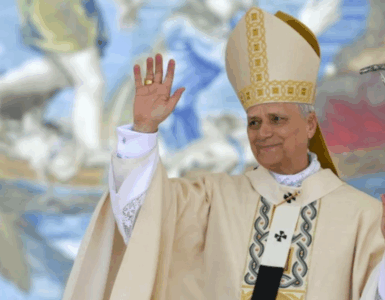
 William Borst