
 Br Matthew Marie, OSB
This is Part II of a three-part series exploring the importance of nurturing a culture of vocations within the Catholic Church. By examining the vocation stories of five individuals from diverse backgrounds, the essays aim to identify commonalities in their discernment journeys and the obstacles they faced. The goal is to develop a comprehensive understanding of vocations, emphasizing their significance beyond the priesthood and religious life, and to propose strategies for fostering a vibrant culture of vocations that encourages all Catholics to discover and live out their unique callings. In Part 1, an introduction is provided.
Vocational Obstacles
The overall landscape of the Church’s vocational life includes many barriers that can hinder the discernment process. While one cannot understand every single stumbling block that will impede any individual who discerns a vocation, one can find several barriers that commonly present themselves as obstacles in the discernment process.
A Lack of Social Support
Whenever a negative trend is recognized in the discernment process, it can be addressed by finding its proper support and solution. Vocations are never discerned alone. The Church is simultaneously the bride of Christ and the community of believers. The social support that is generated by membership in this community of faith in the Church is central and integral to the journey of discerners who come through the Church. Without this support, vocations can be lost. This is not to say that the presence of social support is always positive. Social support can turn into groupthink in any organization where it is taken to an extreme. It is without parallel that social support in the community life of the Church is most important for creating a healthy vocations culture. All discernment will have the presence of adversity and trial. When the Church itself considers vocations, it must look to fostering this unwavering support for those who discern their vocation and for supporting them in the times of trial that they have. One can look to the literature of other fields of scientific inquiry to find corroborating evidence for this aspect of vocational discernment. In the treatment of veterans with Post Traumatic Stress Disorder, it has been noted that a lack of a social support network in the veteran’s life is a determining factor for PTSD. This factor is twice as likely to determine PTSD as the nature of the trauma itself.[i] [ii] This means that when a veteran comes home from active duty in war, he or she should have a social support network around them to help process the trauma endured. It is evident that humans are social creatures by nature and therefore have an inherent need to connect with others socially to come to terms with their own experiences.
No Transitional Process
Dr. William Bridges offers four rules that govern how people deal with important life transitions. These rules offer insight into the nature of grief that is experienced in the process of vocational change. [iii]
Rule I: In a time of transition, you will find yourself coming back to old activities in new ways.[iv]
Rule II: Every transition begins with an ending.[v]
Rule III: While it is advantageous to know how you personally respond to transitions, there will always be a part of you that resists this understanding.[vi]
Rule IV: There is a hollow or restless time in the transition time between the ending of one event and the beginning of the next event.
This understanding gives a general framework for helping someone to make a major change in life, with some guidance based on their experience they have. This is a part of service in many important fields. When an active member of the United States Armed Forces demobilizes and leaves active service in a war zone, it is the practice of the military to have them undergo a psychological evaluation process to see how they are doing mentally and prepare them for life back in the United States as a citizen. This is highly important for the veterans who transition back home to find peace and employment in American civilian life. Too many veterans struggle with Post-Traumatic Stress Disorder, loneliness, and depression when they return home. While you cannot prevent all problems that come from War, the military does have a process to help soldiers transition from one phase of their lives to another.
For a point of comparison, the Peace Corps organization notes in its exit surveys that people leaving service in their group generally find it harder to transition back into life at home than the transition they experienced when they served in a foreign country and a new culture.[vii] This means there is a greater difficulty leaving a long-term form of service than starting one. This is a pertinent comparison for vocational work. Formators and all who minister in the Church cannot dismiss the transition from one vocation to another as just something you do. It is not easy to make this step in anyone’s life. We as a Church commit a disservice when we allow people to transition out of a vocation to another without clear guidance and pastoral love.
Ministerial vocations in the Catholic Church often do not have these transition processes in place. For example, in Seminaries, a student who leaves on good terms will be allowed to finish their last term and leave with the other students. There is no detailed plan to help the seminarian leave the Seminary and live as a lay person in the Church. This transition is not as easy and simple as changing jobs in the outside World. Marriage is no different. When a marriage ends and two Catholics in this Sacrament separate, there will be emotional and spiritual pain. Whether or not you agree with Amoris Laetitia or any stand on the validity of how annulments are carried out, it cannot be denied that people ought to have the best support possible when a marriage ends, and this is in full respect to the Church’s teaching on marriage and its sanctity. This is apparent when people divorce and leave the Church, and do not return because they feel they were unworthy of the Church’s life after a divorce. Asking members who are counselors and/or spiritual directors to be available for service to Catholics who are divorced or going through a divorce will strengthen the life of a parish. It is simply not enough to tell Catholics to follow the rules of marriage. Rules also require the Church to shepherd all its members and to include the divorced and separated Catholics into the loving embrace of the Good Shepherd.
Anti-clerical culture
Pastores Dabo Vobis gave an important insight into the relationship between the laity and the priests that is taken from the Second Vatican Council itself.
“The more the lay apostolate develops, the more strongly is perceived the need to have well-formed holy priests. Thus, the very life of the People of God manifests the teaching of the Second Vatican Council concerning the relationship between the common priesthood and the ministerial or hierarchical priesthood. Within the mystery of the Church, the hierarchy has a ministerial character (Lumen Gentium, 10). The more the laity’s sense of vocation is deepened, the more what is proper to the priest stands out.”[viii]
The theme here is counterintuitive to commonplace thinking on Christian ministerial work, and yet it is an observable phenomenon in the Catholic apostolate. Clericalism is a culture of favoritism or unquestioned deference given to priests in the Church. In this way, ordained priests are preferentially treated over the lay faithful and other ministers in the Church. Clericalism can be seen as giving two different standards for Christians based on their rank in the Church’s hierarchy, such as a complaint made by non-commissioned officers in the United States Armed Forces when observing the treatment that officers receive in the military’s hierarchy. While clericalism has existed at certain times in Catholic history, it is not necessarily an obstacle to a vocations culture as defined in this article. Anti-clerical sentiments arise when priests and seminarians find themselves stretched so far that they cannot exercise their priestly ministry. When priests take on a set of rural parishes, they will often find themselves overwhelmed with their office duties and business matters in running the parish without a staff to operate the corporate functions of their parishes. In parishes in cities, priests usually will have staff hired by the Church who assist in operating the day-to-day matters, and the priests will still be tasked with oversight for corporate operations. In this setting, they can still be overwhelmed with their workload and ministerial tasks.
In today’s Church environment, the average priest may, depending on his other diocesan assignments, spend 10-20% of his working hours doing sacramental ministry and worship, and the other 80-90% in the office, in meetings with supervisors, employees, and contractors. This is not to give the impression that the time spent in office work is unnecessary; this overemphasis on a corporate approach to a parish creates an anti-clerical culture that erodes the priest’s identity as pastor and spiritual father to his flock. When a priest is taught to believe everything depends on him, it leads to an overemphasis on performance in the administration and not on the sacramental ministry. This can lead, in many cases, to overwork, which will jeopardize the priest’s physical and emotional health. And then, when the priest believes in taking charge of every project, it will stifle the initiative and ministry of the people of God in the Church. Thus, it is anti-clerical to consider that everything depends on the priest’s responsibility. All are called by the Church to service in their vocation, and the anti-clerical mindset destroys this.
“The lay faithful also, particularly catechists, teachers, educators, and lay ministers, each with his or her own resources and style, have great importance in the pastoral work of promoting priestly vocations: the more they inculcate an deep appreciation of young people’s vocation and mission in the Church, the more they will be able to recognize the unique value of the priestly vocation and mission.”[ix]
No organic growth
For the sake of clarity, it is important to focus on negative ecclesial trends that affect people in their vocations specifically and not general trends in American Churches, such as the diminishing number of weekly attendees at worship services and the rise of the non-affiliated Americans in religion, who are identified as nones. Trends that affect vocations are inherently important for the life of the Church, and therefore ought to be given the attention of the whole Church so that they can flourish in the Spirit.
In religious institutes of the Catholic Church, new members who join religious orders of the Church for men and women are directed to take part in the common spirituality, ethos, and work or field of the order. The specific character of each order is the charism of that community. The charism is the rules, customs, traditions, and ministries that are passed on from generation to generation in each religious group. For diocesan priests, the emphasis is on taking responsibility for the pastoral needs of a diocese and the local Church for which they serve. In all other denominations, a minister will come into a new faith community after being chosen by the people and elders and will be inducted into the spirit of that community. All vocations will have an underlying score of presumptive ideals that shape the expectations and practices for that particular Christian calling. Of course, culture and society influence the expectations for each role that a person fills in their vocation.
What leads to harm in this regard is the lack of positive deviance from the vocational norm in a Church entity. A specific vocation is made possible by having a common ethos and rules that give it identity and focus. Once someone fits the role that he or she is meant to fulfill and observes all the common practices, there will be space for growth in one’s expression. It is important in vocational work, as in any other field of theological study, to explore and even encourage the healthy development of one’s natural abilities. For vocations, this will focus on the continuing education and constant formation of the person as an individual. One reason that organic growth of vocational life becomes hindered is resistance to new ideas that stifle new ideas and initiative. There are historical examples that demonstrate this. John of the Cross, the sixteenth-century Carmelite friar and reformer, faced persecution in his attempt to reform the Carmelite Order in Spain. His ordeal was so great that he was taken prisoner in Toledo, Spain, and held hostage for nine months by friars of his Order. His reform, undertaken with Teresa of Avila, was a reform of the Carmelite Order and did not threaten Church doctrine, but was still treated with suspicion. For current examples, there is scant attention paid to the skill development and occupational training for priests, ministers, and members of orders outside of the theological training that they receive in the course of seminary and formation.
There is far less research done on determining the role of shared interests and the vocation of marriage. The overall positive assumption that can be made here is that the freedom of each person in a marriage is important to respect and allow for their personal growth. When one spouse expects the other to give up all their passions and interests for what they want for the family, it will likely harm their marriage in the long run. Organic growth in all vocations is important for each person living out their vocation and life. When people terminate any vocation, in marriage, the priesthood, religious life, and any other ministerial vocation, it correlates with a general divide between their identity and their public calling. The loss of personal growth in a vocation and passion in the vocation in daily life are impediments that form an obstacle to the growth of vocations.
[i] Finley, Erin P. “Empowering Veterans with PTSD in the Recovery Era: Advancing Dialogue and Integrating Services.” Annals of Anthropological Practice 37, no. 2 (November 2013): 75–91.
[ii] Congressional Budget Office. The Veterans Health Administration’s Treatment of PTSD and Traumatic Brain Injury Among Recent Combat Veterans. February 9, 2012. http://www.cbo.gov/sites/ default/files/02-09-PTSD_0.pdf
[iii] Transitions: Second Editions, Dr. William Bridges, Gildan Media, (2011), 7.
[iv] Ibid, 11.
[v] Ibid,15.
[vi] Ibid, 17.
[vii] Hirshon, J. M., et al. “Psychological and Readjustment Problems Associated with Emergency Evacuations of Peace Corps Volunteers.” Journal of Travel Medicine 4, no. 3 (September 1997): 128–31
[viii] Pastores Dabo Vobis, 8.
[ix] Ibid, 89.

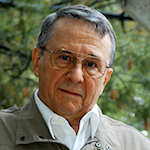 Vincent Ryan Ruggiero
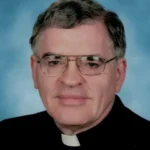 Fr Joseph Esper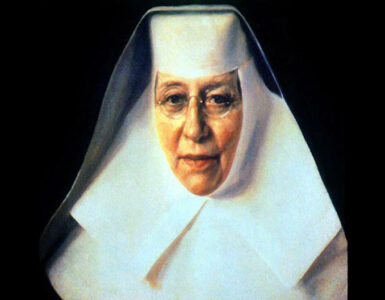
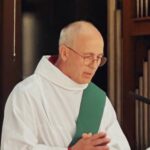 Deacon Kurt Godfryd

 Deacon Gregory Webster