
 Fr Joseph Esper
Many years ago, the Detroit News carried a special article for Easter Sunday (April 11, 1993) regarding a religious controversy among various Protestants. Most of their theologians, or religious scholars, accepted the traditional understanding of Christ’s Resurrection, but as the article explained, there were some who took a much more liberal view. These Protestants claimed that Jesus’ body didn’t actually rise from the dead; no, He supposedly returned to life only in a symbolic way, living on in the hearts and minds of His followers. (This mistaken view, of course, is contrary to what the Catholic Church teaches, and also contradicts what most Protestants believe.) One of the first persons to present this new interpretation was a Lutheran theologian in Germany named Rudolph Bultmann. Though himself a sincere Christian, he decided early in the 20th century that modern people were too sophisticated to believe in an actual physical resurrection, and thus whatever supposedly happened on Easter Sunday would have to be presented or explained to them in a more symbolic way.
The Catholic Church rejects this watered-down interpretation of the Resurrection, and, as the article made clear, so do many Protestants. One of the traditional professors quoted in the story used an image I like: he accused liberal scholars of “theological bungee-jumping,” in which they jump off or abandon a position of faith and try to come as close to denying it as possible, while still claiming to believe in Christ. Such attempts are both spiritually dangerous and extremely foolish; St. Paul, for one, made it very clear that if Christ wasn’t raised from the dead, our faith is useless and our lives are hopeless (1 Cor. 15:12-19). As it happened, of course, Jesus was raised from the dead on Easter Sunday; His body was transformed, and capable of doing amazing things—such as walking through walls and locked doors, appearing and disappearing, and teleporting or being transported to distant places in an instant. This was the same physical body He had for His thirty-three years on earth before dying on the Cross. As Jesus’ followers, we will one day share His glory; at the end of the world, our weak, tired, vulnerable bodies, now subject to illness and death, will be made perfect and incorruptible, able to share and delight in all the beauty and joys of Heaven. Easter Sunday really happened, and it changed everything forever. Christ’s Resurrection made a true and lasting difference in history; it should also make a difference in our lives.
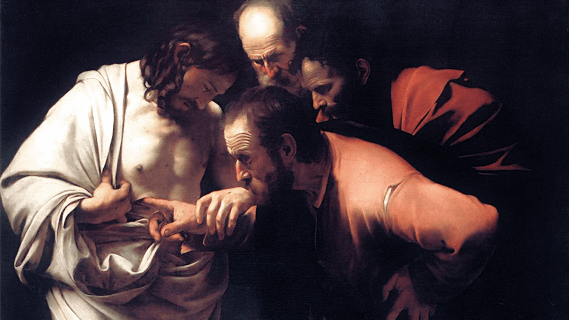
As the Gospel of John (20:19-31) shows, St. Thomas was the first Christian who doubted the Resurrection—but unlike some people in our modern age, he was willing to admit he was wrong when he learned the truth. Upon seeing Jesus, he immediately acknowledged him as Lord, and from then on lived as a true apostle. Indeed, all of Jesus’ followers were changed by the Resurrection. The Acts of the Apostles (2:42-47) tells us that they lived together in mutual faith, charity, and peace, and their example attracted many others to the early Church. Even after Jesus ascended to Heaven and could no longer be physically seen, His disciples knew He was alive and present among them through the Holy Spirit. As St. Peter (1 Peter 1:3-9) says, this is part of God’s plan of salvation. The resurrection of Jesus Christ from the dead is God’s promise that we too will have eternal life, and any suffering we may have to endure here on earth can help prepare us for this event.
It’s been said that people will give their lives for an exclamation point, but not for a question mark—in other words, they’ll take seriously a bold and confident proclamation of the Gospel, but not a weak, watered-down version of Christianity that seems afraid to offend anyone by insisting on the truth, especially the miracle of the Resurrection. As Christians, our lives must proclaim faith, not doubt. We need to ask ourselves what message we’re giving, and whether we’re announcing the Good News of Jesus Christ, or living by the old, sinful and misguided standards of this world. For instance, what approach do we take in regard to the question of forgiveness? When someone wrongs or offends us, our choice is between the world’s tired and shortsighted approach of holding grudges and taking revenge, or Jesus’ radically new example of breaking the circle of evil by forgiving others unconditionally. What message do we give in terms of moral standards? Do we go along with society’s steadily-deteriorating values, or do we hold firm to everything Jesus our Lord stands for? In regard to helping people in any sort of need, the world has always tended to say, “It’s everyone for himself.” Jesus says, “Whatsoever you do to the least of My brothers and sisters, you do to Me.” Which approach do we choose? In terms of the worries, burdens, and sufferings that are an inevitable part of life, we can curse and complain and feel sorry for ourselves, or we can take up our cross and offer up everything as a sacrifice. We know which choice Jesus made. Do we truly follow His example? What about our goals—are they earth-centered, or heaven-centered? If we truly believe in the Resurrection, we’ll show it by the way we live; everything we do will somehow be a preparation for the life to come.
There are some theologians and religious authors today—sad to say, Catholic as well as Protestant—who seem more concerned with making a name for themselves by questioning Christianity’s central beliefs or attacking the authority of the Church than with sharing Christ’s Good News. These “theologians of suspicion,” as they’ve been called, often sow seeds of doubt, rather than faith—but God’s truth will prevail. We must make it clear that we’re on God’s side; we must live as true followers of Jesus Christ. We’ll probably have our own moments of weakness and doubt, as did St Thomas, but God’s grace and forgiveness will always be available when we need it. As Jesus said, “Blessed are they who have not seen but have believed.” This is both a challenge and a promise; if we witness to Christ’s Resurrection by the way we live, we will one day share in it ourselves.


 Fr Dino Vanin
 Michael Vacca and John Nguyen
 Fr Mario Attard OFM Cap