

 Br Matthew Marie, OSB
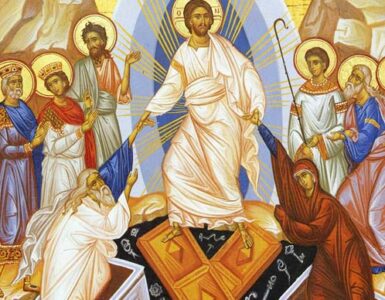
Blessed tidings of Easter to everyone reading these reflections. The Paschal Season is a blessed time of renewal and new life as we celebrate Jesus’ resurrection and our redemption in His Paschal sacrifice. We behold these Gospel accounts of the Resurrection; let us put ourselves in the place of the disciples and behold Christ’s glory. The rising of God’s Son from death to eternal life did not create an explosion or fearsome event that was beheld by all. This hidden and everlasting event began the re-creation of all things, a new beginning for all, and the preparation for the last days.
When we look for signs of God’s glory in the narrative of Easter, we come to see that light is shining through all around us. The celebration of Easter is the highest solemnity and most important commemoration of Christianity every year, although the secular world monopolizes Christmas and other holidays. Easter is, without a doubt, a time when renewal is possible again and again in the life of the Christian disciple. As we celebrate these precious days of the Pascal Season, I invite you to listen deeply to the story of Jesus’ rising and your place among the disciples as we come to know His light and love for us. Let us place ourselves within the Gospel stories to know Jesus all the more, to hear His message of peace, and to embrace the invitation to rise with Him by faith and love.
Emmaus Account: “Was it not necessary that the Christ should suffer these things and enter into glory?” Luke 24.26.
I believe this message is hard to hear. Who really wants to suffer? To desire suffering is psychologically unhealthy and is a sign of mental illness. You suffer, not for its own sake, yet you go through suffering to grow in life and become who you are meant to be. Jesus goes towards His faithful ones and pulls them back. He walks with them on the road to Emmaus. The “Emmaus Encounter” teaches that whatever path we are on, our Lord will be on it with us. The road less travelled by will be the road we meet Christ. Jesus only wants us to live. After He opens the scriptures for the two walkers, He is fully revealed to them in “the breaking of the bread.”
Now they go back on the road they just came from, a helpful redirect that brings them back to Jerusalem, and they return on the path of discipleship.
“You are witnesses of all these things.” Luke 24:48.
The disciples can speak about what they had seen, heard, and touched in their encounters with divinity in Jesus’ life (see 1 John 1:1-4). They witnessed these things and witnessed Jesus as He was in the flesh. Now, they could be witnesses in another sense. They transform from people who passively took part in the saving events of Jesus’ life. Now, they can actively proclaim what they saw and heard, and tell about the truth of Jesus being the Savior of humanity. This is a shift from passive to active witness, to receive the truth and then share the truth. In short, this is the essence of the Christian life in its most basic sense.
Thomas’ Witness “Be not unbelieving, but believe..” John 20:27
To believe without direct contact or proof. Thomas the Apostle is not able to make that leap. He wanted to believe, yet he could not let go of his desire for proof. As the rich young man walked away with great sadness because he was inordinately attached to his material possessions, Thomas is attached to his senses and knowledge. “Reason flies on short wings,” The Divine Comedy, Paradiso 2:57). Yet Jesus comes back for Thomas as He promised He would. Jesus comes to Thomas and allows Him to touch His wounds, the marks of the nails, and where the lance pierced His side, and to know the highest value of belief. Remember Thomas’ response. He did not question or doubt. He gave the greatest acclamation of faith when he said, “My Lord and my God.”
“Peace be with you. As the Father has sent me, so I send you…” Receive the Holy Spirit,” John 20: 21-22.
When peace is spoken, it is not to be taken lightly. Peace, shalom, is an offering that is given between different parties to avoid conflict and share in mutual company. Peace means the absence of conflict or the inner feeling of anxiety and fear. Peace is equilibrium, tranquility, and stability of character. When Jesus offers it to the fearful disciples, He gives them much more. They receive a peace “that this world cannot give,” John 14:27. The Holy Spirit inspires them to live with joy, contentment, and courage that is daresay irrational. It makes no sense because it has no rational or natural source. Jesus’ peace is supernatural, without limit or logic, and it reminds us of who we are, whose we are, and why we live. The Holy Spirit, the unseen actor throughout the Bible, now comes to center stage. The spotlight is on this divine person because it is the Spirit itself that inspires all things and sets all things together by God’s will. Now we know peace because we know the Spirit.
“Simon Peter, do you love me more than these?” John 21.15
Three questions; three responses, three affirmations of love. How poetic and powerful the prose that John gives, and what a gift we have in receiving this personal dialogue! There is such beauty in knowing that those closest to Jesus got a second chance. He forgave them when they abandoned Him; He healed their hearts although they had not comforted His, and He loved them when they had failed to defend Him out of love, and He reaffirmed Simon Peter after he denied Jesus. The Lord came back for His disciples. Only Judas was not redeemed. This is because Judas sold Jesus out for silver, and despite divine mercy, Judas did not hold on to life and seek forgiveness. This is Judas’ tragedy, and Peter’s redemption. They both betrayed Jesus. Yet Simon Peter reaffirms his love for Jesus and is reconciled. You can say that he truly became Peter once he revoked his past denial by three affirmations. Judas could have been saved and was not, could have asked for forgiveness and did not, and that is why Judas fell, and Peter was redeemed. Never forget this. We all need God’s mercy and Jesus’ redeeming words.
The Beloved Disciple: “What if it is my will for him to remain until I come? You follow me,” John 21.22.
The story of the beloved disciple. This prose is poignant. It touches the heart. Jesus is the living embodiment of the Lord’s love, and there is one disciple whom he loved specially, sharing a bond that was deeper than most brothers share. They were true confidants and equals, sharing the same mission in their ministry to Israel’s children and Gentiles. Yet, who is the beloved disciple to us? St. John the Evangelist is traditionally considered this person, and recent scholarship has pointed to an anonymous disciple who held a prominent role in the early Church. The most important insight to glean from the story of the beloved one is that the disciple in the story is you.
No one alive at this time lived to witness those events, yet we are called to become the beloved. As Jesus said earlier in John’s Gospel, “the one who loves me will keep my commandments” (John 14:15), and again, “My Father will love him that loves me, and I will love him, and manifest myself to him” (John 14: 21).
“Go forth into the whole World and preach the Gospel to all of creation,” Mark 16:15.
The words we have just heard are a commission given by Jesus to His disciples. He is sending them out, not just two by two in small groups, but as messengers of the good news He came to share. They are no longer disciples. They are apostles, active witnesses who are sent out on a mission that is theirs. They witness by an authority that goes beyond themselves. It is the authority built on a conviction that cannot be overturned or defeated. They are for Jesus, and He is for them. The Commission, the mission together, is not just “the Great Commission,” as it is often referred to; it is ours as well. Our great commission is to be sent out with this passion and purpose. We are “commissioned,” committed to the mission that only Jesus can give and that we are privileged to share in.
“Behold, I am with you always, even until the end of the age.” Matthew 28.20.
No time, no space, or distance from the events of Jesus’ rising changes its message. We are called to go out into the world as disciples, and we are carrying the Gospel in everything we do. It does not matter what vocation you live or what profession you are in, and it certainly does not matter what you did in the past, as long as you love Christ. We have this assurance from Him that we are not alone. Jesus comes with us and goes before us. In John 14, Jesus promises that He will return for His disciples so that “Where I am, there will my disciple also be.” We are not alone. We are backed by Jesus, and He will remain with us, even though the message may seem stale after so long. Jesus’ message of constant support is something for us to always receive.
Living in Christ’s light.
As we journey through this blessed season of Paschal mystery and new life, I want to encourage you again and again; keep hope. Hope is the promise of this divine story. Faith, hope, and love work together so beautifully as Christ’s endowed gifts. God has granted us a share in the eternal kingdom. Whenever we are down, we will be lifted up; when we are hurt, we will be healed, and all sadness will be dissipated by Christ. So, the invitation is for you again. You are “saved by hope,” rejoice in the light of Christ. Amen.


 Fr Dino Vanin
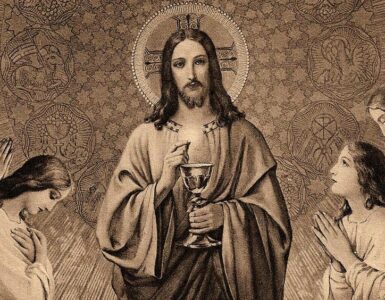
 Fr Charles Irvin