

 Fr Joseph Esper
Early in the 20th century a Catholic missionary arrived at a remote village in China, where he began sharing the Gospel with those who would accept it. The missionary approached three men who were very close friends and began talking to them, and after a while, he invited them to attend the religious instruction classes he was holding. Two of the men accepted; they took instructions, and were eventually baptized. The third man, however, did not want to learn about Christ and His Church; he explained to the missionary, “I am going to wait and see what your Christian religion means to my friends; then I will decide.” The missionary understood what he meant, so he simply nodded, instead of pressing the issue. Three years late this man came to him and said, “Now I am convinced. Christ has made my friends better men, better husbands and fathers, and better co-workers. Now I’m ready to learn about your Jesus” (Msgr. Arthur Tonne, Stories for Sermons, Vol. 11, #51).
If we truly know Jesus Christ and experience faith as the wonderful thing it’s meant to be, we might automatically assume everyone else would eagerly desire it, too. However, we shouldn’t underestimate our own role in this process. Our example can be vitally important, for there are many people who aren’t interested in accepting the truth until they first see what difference, if any, it makes in our lives. Following Jesus means sharing our faith—and in order to share it, we must first put it into practice.
Sacred Scripture makes it very clear that true faith must be based not only on words, but also on actions. Only a living faith can bring us, and other people, to salvation. In the Book of the Prophet Isaiah (58:7-10), the Lord tells us what we must do if we want to be heard and blessed by Him: “Share your bread with the hungry, shelter the oppressed and the homeless; clothe the naked . . . , and do not turn your back on your own. Then your light shall break forth like the dawn, and your wound shall quickly be healed. . . . Then you shall call, and the Lord will answer. . . .” The more we imitate God in His goodness, the more He is able to help and bless us, and the more our words will influence other people.
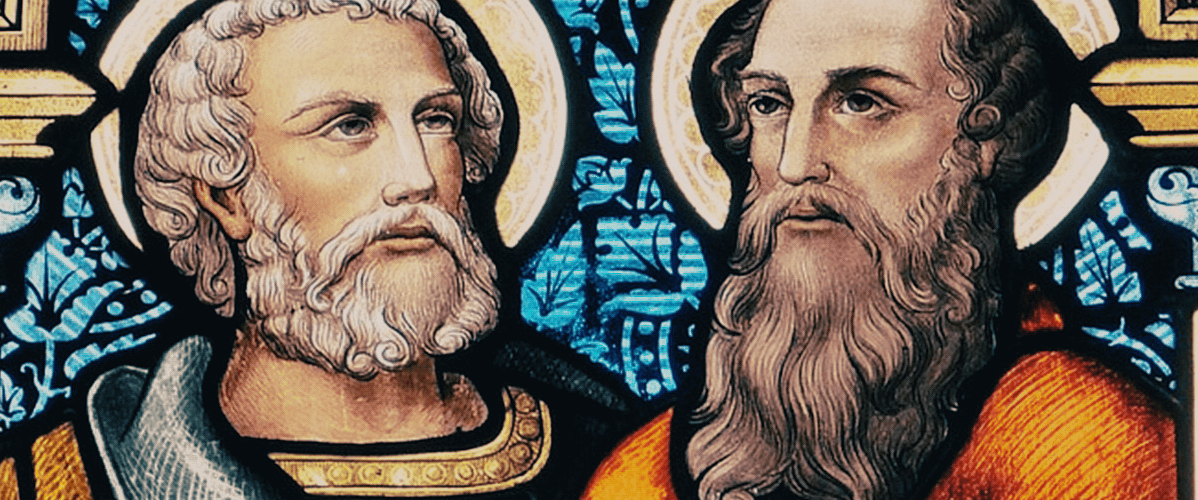
St. Paul is considered the greatest missionary in history, and he describes the approach he used. Paul reminds the Corinthians (1 Cor 2:1-5) that when he came among them, he didn’t try to impress them with eloquence or wisdom, as did most ancient philosophers and teachers. Instead, he preached Christ crucified and humbly allowed the Holy Spirit to work through him. The Corinthians were able to see everything Paul did, sacrificed, and suffered for the sake of the Gospel, and this helped make his testimony very convincing.
In the Gospel of Matthew (5:13-16), Jesus calls us the salt of the earth. Salt is used as a seasoning—and we are supposed to give spiritual flavor and joy and zest to the world. Salt is also a preservative—and the example of our faith should help non-believers save or preserve their souls by gaining eternal life in Christ. Jesus also calls us the light of the world, saying, “your light must shine before others, that they may see your good deeds and glorify your heavenly Father.” Merely believing in Jesus, without acting upon this belief and sharing it, is like having spoiled salt or a hidden lamp; Our Lord warns us that this sort of useless faith is of no help to anyone—ourselves included.
There was once a very intelligent Muslim in Egypt who became a Catholic, and afterwards a missionary priest asked him, “What convinced you of the truth of Christianity?” The Muslim replied, “It wasn’t your Catholic theology; I felt I could refute every argument I heard in favor of Christianity. It was the life of the missionaries that convinced me the Gospel is true” (Tonne, op. cit., #46). Most people aren’t philosophers or theologians; they don’t make life-changing decisions on the basis of abstract theories, but because of practical, down-to-earth, everyday realities. If we want to convince people of the truth of the Gospel, we must live it; if we want to help liberate or free those trapped in the darkness of sin or unbelief, we must share Christ’s light by practicing our faith.
How many people know that we are Catholics and members of a parish? Probably more than we realize—including relatives, neighbors, co-workers, salespeople, mail carriers, and others we encounter each day. What example are we giving? What message are we proclaiming about Christianity? Do people see us as kind, or self-centered? As generous, or greedy? As sympathetic, or unconcerned? As forgiving, or vengeful? As committed to our faith, or indifferent? What would other people, based on their observations, say is most important to us: loving our families and other people, and serving God and our neighbor, or loving our money and possessions, or things like sports, food, status, keeping up with the latest fads, and maintaining our reputations? If someone was choosing whether or not to follow Christ based on our example, what choice would that person make?
Our regular prayers for the spread of the Gospel and for the Church’s missionaries, and our contributions to the annual collection for Mission Sunday each fall, are good and valuable things, but they shouldn’t make us forget that sometimes we are missionaries, too. If our example of faith inspires just one person to accept the Gospel, we have achieved something of infinite value. However, we will never do this if we keep our light hidden and unused—but if we practice our faith, God’s blessing will come upon us and upon others.

 William Borst
 Paul Suski
 Fr Dino Vanin
 Michael Vacca
 Deacon Kurt Godfryd