 Fr Joseph Esper
Years ago, I received a phone call from a telemarketer, and when she began her sales pitch, I interrupted her and asked, “Is this a sales call?” When she admitted it was, I said, “Here is my policy: I’ll ask you a question, and if you can answer it correctly, I’ll let you continue. All right?” When she hesitantly agreed, I said, “St. Peter is considered the first pope. Who was the second pope?” She answered, “Um, Paul?” I responded, “No, I’m sorry—it was St. Linus—goodbye,” and hung up. (I’m sure I enjoyed that call more than she did.) St. Linus is considered the second pope, but almost nothing is known about him or his successor, St. Cletus. We know more about the fourth pope, St. Clement, who led the Church from roughly 90-99 A.D. He is of personal interest to me because my home parish is St. Clement of Rome in Romeo, Michigan. On the side of the church are letters that spell out “St. Clement of Rome.” Someone once asked me, “Why does it say Rome, and not Romeo?” I had to look up the answer, and it’s very simple: to distinguish Pope St. Clement from St. Clement of Alexandria, a fifth century bishop. Pope St. Clement I intervened when, in the year 96 A.D., some members of the Church in the Greek city of Corinth forced their bishop into exile. Clement wrote them a letter ordering them to respect the chain of command and take their bishop back—and the Corinthians obeyed, helping establish the principle of Rome’s authority over other churches.
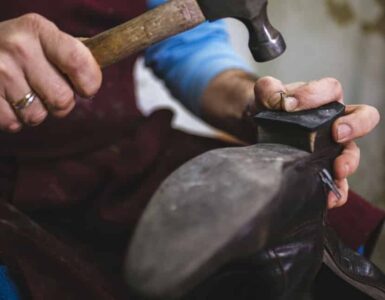
Leo XIV is the 266th pope. Eighty-one of them, or about thirty percent of the total, are canonized saints, and many others have the title Blessed—one step away from canonization. Some of the popes, unfortunately, were not very holy, and a handful were wicked—for when the papacy had great worldly power, unworthy men schemed, fought, and bribed to obtain it. For the most part, however, the popes—despite their individual weaknesses and foibles—have provided solid leadership for the Church. None of them were perfect; each of them was unique, and often very down-to-earth. When Spanish explorers brought back coffee from the New World, Pope Clement VIII’s approval caused coffee houses to spring up all over Europe. In the twentieth century Pope St. John Paul II enjoyed Polish cooking, especially pierogi and sweet pastries, while Benedict XVI preferred Bavarian foods like white sausages and apple strudel. Pope Pius XI, who reigned 100 years ago, loved mountain climbing, and even wrote a book on the subject; Pius XII was fascinated by astronomy, and enjoyed looking through the telescope in the Vatican Observatory. John Paul II was no longer able to go skiing as pope, so he settled for swimming, instead. Benedict XVI was a classical piano player; he also had a helicopter pilot license (but never learned how to drive a car). Pope Leo XIV is an auto mechanic, enjoys the word game Wordle, and is a Chicago White Sox fan. (Maybe that’s why they’re in first place right now.) Pope John XXIII, who convened the Second Vatican Council in 1962, was known for his approachability and simple humor. When someone asked him, “How many people work in the Vatican?”, he answered, “About half.”
Human nature being what it is, someone has to be in charge of Christ’s Church, and have the final say on matters of doctrine and morals; otherwise, there would be ongoing confusion, disagreements, and divisions (as is the case in many Protestant denominations that over the centuries split away from Catholicism). That’s why Jesus appointed St. Peter—and he and his successors have, for two thousand years, provided a valuable and necessary ministry of leadership and service, thereby playing an important role in God’s plan of salvation.
When Jesus spoke of giving Peter the keys to the Kingdom of Heaven, He was intentionally building upon the precedent described in the Book of Isaiah (22:19-23), in which God’s faithful servant Eliakim was appointed master of the royal palace, with authority to open and shut, and to make binding decisions. St. Paul (Romans 11:33-36) speaks of the wisdom and knowledge of God, which are far beyond our very limited human understanding. However, the Lord can bestow great wisdom and discernment upon those He appoints to positions of leadership—and Jesus freely chose to do this with Peter and his successors (Matthew 16:13-20), giving them the power to bind and loose. Thus, by obeying the legitimate authority and teachings of the Pope, we can be sure we are being faithful Catholics and are pleasing to God.
Some Protestants, and also the Mormons and Jehovah’s Witnesses, claim that the Church started out all right, but then a few centuries after Christ’s death, somehow suffered a tragic and catastrophic falling away from the truth, ushering in the Dark Ages; supposedly true Christianity was afterwards only recovered and restored with Martin Luther and the Protestant Reformation. However, this mistaken belief contradicts Our Lord’s promise in the Gospel that the gates of the netherworld, or hell, would never prevail against the Church; also, non-Catholic pastors and scholars have never been able to point to a specific year or event when the Holy Spirit supposedly abandoned the Church, causing Catholicism to fall into an imagined apostasy. In the early centuries of Christianity, there were several other important religious centers besides Rome—Alexandria in Egypt, Antioch in Syria, and Constantinople in modern-day Turkey. Each was led by a patriarch, or “super-bishop,” and each, at one time or another, succumbed to various heresies or false teachings, such as Arianism, Nestorianism, or Monophysitism. Only Rome, under the leadership of the Pope, never fell into heresy, despite many religious controversies, barbarian invasions, political intrigues, meddling by princes and kings, and weak, sinful, and unworthy occupants of the papal throne. The Holy Spirit never allowed any pope to teach heresy on matters of faith and morals—the concept of papal infallibility—and no other religion, Christian or otherwise, can make that same claim. As the great fifth century biblical scholar St. Jerome said, “I, following no leader save Christ, am in communion with the chair of Peter. I know that the Church is built upon that rock.”
We as Catholics should be proud of our Church and her history, and we should never stop learning more about our faith, including the teachings of the popes. For instance, Leo XIV’s encyclical Magnifica Humanitas, issued earlier this year, has many insightful things to say, not only about artificial intelligence, or A.I., but also on living our faith in an increasingly technological world. If world and societal leaders and influencers had actually paid attention to and acted upon various papal encyclicals over the last few centuries, the world would now be a much happier and more humane place. When the history of our age is written, scholars will note how the Catholic Church actually had important teachings on solving humanity’s problems, and when Jesus returns as the Lord of all history at the end of the world, His Church will be renewed and exalted in an amazing and miraculous manner no human being can fully imagine. Being a faithful Catholic in today’s world is a challenge and a source of controversy and sacrifice—but, under the leadership of the successor of St. Peter, it’s also supposed to be a glorious adventure helping us discover and fulfill our mission in life.




 Fr Dino Vanin