


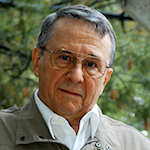
 Vincent Ryan Ruggiero
This essay continues the previous parts discussing my book Changing Attitudes, published in 1998. Part 2 ended by noting that the principal reason for academic deficiency is that mass culture has undermined young peoples’ desire to learn and respect for parents and teachers.,
Attitudes are very different from ideas and beliefs. The latter derive from some degree of thought, and we are generally conscious of them. In contrast, attitudes are emotional products of our ideas and beliefs which we may be completely unaware of. That is why, if others comment about our attitudes, we may be shocked and even, if the comments are unfavorable, offended!
Of course, students are not the only ones with unrecognized attitudes. Adults also have them, and that includes parents and educators. Many of them have been as influenced by mass culture as young people have. One of the most unfortunate results of this reality has been that the individuals best suited to solving young people’s problems often have been responsible for creating the problems.
A case in point began in the 1960s when high school and college teachers decided “there are no right answers in this classroom,” and repositioned the desks in a circle to make the idea visual. The notion that this would help students was not thought out but simply borrowed from the popular psychology of the day without careful examination. For example, the teachers didn’t realize its implication that any answer to a test question would thereafter be considered correct. As a result, thousands, perhaps millions, of students developed a blasé attitude toward reading textbooks and taking notes in class. After all, what would be the purpose if their own viewpoints (no matter how foolish) were as valid as those of teachers or experts..
Another example of teachers creating bad attitudes occurred at about the same time as the above one. That was the message to students that, “You can be anything you want to be. There are no limits except those you impose on yourself.” This too was mindlessly borrowed from popular psychology to make young people increase their confidence. If the teachers had considered a tone-deaf man singing lead tenor at the Met, or a five-foot woman playing center for the New York Knickerbockers, they would have understood the foolishness of the statement. Of course, obstacles exist in life, and some of them are insurmountable. And of course, we shouldn’t “sell ourselves short,” but neither should we deny that talent varies from person to person. The sad fact is that with a small investment of imagination, those teachers could have thought of half a dozen inspiring things to say that had the additional virtue of being sensible and honest, things that built genuine rather than false confidence. Failing to do so led innumerable young people to form foolish attitudes that led to failure and in many cases to blaming others for their disappointment.
How can teachers replace foolish attitudes their students have adopted with sensible, helpful attitudes? In a word, indirectly. That is, by quietly identifying the negative attitudes students display and determining what ideas and beliefs are likely to have produced those attitudes. And then, having students examine and debate those ideas and beliefs for soundness. Once they recognize the flaws in the ideas, they will be able to change the related attitudes with little or no prompting. [Parents can use a similar approach with their children, though with informal discussions rather than classroom assignments.]
A cautionary note: directly discussing students’ attitudes with them is at best pointless and at worst counterproductive because most students are not aware they have them.
The final part of this essay, Part 4, will discuss the most common unhealthy attitudes identified and examined in my 1998 book Changing Attitudes and not only still prevalent, but even more troubling than before
Copyright © 2025 by Vincent Ryan Ruggiero. All rights reserved.



 William Borst
 Jennifer Borek
 Mindszenty Report
 Donald Wittmer