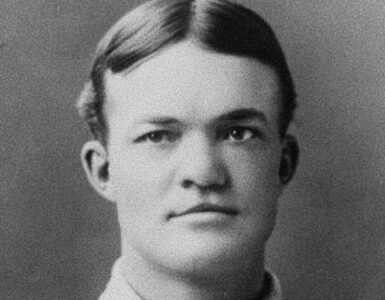


 William Borst
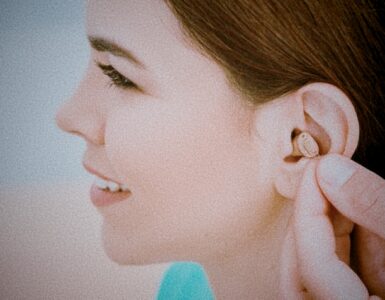
It has been nine months since I last wrote about my Invisible Handicap. I had stated that I was anticipating my second cochlear implant in May and promised to report how I was managing it. Unlike its predecessor, the second one leaves the patient without a decibel of natural hearing. In its place the implant receiver must rely on the magic of modern audiology.
For the rest of my life, I will have to rely on a pair of speech processors that will filter through the noise of everyday living and quickly turn it into audible language for my brain to interpret. This is the proper spot for my disclaimer, that my understanding of this is not doctrinaire science but just my narrow grasp of rudimentary audiology, based on my personal experience.
As a necessary aside, my wife and I went to St. Louis for a week to visit family and friends. On our last night, we attended the five o’clock Mass. After Mass we visited with a handful of friends, including Monsignor John Leykam who married us eight years ago. I had to proudly show off my second speech processor, which sits proudly atop my left ear. We also saw the Gottleibs, Tom and Irene. Tom has been Monsignor’s dutiful deacon for several years, while his wife Irene has been a parish cantor.
A stylish red head, Irene is a former communications executive at Anheuser Busch. She is better known by her maiden name, Hannon. It also serves as her nom-de-plume or pseudonym for her prolific writing career. To date Irene has published at least 65 novels in the contemporary romance and romantic suspense novels genre. (At last count, I have read half of them.)
Irene has been widely honored among her peers. To name just a few of her accolades, three of her books have won the prestigious RITA Award for Romance Writers of America. She is also a member of the RWA’s Hall of Fame and has merited a Career Achievement Award from RT Book Reviews for the corpus of her work.
I was happy to tell her that we had been visiting the best man from our wedding, and he had given me a copy of her latest book. (Irene also sang at our wedding.) Shortly after we returned to our Georgia home, I started reading her Out of Time.
Many of Irene’s books include some serious villains, who prey on the innocent. There is usually a handsome male character and a beautiful female character who quickly light a mutual fire in each other’s minds and hearts.
However, their ambers of romance never wafted into the bedroom without benefit of clergy and that is not to the end of her book. Irene bases her major characters on the dictates of her Catholic faith. In other words, Irene writes good, clean love stories that never degenerate into the spectrum of lust.
‘Out of Time’ is the story of a historical anthropologist and a sheriff who grapple with a century-old mystery, a hidden treasure, a dying language, and suspicious deaths on an isolated estate where danger seems to lurk in every shadow.
In Out of Time, her female protagonist has a personal characteristic that I believe is a serious departure from most of Irene’s heroines. Cara Tucker has been deaf from childhood. As a result, she stands alone in my vast reading experience, in that she has had a double cochlear implant, which has left her clinically deaf without her speech processors.
This had been a complete surprise to me. Even after I mentioned the book and showed her my new speech processor, she never even hinted as to what I would find on page 42. This is the page where the author introduces the readers to Cara’s handicap, through the instrument of a divine-ordered strong wind which blew her beautiful tresses away from the side of her head.
The wind scene led to a moment of clarity for Brad Adams, the police officer, who had been smitten with Cara from the beginning. Cara’s inability to totally understand him during their conversation struck a chord in this detective’s vein of curiosity. I have been in these situations many times and always answer with an apology as if it were my fault I could not hear something.
The truth of the matter is that most people do not understand the invisible handicap. Brad called it her secret, and she confessed that she never brings it up, nor did she ever initiate discussions of her hearing loss. Since I have noticeably short hair, my implants are always right there out in the open for all to see. In all honesty, I am surprised that so many people understand and recognize a cochlear patient at first sight.
The persistent Brad is also very attracted to her and so he wants to know everything about her that he can learn without any breaches of personal or moral decorum. The obvious questions surround the origins of her hearing loss. Was it congenital? If not how long ago? How does she deal with the day-to-day challenges of living with these devices? From my perspective, these are all especially important questions.
Cara’s hearing loss is like so many other victims of sound deprivation. As she explains to Brad in a mutual revelation of their respective pasts, when I was three and a half, I got the measles. This led to ear infections, which resulted in severe hearing loss. Deafness can be complications in up to ten percent of measles cases and I was in the that unlucky percentage…after the hearing loss my speech suffered…and my father…started making fun of me…
As someone who could write detailed answers to these questions, I think this paragraph and a few to follow do a great service for deaf people, especially those with cochlear implants. As I have written before, most people do not believe it is much of a handicap. But as the late radio impresario, Rush Limbaugh, opined many years ago, Deafness is the only handicap that does not generate any sympathy but can make people angry.
Rush knew only too well of what he was saying because he had inadvertently deafened himself when he was got addicted to oxycontin several years before his death in 2021. These words still ring loudly in my head because I have had friends and neighbors yell at me because I had to ask them to repeat something they have said to me. I think Irene Hannon is to be praised for providing a cochlear patient and explaining just what it is and how especially young people deal with it.
In all my 82 years, I had never met a fictional character whom I could fully understand and sympathize with because of her audio handicap. Irene is the first writer to feature a completely deaf protagonist…or at least the first one I have ever encountered, in the several thousands of pages I have read, over the course of my adult life.
In my search to see if Irene were the only author to feature a deaf or hard-of-hearing protagonist, I discovered a story from 2022 where a three-year old girl was sad because there were no books about children with cochlear implants.
Mia’s hearing progressively worsened to the point that she got a cochlear implant the same time I did in September of 2020, just before all elective surgeries were cancelled in many states. When she picked out her processor’s colors, she chose brown. (I had gone with the tan though I have some brown pieces serving my back-ups.)
Her mother, Sophia San Filippo, who was an award-winning writer, was inspired by her daughter’s plight. She authored a story that was self-published in 2022. Mighty Mila is a children’s picture book where all children, regardless of hearing, can fall in love with an imaginative, fierce little girl, who just happened to have a serious hearing loss. Mila had suffered from hearing loss since she was a baby. Little Mia should be an inspiration for anyone who has gone through this.
As for San Filippo, what started as an attempt to fill an empty space in children’s literature, turned into a true passion and mission to raise awareness and promote inclusion. Deaf children now have their own book on the library shelves. It also removes some of the stigma of young children with sophisticated hearing devices, like cochlear implants.
I also found a review of another book, The Acupuncture Murders by Dwight Stewart on Goodreads. His protagonist is a deaf Sherlock Holmes, named Sampson. His deafness colors most of the novel as he solves the murder. When dealing strictly with hearing people in his work, he sometimes toys with them by wearing a disguise and adopting different personalities. He also trolls them by putting a small button in his ear to trick them into thinking it is a hearing aid, so they will face him when talking.
At the end of the book, Sampson undergoes an acupuncture procedure, and his hearing returns. I believe this is a wonderful story with an accurate presentation of the deaf. I think The Acupuncture Murders is a boon to the deaf community with its poignant interpretation of what it is like to be among the aural handicapped. Deaf people need more sympathetic treatments, such as the deaf world in which all of us Sampsons dwell.
After the second surgery, I have comfortably settled into my unfamiliar environment where I am almost a 100% dependent on my speech processors for my connections to the real world of hearing. For the first time in my life, I could not hear my own voice without them. This is a very spooky thought. And with that I will bid you adieu.