
 Vincent Ryan Ruggiero
The story of Evelio Menjivar-Ayala (EMA), Pope Leo’s choice of Bishop for Wheeling-Charleston West Virginia, raises enough questions to challenge a modern-day Aquinas, so it is no surprise that most Catholics are profoundly puzzled.
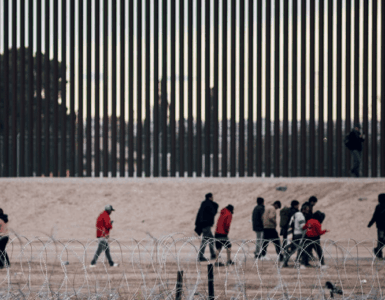
First, some information about the new Bishop. “As a teenager, he made three attempt to enter the U.S. illegally. [Then] he and his brother were smuggled in the trunk of a car over the border crossing between Tijuana and ‘San Diego.” After attending US schools and learning English, he did janitorial work and construction. In time he entered a Catholic Seminary in Miami, then three Pontifical Universities in Rome. Eventually, and was ordained a deacon by Cardinal Timothy Dolan in Rome (2002), then a priest by Cardinal Theodore McCarrick in Washington D.C., (2004) and subsequently served as a priest in several parishes. He reportedly became an American Citizen in 2006, in other words, after the ordinations by Dolan and McCarrick. (Source, Wikipedia.)
In 2022, Evelio Menjivar-Ayala (EMA) was appointed an auxiliary bishop by Pope Francis and consecrated byCardinal Wilton Gregory, Bishop Mario Dorsonville, and Bishop Roy Campbell. (Source, Wikipedia.) On July 2, 2026, he will be installed as the tenth bishop of the Wheeling-Charleston diocese.
So much for the information about Evelio Menjivar-Ayala. Now for the challenging questions about his rise from illegal immigrant to Catholic bishop.
QUESTION 1: Who in the Catholic Hierarchy knew about EMA’s illegality, and when did they know? Did some know soon after he and his brother came to the US illegally in the trunk of the car? Did more know years later when he entered the Catholic seminary in the US.? Did even more know when he attended three Pontifical institutions in Rome? Did both Cardinal Dolan ordain him a deacon in 2002 without knowing? Did Cardinal McCarrick ordain him a priest without knowing? The answers to these questions are important because the members of the hierarchy who knew the facts aided and abetted him and thus violated the law. If this was the case, did they do so simply because they considered EMA one of them—that is, an insider, a member of the team or of, to use an old Italian term, “La Cosa Nostra” (our thing)? It is hard to say.
QUESTION 2: How did EWA become a US Citizen? He reportedly did so in 2006, long after he illegally entered the US illegally. Surely the process of gaining citizenship revealed his illegality to the government. So why was he not then deported? Did the Catholic hierarchy in the US request special treatment for him from then President Joe Biden? Did the president in turn request a monetary “offering” to honor the request? If so, did anyone in the Catholic hierarchy make such an “offering?” If so, did the money come from Catholic parishioners without their knowledge? If that was the case, the aiding and abetting of the illegality was expanded to the parishioners. Of course, if they did not know of this, the parishioners would have no legal or moral guilt.
QUESTION 3: Does EWA share the hierarchy’s view of illegal immigration? The answer to this question is clear. He does. Since becoming a priest, he has offered this public statement: “Immigration laws are a different set of laws than criminal laws” but the Trump administration is now “pulling them together.” He added that “[The] question for them” is about “how are you living the Gospel?” (Source EWTN News) Though English is not his native language, he has learned it well enough to craft an impressive non-sequitur (error). In effect it says that if two sets of laws are somewhat different, only one can be a violation! Bosh. In reality, two or twelve or twenty laws can differ from one another and yet all be violations of the law. (Incidentally, to argue in a way that make’s one’s own behavior look good, as he does, is neither uncommon nor impressive.)
QUESTION 4: While advancing EWA in the Catholic Church, did the Hierarchy ever ponder Leo XIII’s 1891 Rerum Novarum? Though not directly about immigration, one of its key statements impacted the Catholic Catechism that followed it. Leo wrote: “The safety of the commonwealth is not only the first law, but it is a government’s whole reason of existence.” (Rerum # 35). The Catechism, in turn, states that “Political authorities can set conditions on immigration to ensure the common good.” (# 2241) The safety of the commonwealth and the common good are obviously closely related—to maintain one is to maintain the other; to forfeit one is to forfeit the other. If the hierarchy had read these words carefully, they would understand that the government’s setting conditions on immigration is vital to maintaining the common good. And with a just bit more pondering, they would grasp what the basic “conditions” must be: (a) sufficient control of entry into the US to ensure that applicants pose no danger to existing citizens, b) adequate provision for legal immigrants learning the basics of the English language, and c) “making sure legal immigrants understand the moral beliefs, customs, and ideals that define acceptable, expected behavior within a society or social group.” (Quotation from SimplyPsychology.org).
If the previous paragraph seems to imply that the hierarchy lack meaningful understanding of the principles noted from Rerum Novarum and the Catholic Catechism, it is because their emphasis on immigration seems less concerned with the common good of citizens and more with the treatment of illegal immigrants. Consider, for example, this excerpt from American Bishops’ statement Catholic Social Teaching on Immigration and the Movement of Peoples:
“Immigration policy that allows people to live here and contribute to society for years but refuses to offer them the opportunity to achieve legal status does not serve the common good. The presence of millions of people living without easy access to basic human rights and necessities is a great injustice. It is the position of the Catholic Church that pastoral, educational, medical, and social services provided by the Church are never conditioned on legal status. All persons are invited to participate in our parishes, attend our schools, and receive other services offered by our institutions and programs.”
The last two sentences in the Bishops’ statement, in effect, say (to borrow an old colloquialism) “Legal Schmeegl, it’s all the same to us.” In other words, the statement entirely ignores the complicated problems that cry out for solving, particularly those that affect American Citizens.
QUESTION 5 Have the Catholic hierarchy given reasonable attention to the problems caused by illegal immigration? Let’s look at a sampling of the problems:
“Under President Biden in fiscal year 2023, the United States absorbed more than 3 million illegal aliens—the highest number in its history. . . Unchecked illegal migration over the past three years has possibly cost the public education system billions of dollars. Large influxes of non-English-speaking children also has a negative effect on the classroom.” (Heritage Foundation)
“. . . When the Rule of Law is degraded, cynicism, corruption, social discontent, and chaos can ensue . . . Illegal immigration contributes to population growth, overwhelming communities by consuming already limited affordable housing, crowding classrooms, and increasing the strain on public services like food banks, transit, and social services. U.S. workers are . . . disadvantaged by illegal aliens who will work for renumeration that is lower than the minimum or prevailing wage . . . As illegal immigration has increased, so has the trafficking of drugs such as fentanyl, with drug overdoses killing 100,000 Americans a year. When illegal aliens are released into American communities without proper vetting, Americans are increasingly becoming the victims of illegal alien crime including hit and runs, assault, and even murder. . . In addition, illegal aliens often steal Americans’ identities to live, work, and remain in the country.” (Fairus.Org)
“The costs of illegal immigration to the taxpayer are numerous, but the largest costs are the education of their children, emergency medical care, and incarceration for those arrested for crimes. U.S. taxpayer dollars also support shelter, educational benefits, welfare and tax credits for those in the country illegally. Despite being ineligible, some illegal aliens also get welfare the same way they get jobs: with identity documents falsely identifying them as U.S. citizens, often obtained through identity theft or forgery. In addition, if they have U.S.-born children, they may collect welfare assistance in the name of those children. At the start of 2023, the net cost of illegal immigration for United States taxpayers – at the federal, state, and local levels-was at least $150.7 billion. . . ” (Fairus.Org)
“At least 16.8 million illegal aliens resided in the United States as of June 2023. Since 2021, the number of illegal aliens crossing the nation’s borders has grown significantly. In Fiscal Year 2023, a record 3.2 million encounters with illegal aliens were recorded at America’s borders. In addition to those arrested, many illegal aliens have succeeded in evading law enforcement or Border Patrol, often entering between ports of entry. There were 1,174,385 known gotaways during the first two years of President Biden’s tenure, not to mention hundreds of thousands of unknown gotaways who avoided law enforcement notice entirely.” (Fairus.Org)
Because Catholic Bishops sometimes speak individually and at other times together, it is virtually impossible to say they have never expressed a view on the dangers of open borders noted in the last four paragraphs. Yet I cannot recall their having stated such a view. Moreover, I believe they have given considerably more attention to the plight of illegals than to the impact of illegals on American citizens. And that is very strange for two important reasons.
The First reason: The Church calls each bishop to care for the parishioners in his own diocese, which does not extend to parishioners from other dioceses, let alone immigrants from other countries: “The Bishop is the principal teacher in the faith community. As such, he must be devoted to preaching the Gospel constantly. That preaching aims at illuminating to the faithful what they must believe and put into practice, while steering them away from every error that is life-threatening to the spirit. (CatholicCulture.org)
The Second reason: Because bishops hold a position of high leadership in the Church, whatever they say or do casts a good or bad light on the clerics beneath them, the parishioners in their various parishes, and the Church in general. They therefore have a sacred obligation to avoid allowing their followers to remain ignorant about moral matters, let alone draw them into confusion or worse, into error. Unfortunately, that is what I believe has happened, and the negative impact has brought confusion to Catholics, embarrassment to the Church, and a danger to America and other Judeo-Christian countries.
Copyright © 2026 by Vincent Ryan Ruggiero. All rights reserved.

 Thomas Addis

 William Borst